











An IBM warranty check sounds like a ten second task: type in the serial number, read the expiration date. In practice, a lot of people hit a sign in screen or a result telling them the machine cannot be found. The reason is rarely the serial number itself.
Most hardware that people still call IBM is serviced by Lenovo today, so half of these lookups happen on the wrong website. This article covers which machines belong to which vendor, how to run the check for each one, what to do when the result comes back empty, and how to keep coverage dates current across a whole fleet without checking one serial number at a time.
IBM sold its personal computer business to Lenovo in 2005 and its x86 server business in 2014, and warranty service followed the hardware out the door. That split is the first thing to settle, because an IBM server warranty check on a System x box and one on a Power system end up on two different websites.
Lenovo took over service and support for the x86 machines that shipped under IBM branding. That covers System x servers, BladeCenter, Flex System and NeXtScale, along with IBM System Storage products and every ThinkPad built before the 2005 handover.
IBM's own support pages confirm the arrangement and point owners of these machines to Lenovo to verify coverage. Because the lookup then runs entirely on Lenovo's side, the process matches what a Lenovo warranty check involves, down to the machine type requirement.
IBM kept the product lines it still designs and sells. Power Systems, IBM Z mainframes and current IBM Storage arrays are covered by IBM directly, and so are the software and services attached to them.
These are the machines the IBM Warranty Lookup tool is built for. Coverage on this side is frequently extended through a maintenance agreement, so the dates that come back may reflect a renewal rather than the original factory warranty.
The machine type is the fastest way to route the check. It is a four digit code sitting next to the serial number on the product label, and it tells you which catalog the machine belongs to:
If the label is gone or unreadable, the product family alone is usually enough to pick a side. IBM also publishes a reference page for locating the machine type, model and serial number that covers the older lines, including System x, xSeries, Netfinity and BladeCenter chassis.
Both routes ask for the same two values, and neither one works with only half of them. Find them first, then go to the site that matches your hardware.
On most machines both values are printed on the same label, on the back or the bottom of the chassis, and that label stays the most reliable source for the machine type. IBM documents the type number as a four digit number, usually followed by a three character model identifier, and the serial number as a seven or twelve character string depending on the product line.
When the label is unreadable, where you pull the values from depends on the kind of hardware. Lenovo documents the wmic form of the two Windows commands below, but Microsoft disabled WMIC by default in Windows 11 versions 23H2 and 24H2 and removed it from supported versions in August 2026, and points to Get-CimInstance as the replacement, so these read the same classes through PowerShell instead:
ssh <management-ip> -l USERID and run vpd sys, the procedure Lenovo documents for returning the system serial number.Get-CimInstance Win32_BIOS | Select-Object SerialNumber reads the Win32_BIOS class behind the wmic bios get serialnumber command Lenovo publishes.Get-CimInstance Win32_ComputerSystemProduct | Select-Object Name reads the Win32_ComputerSystemProduct class behind wmic csproduct get name, which Lenovo documents as the way to return the Model-Type Number.sudo dmidecode -s system-serial-number reads the same value out of the firmware tables, using one of the string keywords dmidecode documents.None of these change anything on the machine, they only read values the firmware already reports. The two server routes need management module credentials or a reboot into UEFI, so they belong to whoever administers the hardware. When a command returns an empty value, the printed label is the source both vendors fall back on.
Lenovo runs two warranty lookups, and ex-IBM hardware splits between them. Servers and storage go through Lenovo’s data center lookup, which is where IBM’s own support pages send owners of these machines, while ThinkPad-class hardware goes through the PC lookup.
Either one accepts a serial number without an account, which makes this the faster of the two routes overall. The machine type only becomes mandatory in Lenovo’s batch tool, where a row without it returns nothing, so a blank result on a single lookup points at the serial rather than at a missing machine type.
IBM's Warranty Lookup sits behind a sign in wall. Opening the tool redirects to the IBMid login page, so an IBMid account has to exist before you can submit anything, and creating one is free.
Once inside, the tool asks for the machine type and serial number and returns the warranty start and end dates for that machine. The same IBMid also opens IBM's support case system, which is where a warranty claim on this hardware gets filed.
The output is short in both tools, and reading it correctly matters more than it looks. So does telling the difference between an expired machine and a failed lookup.
Both tools check IBM warranty status the same way and return the same core facts: whether the machine is currently covered and the date that coverage ends. Neither one returns the purchase date sitting on your invoice.
That gap is expected. Coverage starts on the date the machine shipped from the factory, and the invoice date your organization has on file is usually later, so a device held in a distributor's warehouse can show a warranty that began before anyone unboxed it.
An empty result almost always traces back to one of four causes:
Working through them in that order clears most cases. When the serial checks out on both sites and still returns nothing, the machine has usually aged past the point where the vendor keeps its record online, and a regional support contact is the remaining option.
One lookup takes under a minute. Thirty machines take half a morning, and the spreadsheet holding the results starts going stale the moment it is saved, because every new purchase and every replacement changes it. Most fleets are mixed too, so the same exercise repeats for the Dell, HP, Lenovo and Fujitsu hardware sitting in the same building.
The cost of that drift shows up later. Renewals get missed on machines that were worth covering, replacement budgets get built on guesses about which devices fall out of coverage next quarter, and repairs get paid out of pocket on hardware that was covered the whole time. Keeping coverage and spend aligned is what Warranty Management is for, and it depends on data that refreshes without anyone opening a browser.
InvGate Asset Management discovers and manages hardware, software and cloud assets in a single interface, bringing IT Asset Management lifecycle tracking, automated discovery and audit-ready reporting into one place. Warranty dates live on the asset record itself.
Its automatic warranty detection reads the serial number already held on each asset and fills in the Warranty expiration and Acquisition date fields for Dell, Lenovo and IBM devices. IBM hardware is covered through the same API as Lenovo, which is why there is no separate IBM credential to go looking for.
For a fleet with IBM machines in it, that changes the day-to-day work in a few specific ways:
Setting this up on your own fleet takes a 30-day free trial and the credential covered below. If the fleet mixes IBM, Lenovo and Dell hardware, talk to Sales about covering all three from the same place.
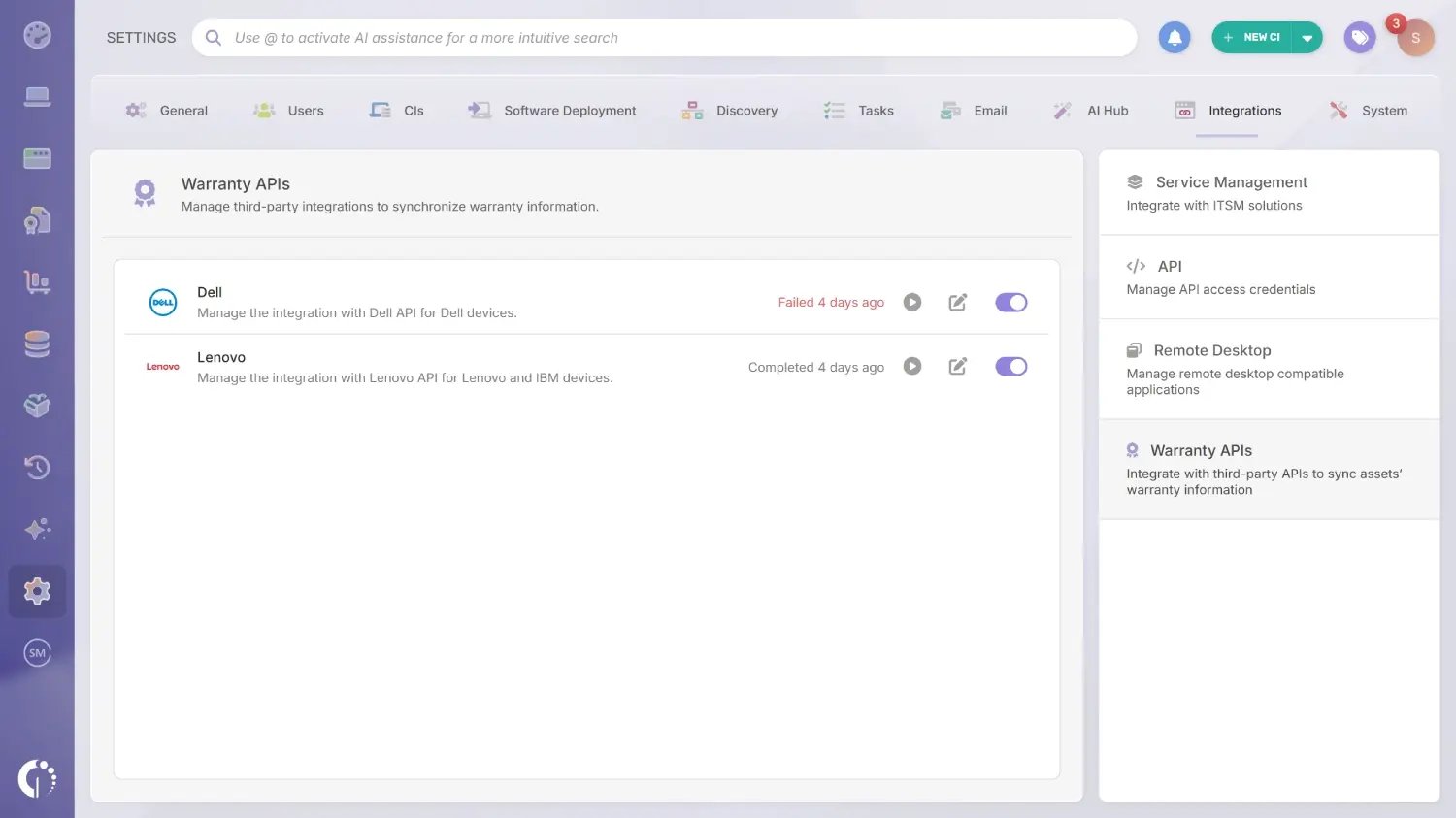
The integration lives in Settings > Integrations > Warranty APIs, the same screen that automates a Dell warranty check. Enabling it opens a configuration screen asking for a Client ID, with options to exclude assets by tag and to overwrite information already stored in the two fields. The Client Secret Key field appears only for Dell, so an IBM sync needs the Client ID on its own.
For IBM devices that credential is the Lenovo one, because the two share an API. The token is requested from a Lenovo account manager, or from the reseller that sold the hardware, and it has to come from outside InvGate. Saving the configuration starts the first synchronization.
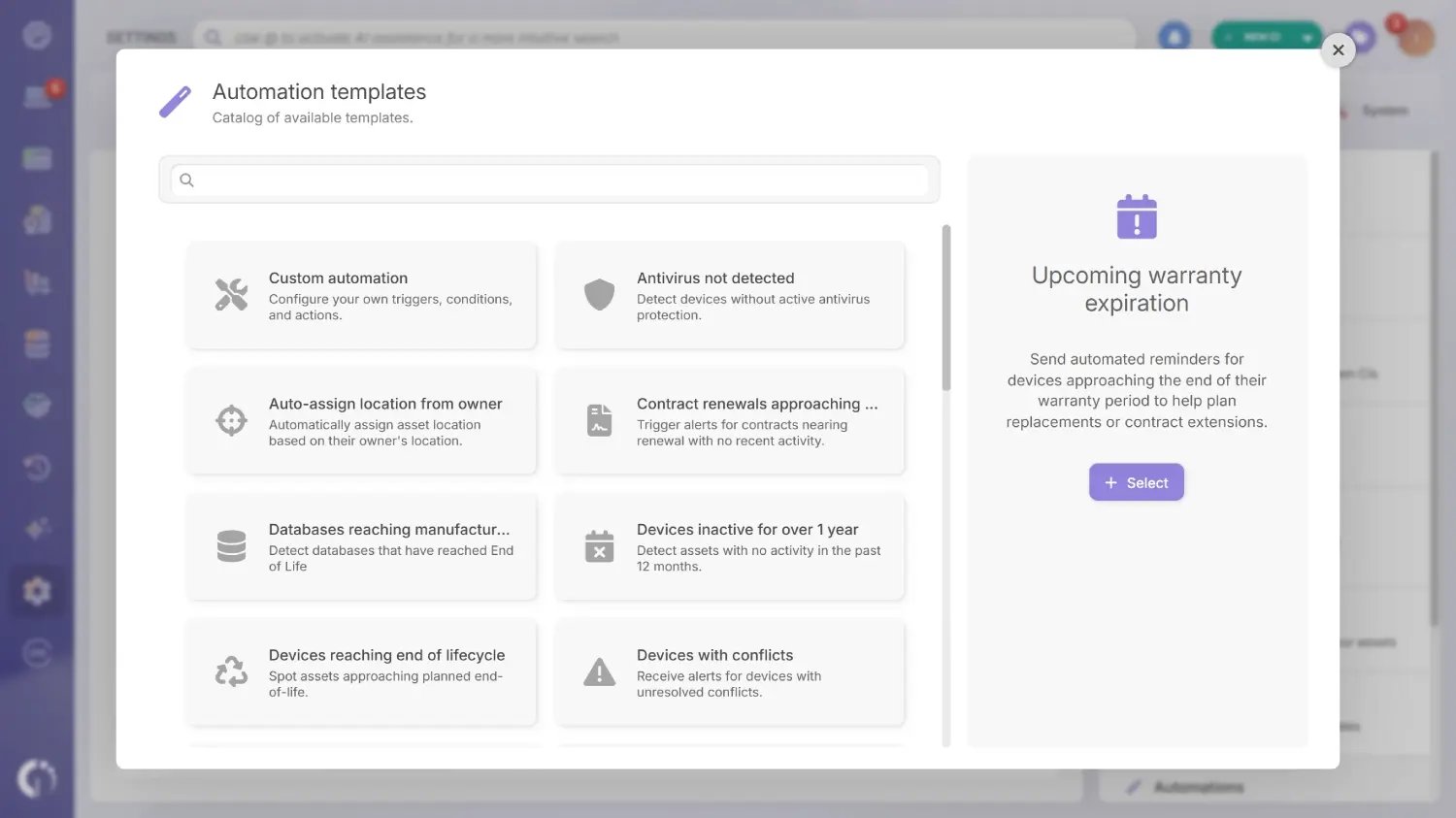
Once the dates are in the system they can drive automations. A scheduled automation with a condition on the warranty expiration date emails whoever owns renewals, and the window is yours to set, thirty days out being one common choice.
InvGate Asset Management's Smart Tags do the same job for grouping rather than notification. A tag with a rule on warranty status collects every expired machine on its own, so the list is ready the moment someone asks which IBM devices need attention.
Dashboard widgets turn the same fields into a standing view: a breakdown of coverage status across the fleet, and a list of the assets expiring soonest. Reports built on those fields can be scheduled, so the numbers arrive without anyone requesting them.
One detail is worth knowing before the first sync. Fields populated automatically become read-only on the asset profile, and editing them by hand again means putting the asset in a tag and excluding that tag from the synchronization.
An IBM warranty check is really two checks wearing one name. Machines that shipped under IBM branding on the x86 side get looked up on Lenovo's site with no account required, while Power, IBM Z and current storage lines get looked up with IBM's own tool behind an IBMid sign in.
Both routes work fine for one machine and neither survives a fleet. Letting the platform that already holds your inventory read those serial numbers and keep the coverage dates current is what turns a warranty check into something that happens on its own.
For hardware IBM still services, yes. The IBM Warranty Lookup tool redirects to the IBMid login page before it accepts a serial number, and accounts are free to create. Ex-IBM x86 machines get checked on Lenovo's site, which asks for no account at all.
The most common reason is that the machine is no longer IBM's to service. System x, BladeCenter, Flex System, NeXtScale and ThinkPad hardware moved to Lenovo, so those serials resolve on Lenovo's lookup. Leaving out the machine type is the next most common cause.
They are two different values. IBM defines the type number as a four digit number identifying the product line, usually followed by a three character model identifier, while the serial number identifies the individual unit.
IBM's web tool handles one machine at a time. Bulk coverage comes from pulling the data through the vendor API into the system that already holds your inventory, which is how the warranty integration in InvGate Asset Management works for Dell, Lenovo and IBM devices.
Coverage starts on the date the machine shipped from the factory. The invoice date your organization has on file is usually later, so a device that waited in a distributor's warehouse can show a warranty that began weeks or months before delivery. Correcting the record means contacting regional support with the purchase documentation.

