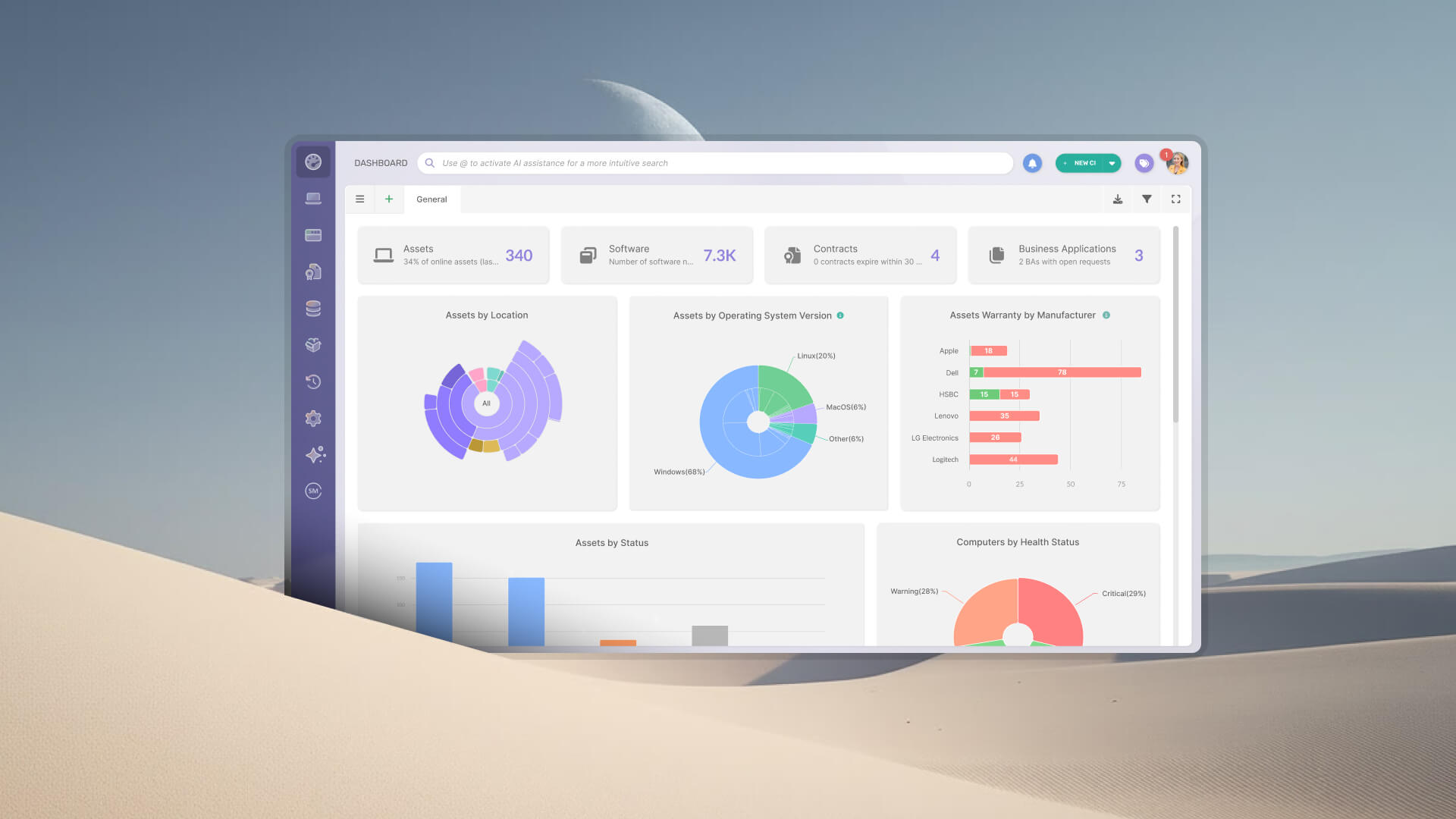
IT inventories used to cover hardware, software, some cloud resources and Software as a Service (SaaS) subscriptions. Today they also have to account for digital assets, such as certificates that authenticate systems and expire on their own schedule. A digital governance strategy brings those assets under the same ownership, lifecycle tracking and change record IT already applies to laptops and licenses.
Digital governance in this sense has no relation to Digital Asset Management (DAM) platforms, where marketing teams store images, videos and brand files. Here, digital assets are the non-physical resources IT is responsible for, and neglecting them has concrete costs: an expired certificate that takes down production, or an AI agent with no owner that a compliance audit flags.
What digital governance means in IT
Digital governance is the practice of tracking the parts of an IT estate that have no physical form with the same discipline applied to hardware and installed software: an owner, a lifecycle and a record of what changed. It extends IT Asset Management (ITAM) to assets most platforms still ignore, since most IT Asset Management software was built for hardware and licenses first.
It sits underneath broader IT governance, the policies, committees and risk frameworks most organizations already have, and supplies the inventory and change record those policies depend on. Without it, digital assets live in spreadsheets, wikis or nowhere, and when one breaks there is no owner to call and no record of what changed.
What counts as a digital asset in this context
A digital asset is anything IT is responsible for that has no physical form, runs on its own logic and needs an owner and a lifecycle. Certificates, AI agents, automation workflows and scripts qualify, and so do Application Programming Interface (API) keys, service account credentials, container images, Infrastructure as Code templates, DNS records and encryption keys.
This article focuses on the first four because they concentrate the most risk today. An expired certificate takes down production, an AI agent reaches live systems and data with little tracking, a workflow carries business logic with no version history, and a script moves between teams with no record of who deployed it.
Certificate Lifecycle Management
SSL/TLS certificates authenticate connections and expire on a fixed date set by their certificate authority. When one lapses, the connection breaks, which makes expired certificates a frequent and entirely avoidable cause of unplanned outages.
Certificate Lifecycle Management treats each certificate as a record with its validity window, issuer, domain and owner, so the expiry date stops depending on memory. A weekly report of every certificate due in the next 30 days gives the owner time to renew, and the record shows who updated it and when.
AI agent governance and inventory
AI agents deployed in cloud and hybrid environments get real access to systems and data, yet few are tracked like other production systems. Governing them means knowing which agents exist, who owns each one, what they connect to and when they were last reviewed.
Part of that picture can now be detected automatically. An endpoint agent can find agentic tools such as Claude or Codex on managed computers, along with their accounts and the MCP servers, skills and plugins added to them, while agents running in cloud platforms still depend on vendor APIs that remain uneven. That is a different problem from the one asset discovery tools solve for hardware and installed software.
Detecting shadow AI
Shadow AI is the AI-era version of shadow IT: agents and tools teams adopt without IT or security review. They run with real access and no visibility.
On managed computers, detection starts at the endpoint, with a record of which AI tools are installed, since when, on personal or corporate accounts, and with which MCP servers and skills. Network logs, expense reports and conversations with teams cover the rest.
Automation workflow governance
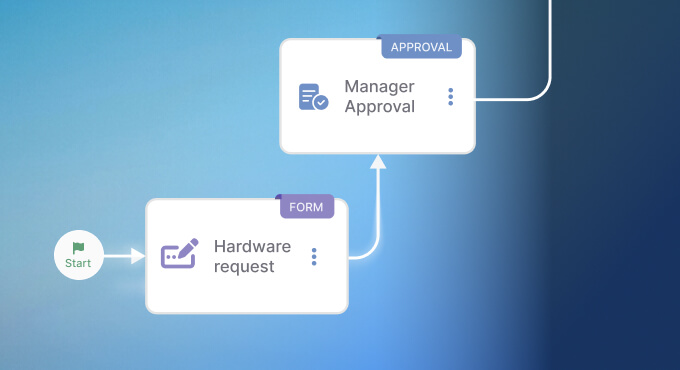
Automation workflows now carry business logic, on an IT team's own engine or on external tools connected over an API, yet most have no version history or review record. Governing them splits into two concerns that work differently.
Deterministic compliance workflows
These must run the same validated way every time for frameworks like SOC 2 (System and Organization Controls 2) or PCI DSS (Payment Card Industry Data Security Standard), and governance means proving they did.
That proof comes from two places: the run log in the platform that executes the workflow, and the workflow's inventory record, with its live version, owner, framework and change history. An auditor needs both.
Auto-remediation workflows
These fire automatically to fix a known issue, such as renewing a certificate or recovering from an error. Governing them means knowing what each one may fix, who owns it and which systems it touches, and checking its run history to confirm the outcome.
Many run on external tools, so IT Vendor Management covers both the contract and what the tool is allowed to touch.
Change Governance: the evidence layer
Most platforms already log what changed on a record. Change Governance adds what an auditor asks next: who made the change in the real world, when it took effect and why, captured before a critical change is saved and locked afterward.
Change Management is the Service Management process that approves a change before it happens, and Change Governance is the evidence attached to the CI afterward. Either way, a renewal, a workflow update or a script change is only traceable once the asset behind it is tracked as a CI.
How to build a digital governance strategy step by step
A digital governance strategy extends practices IT already runs for hardware and software to a wider set of assets. It takes five steps:
- Start with inventory. List every certificate, AI agent, workflow and script, including the forgotten ones. IT Inventory Management practices already cover this for hardware and software.
- Assign an owner. One accountable person or team per asset.
- Set a review cadence. Expiry dates for certificates and regular review dates for agents and workflows.
- Connect the change record. Every update, renewal or configuration change should record who made it and why.
- Extend the platform in place. The same Configuration Management Database (CMDB) tools that track servers and applications can hold digital assets as CI types.
Where InvGate Asset Management fits in
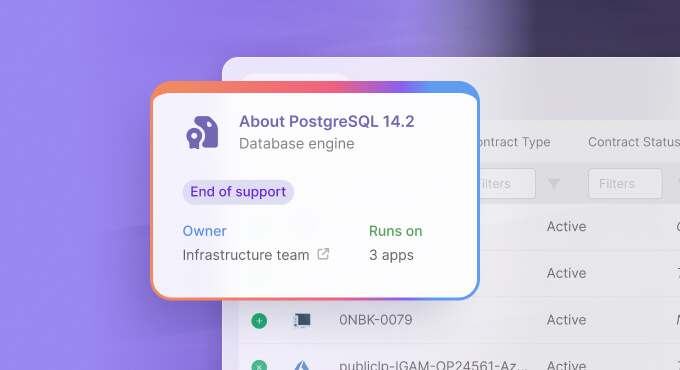
InvGate Asset Management brings digital governance into the existing inventory through its Digital Assets family, announced at ENVISION'26. Each digital asset becomes a Configuration Item (CI) with an owner, a lifecycle status, alerts, business application relationships and a change history, as detailed in the announcement of the digital asset inventory in InvGate Asset Management.
The platform records, relates and alerts on these assets, while the tools that run them keep executing and renewing them. The family grows in stages:
- Certificates and automation workflows are the first two types. They load by hand, from a CSV import or through the public API, the Upcoming certificate expiration automation sends a weekly report of every certificate due in the next 30 days, with a configurable window, schedule and recipients, and Smart Recommendations flag any record nobody has claimed.
- AI tools on managed computers are detected automatically by the InvGate Asset Management Agent, starting with Claude and Codex: which tool is installed and since when, the account it runs under and its license level, and the MCP servers, skills and plugins added to it, without reading conversations or prompts.
- AI agents and scripts come next as types of their own, so the agents running in production and the scripts passed between teams get the same owner and change record.
- Change Governance adds the evidence layer. It is live today on database CIs, where changing a critical property such as the owner or the status asks for the real author, the effective date and the reason before the change saves, and that evidence stays locked once recorded. The Digital Assets family is set to follow the same model.
- Domains, jobs and pipelines, and secrets follow on the roadmap, and automatic discovery is the other direction the family is heading.
Conclusion
A digital governance strategy extends IT Asset Management to certificates, AI agents, automation workflows and scripts, with the same owner, lifecycle and change record applied to hardware and software. Inventory shows what exists, and Change Governance shows who changed it and why, which is what an auditor asks.
Start a free trial of InvGate Asset Management, or talk to Sales about where digital governance fits your roadmap.
Frequently Asked Questions
What is digital governance in IT?
Digital governance tracks certificates, AI agents, automation workflows and scripts as configuration items, each with an owner, a lifecycle and a change record. It is unrelated to Digital Asset Management (DAM) platforms for marketing files.
Does digital governance include AI agents?
Yes. It covers which agents run in an environment, who owns them, what they connect to and when they were last reviewed. AI tools on managed computers can be detected automatically, while cloud agents are still registered manually because discovery depends on each vendor.
How does digital governance relate to ITAM?
It extends IT Asset Management to certificates, AI agents, workflows and scripts, applying the same ownership and lifecycle discipline plus a Change Governance layer that records what changed and why.