









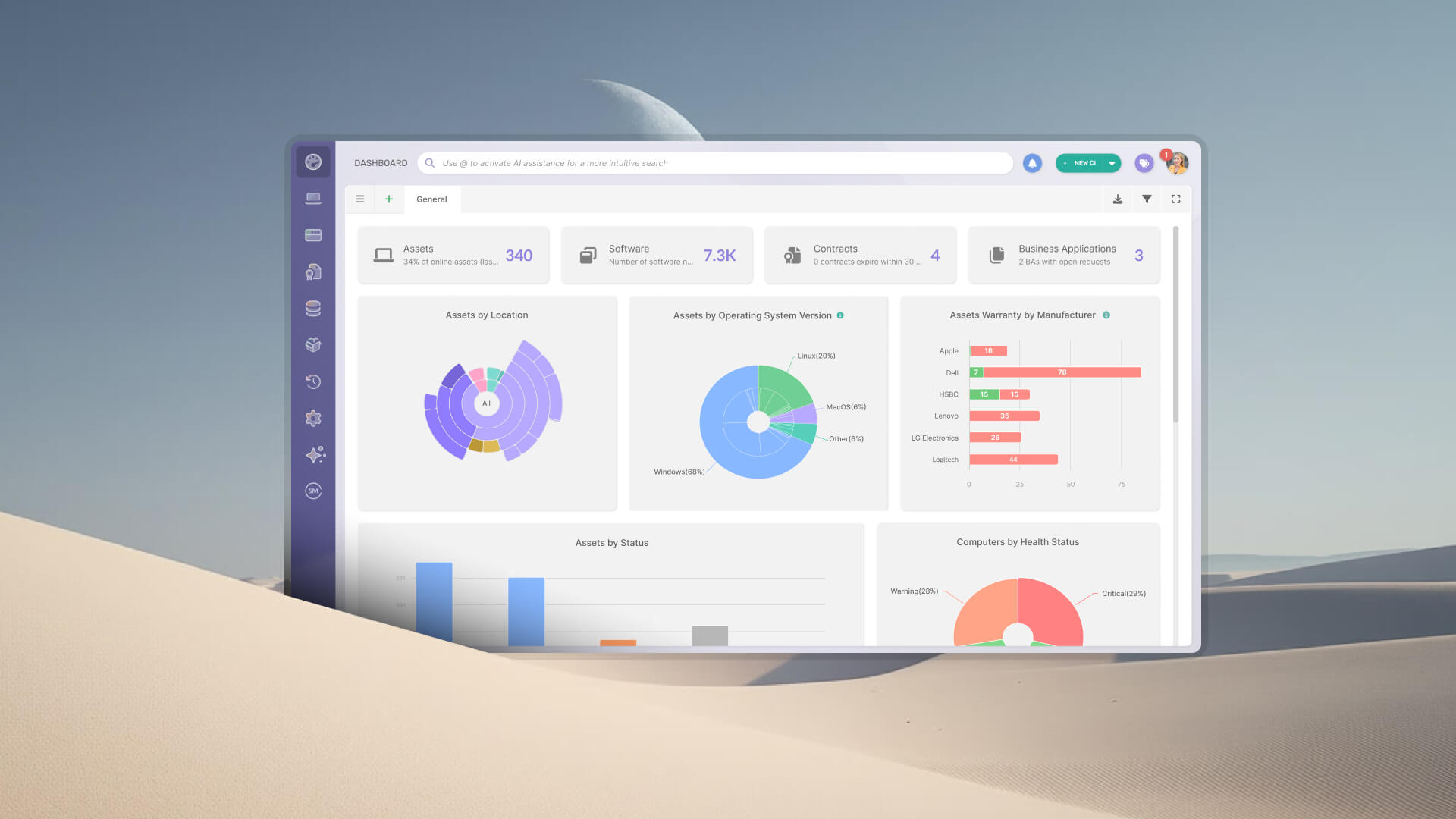

For most public sector IT teams, a hardware asset audit is something that happens to them. Auditors arrive with little notice, documentation is scattered across spreadsheets, OneNote files, and email chains, and a lean team spends days reconstructing a picture of its own infrastructure. The result is a report nobody fully trusts, delivered under pressure to people who already doubted the data existed.
In a recent InvGate industry forum on public sector IT modernization, three government CIOs described exactly that experience, and what changed when they stopped managing assets manually. Their accounts make the case that a hardware asset audit does not have to be a crisis. When the inventory is structured, continuously updated, and exportable in seconds, the audit becomes the moment IT demonstrates its value to finance and leadership.
The problem is not that public sector IT teams are careless. It is that the tools most teams use to track hardware were never built for the scale and pace of government operations. Spreadsheets require someone to update them. That person has other responsibilities. Months pass. A device is reassigned or removed without anyone updating the record. By the time a CFO asks for a hardware report, the data is already out of date.
Finance needs hardware data for reasons that go beyond compliance: depreciation schedules, replacement forecasts, and budget justifications all depend on knowing what exists, what it cost, and when it will need to be replaced. When IT cannot answer those questions reliably, credibility suffers, and in government, credibility with finance is what determines whether IT gets the resources it needs.
Government IT teams operate with roughly 2 to 3 staff members per 100 devices, compared to approximately 10 in the private sector. Hardware replacement cycles run 5 to 6 years instead of 3. Budgets lock in 9 to 12 months in advance with no flexibility for emergency spending. And compliance frameworks like NIST 800-171 and CMMC require agencies to produce evidence of what hardware is connected to their networks, sometimes within hours of a request.
Shadow IT compounds the risk. Unauthorized devices can go undetected for years without continuous network scanning. In government environments where devices are frequently added by individual departments without central IT visibility, the inventory gap grows silently until an audit or a security incident forces the question.
Keith Bluestein is the Deputy CIO of the Judicial Branch of Arizona in Maricopa County, one of the largest court systems in the country. Before joining the courts, he spent two decades as a federal CIO at the US Small Business Administration, NASA, and the US Navy. When his organization needed to get its hardware inventory under control, the driver was not compliance. It was the CFO.
"Money makes IT go. We heard loud and clear from our CFO: 'I really need to get my hands around this.' We wanted to deliver something of true value to the CFO, which now opens the door to other things we want to do and basically gives us credibility for future resource asks."
Keith Bluestein, Deputy CIO, Judicial Branch of Arizona in Maricopa County
After implementing InvGate Asset Management, the result came faster than expected.
"Within days, we were compliant. We could produce a report that when we sent it to our finance team, they thought they were gonna cry. They'd never seen something so complete and neatly organized."
Keith Bluestein, Deputy CIO, Judicial Branch of Arizona in Maricopa County
That outcome was not just about clean data. It was about what that data made possible next: IT credibility with finance, and the budget conversations that follow from it.
An audit-ready hardware inventory is not a snapshot. It is a continuously updated record of every device, populated automatically and available on demand. Four capabilities make that possible in practice.
Automated discovery surfaces every device connected to the network, including unauthorized hardware. When a new device appears, IT knows immediately rather than discovering it during an audit.
Lifecycle tracking gives each asset a complete record: acquisition cost, depreciation, warranty expiration, end-of-life date, owner, and location, updated automatically without manual entries.
Export in seconds from custom views changes the experience of responding to an auditor's request. Producing a complete hardware report in one click rather than assembling data from multiple systems over days is the difference between a team that looks prepared and one that looks overwhelmed.
Automated alerts on warranties and contracts at configurable intervals ensure nothing expires without notice. In government, where emergency procurement is often impossible, a 120-day contract renewal alert is a budget protection mechanism, not a convenience.
"We say yes now to consistency. We say yes now to visibility. We say yes now to automations. And we don't have to break the budget by adding overhead and adding new teams."
Gabriel Colon, Assistant Director, City of Coppell, Texas

InvGate Asset Management gives public sector IT teams the hardware visibility they need without the implementation complexity enterprise tools typically require. It is no-code and configurable by the IT team without specialized resources or outside consultants, with cloud (SaaS) and on-premises deployment options with full feature parity for agencies with air-gap or data residency requirements.
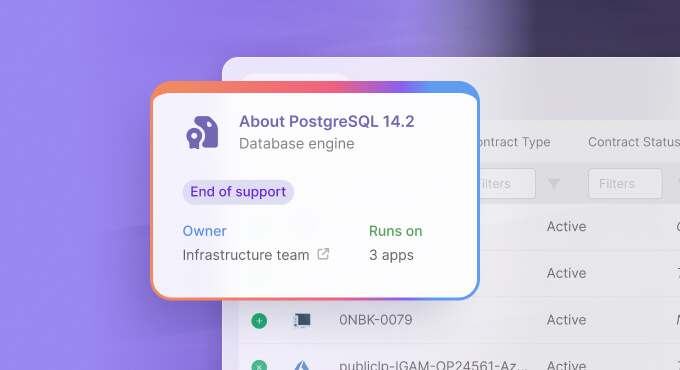
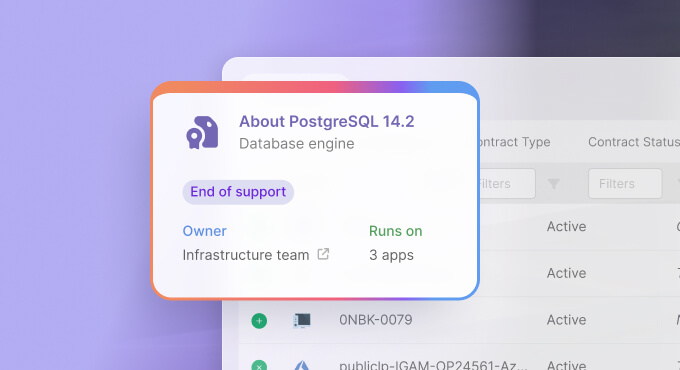
The platform provides continuous network discovery, full hardware lifecycle tracking, automated warranty and contract alerts, AI-powered Configuration Management Database (CMDB) auto-mapping for CI relationship building, and compliance-ready reports exportable in seconds. Atlas enriches end-of-life and end-of-support data for hardware, operating systems, and databases automatically. Smart Recommendations surfaces actionable risk and compliance signals before they become audit findings.
InvGate Asset Management is trusted by public sector organizations including NASA, the US Navy, the City of Atlanta Airport, San Diego Airport, the City of Carmel Indiana, Element U.S. Space & Defense, KARMAN Space & Defense, the Advocacia-Geral da União (AGU), and the Province of Oost-Vlaanderen, among others.
Start a 30-day free trial or talk to Sales to find the right plan. Both options give access to the full platform from day one.
The hardware asset audit that finance actually trusts is not a different kind of audit. It is the same audit, done with data that was always current, always complete, and always ready to export.
For public sector IT leaders, getting to that point is not just about passing the next audit: it is about building the institutional credibility that unlocks budget and earns the trust of the oversight bodies and finance departments that determine what IT can do next.

