









Contract Lifecycle Management (CLM) is the end-to-end management of an organization’s contracts. Many organizations streamline this practice with CLM software, platforms that centralize contract data and automate key tasks like document generation, approval workflows, version control, and tracking obligations and renewal dates.
In this blog post, we’ll define what CLM software is, what key features it should include, and we’ll share 11 CLM software options so you can choose the tool that best fits your needs and budget, starting with our own platform, InvGate Asset Management.
CLM software centralizes and automates the full contract lifecycle: creation, approval, execution, renewal, and expiration.
For IT teams, an ITAM platform like InvGate Asset Management can cover asset and license contracts without requiring a dedicated CLM tool.
Five key features to evaluate: centralized repository, workflow automation, version control, renewal alerts, and integrations.
Pricing varies widely: some vendors publish plans; others are quote-only.
CLM-ITAM/ITSM integration allows contract context to be used during Incident Management, service requests, and asset lifecycle decisions.
Before diving into the list, it’s important to clarify that InvGate develops and markets IT Service Management and IT Asset Management solutions, which means we are an active participant in the broader enterprise software market.
While we may compete with some of the vendors mentioned in this article, our goal is to provide accurate, transparent, and helpful information to help readers make informed decisions.
Our comparisons are based on publicly available information from vendor websites, product documentation, customer reviews (such as Gartner Peer Insights, G2, and Capterra), analyst reports, and independent testing or product demonstrations whenever possible. Each evaluation considers functionality, positioning, and pricing (when publicly available).
Information in this article is current as of April 2026, and will be reviewed and updated periodically to reflect product and market changes.
There are plenty of dedicated CLM tools out there. Here are 11 options to consider in 2026, starting with our own platform, InvGate Asset Management.

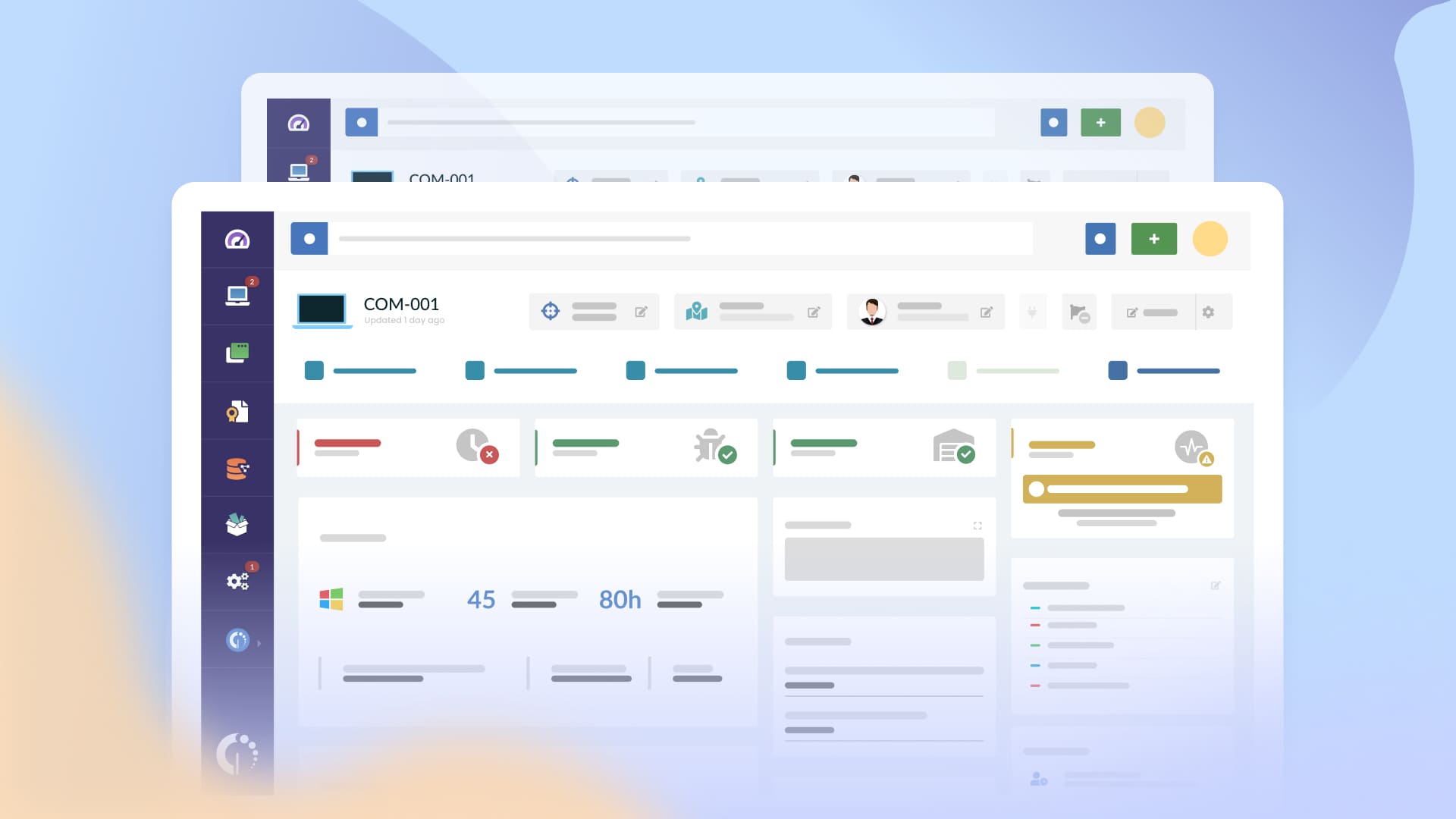
InvGate Asset Management is a no-code IT Asset Management platform that helps teams manage all types of IT assets, including contracts. Within the platform, each contract is treated as a Configuration Item (CI) inside an interconnected asset ecosystem, which means contract data is not isolated, but linked to the software, devices, and users it impacts.
You can register and manage both software contracts and asset contracts in your database, tracking terms, coverage, and ownership in one place. Software contracts support license acquisition and distribution by allowing licenses to be assigned (manually or automatically) to installed software or users, depending on the license type. Asset contracts, in turn, help record services such as maintenance, leasing, rentals, support, or warranties, and link those agreements to the specific assets they cover for easier monitoring and control.
Although InvGate Asset Management isn’t a dedicated CLM software platform, it includes key capabilities that are essential for effective Contract Management within IT environments. Below, we’ve highlighted key features that can help teams centralize contract data, reduce manual work, and maintain control across the contract lifecycle.
What makes the platform especially valuable is that contracts are only one part of the picture. Beyond contract-related features, InvGate Asset Management includes many additional capabilities that help teams gain complete visibility into their IT environment and make better operational decisions.
InvGate Asset Management also integrates natively with InvGate Service Management, so warranty and contract data is accessible directly from incident and asset request tickets - without middleware or manual lookups.
As of April 2026, the solution is referenced on the following review platforms:
InvGate Asset Management pricing is based on IP devices - network-connected assets like computers, servers, and network equipment. Each IP device includes two non-IP devices (monitors, headsets, and similar assets without a network address).
Not sure which plan is right for you? Start with a free 30-day trial - no credit card required. Or contact sales to learn how our platform can help you.
According to Gartner, DocuSign CLM® is a platform that focuses on streamlining and automating agreement processes for organizations, helping reduce reliance on manual or paper-based workflows. Its core offering includes eSignature, which enables electronic signing from virtually any location, device, and time.
DocuSign CLM is designed to manage the entire contract lifecycle, enabling organizations to create, edit, negotiate, and approve contracts digitally. It supports version control, workflow automation, document generation, collaboration across teams, configurable approval routes, audit trails, and integrations with other business systems to centralize contract data and improve visibility and control.
Based on DocuSign’s official product information, DocuSign CLM includes a broad set of capabilities to streamline contract workflows. Below, we highlight five features (not the only ones available) that reflect its core CLM functionality:
As of April 2026, the solution is referenced on the following review platforms:
DocuSign offers pricing plans for its eSignature product line, with both monthly and annual billing options (annual plans can provide discounts):
Note: In 2025, DocuSign launched Intelligent Agreement Management (IAM) - its rebranded enterprise offering that bundles CLM capabilities with AI-powered contract analysis, workflow automation (Maestro), and a smart agreement repository (Navigator). Organizations evaluating DocuSign for full Contract Lifecycle Management should ask about IAM plans specifically, as pricing and packaging differ from the eSignature tiers listed above.
 According to Gartner, Agiloft CLM Platform® is designed to automate and manage the contract lifecycle from creation through execution and renewal. It includes capabilities for contract authoring, negotiation, approval workflows, and document management, while supporting secure collaboration across stakeholders.
The platform centralizes contract data to improve visibility and support risk mitigation, compliance tracking, and milestone monitoring. It also integrates with enterprise systems and provides customizable reporting and analytics to streamline processes and reduce manual effort.
Based on Agiloft’s official product information, the platform includes a broad set of capabilities to support contract operations. Below, we highlight five key features (not the only ones available) that best represent its core CLM functionality:
As of April 2026, the solution is referenced on the following review platforms:
According to Gartner, Agiloft CLM Platform uses a subscription-based pricing model structured around the number of users and the functionality required. Pricing varies by package and supports different levels of features and customization, with monthly or annual billing options. Implementation services may be offered separately.
To get accurate pricing for your organization, you’ll need to request a quote from Agiloft. There is no free trial available.
 According to Capterra, ContractWorks® is a cloud-based Contract Management platform designed to help organizations streamline the contract lifecycle in a unified interface. It functions as a centralized repository to store and organize contracts securely, with SOC 2 Type 2 compliance.
The platform includes AI-powered search to quickly locate clauses and key terms, automated alerts to avoid missing critical dates, built-in eSignature capabilities, and collaborative editing features that support shared redlining.
Based on ContractWorks’ official product information, the platform offers a broad set of tools to manage contracts end to end. Below, we highlight five features (not the only ones available) that reflect its core CLM capabilities:
As of April 2026, the solution is referenced on the following review platforms:
ContractWorks offers two plan tiers, with packaging based on repository scale and included capabilities:
Since pricing varies by package and required capacity, we recommend visiting ContractWorks’ pricing page to evaluate the best fit for your organization.
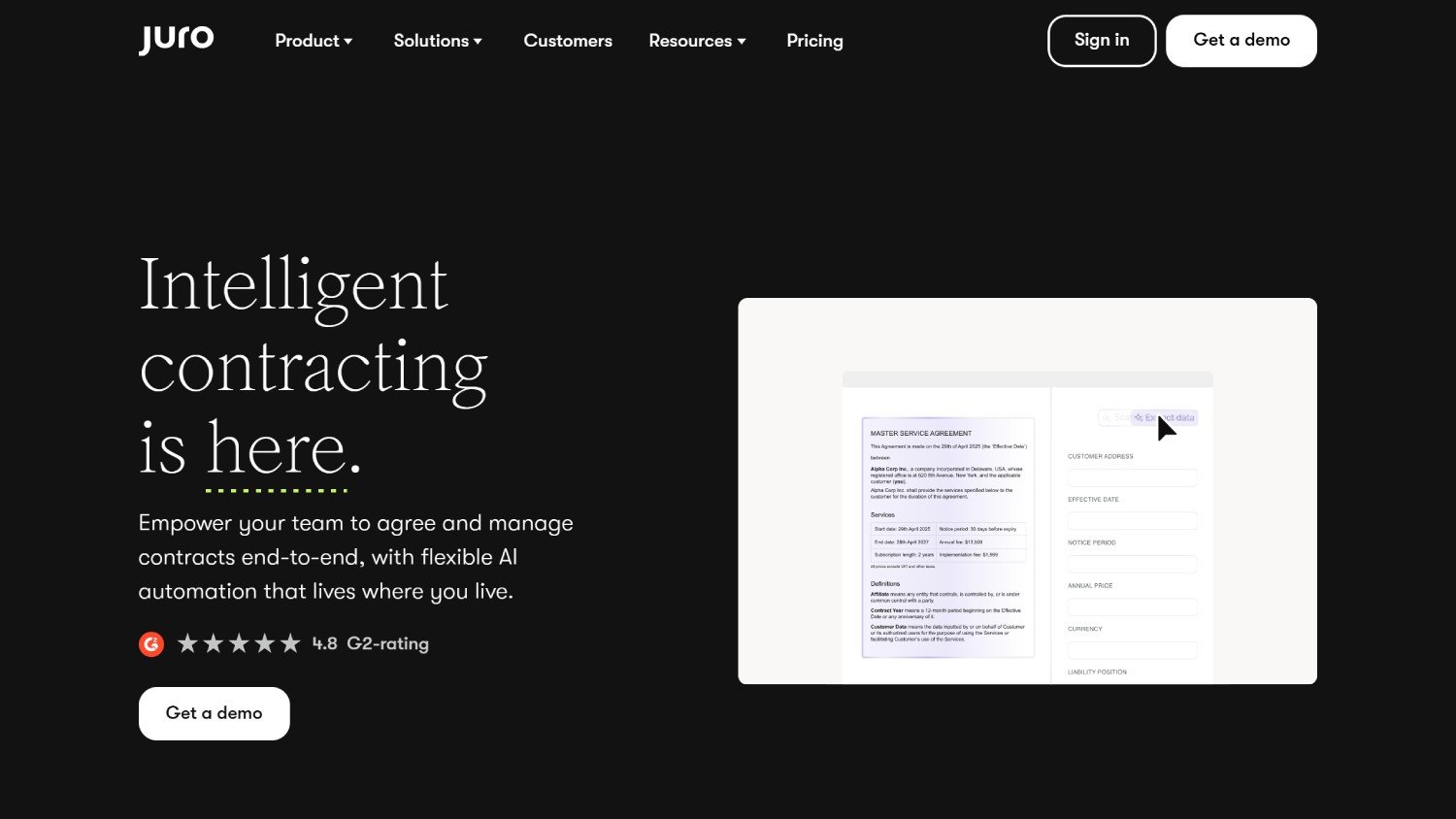
According to Capterra, Juro® is a cloud-based Contract Management platform that brings AI automation into the tools business teams already use. It enables teams to negotiate and manage contracts end to end, while allowing legal teams to retain oversight and control.
The platform operates in a secure, browser-native environment and automates the full contract lifecycle, from initiation to renewal. It also includes AI capabilities for drafting, reviewing, summarizing, and extracting metadata from incoming contracts, helping teams digitize and triage PDF agreements faster.
Based on Juro’s official product information, the platform offers a range of CLM capabilities designed for business-wide adoption. Below, we highlight three features that reflect its functionality:
As of April 2026, the solution is referenced on the following review platforms:
According to Juro’s pricing information, all plans include unlimited users, unlimited workflows, and unlimited templates, plus access to a range of out-of-the-box integrations (e.g., Slack and Google Drive). Deeper integrations such as Salesforce, HubSpot, and Workday may incur additional costs.
To evaluate pricing for your organization, you’ll need to request a quote from Juro.
 According to G2, Ironclad® is a Contract Lifecycle Management platform that supports contract work end to end, including contract creation, negotiation, management, and storage. Its goal is to streamline contracting processes so teams can reduce administrative workload and focus on higher-value legal and business work.
G2 also positions Ironclad as an AI-powered CLM platform used to manage contracts across multiple departments, such as sales, procurement, and NDAs, supporting collaboration, deal acceleration, and risk reduction through centralized contract workflows.
Based on Ironclad’s official product information, the platform emphasizes automation, AI assistance, and centralized contract data. Below, we highlight features that define its CLM approach:
As of April 2026, the solution is referenced on the following review platforms:
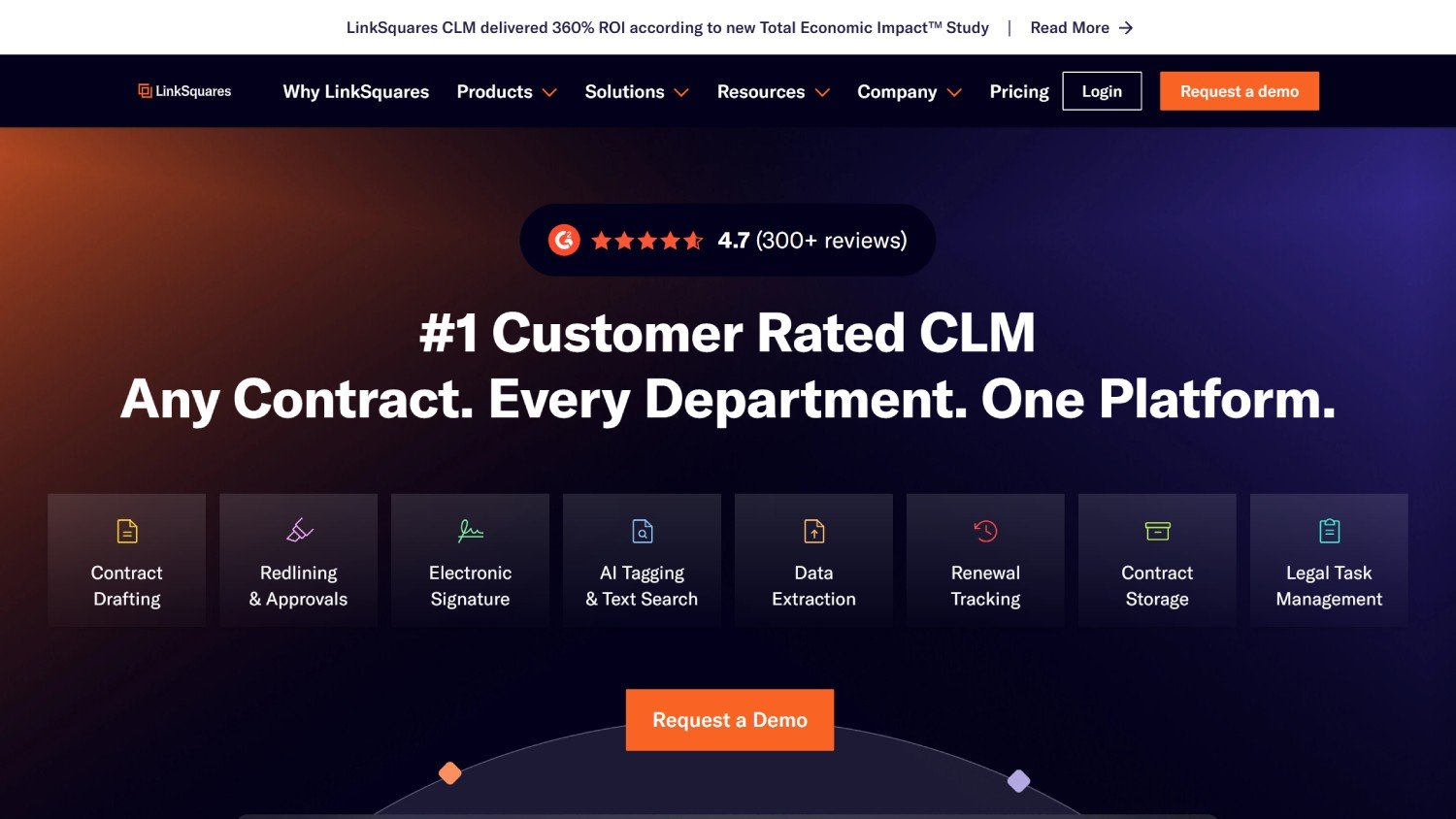 According to Gartner, LinkSquares CLM® is Contract Lifecycle Management software designed to support the full contract process, from creation and execution to analysis. It enables teams to draft, negotiate, approve, e-sign, and store contracts in a centralized repository.
The platform provides visibility into contract terms, obligations, and key dates, supported by search and reporting capabilities. Gartner also highlights LinkSquares’ focus on automating manual workflows, improving compliance, reducing risk, and integrating with other business systems to support collaboration between legal and business teams.
Based on LinkSquares’ official product information, the platform groups its CLM capabilities into several core modules. Below, we highlight five key features (not the only ones available) that best represent its approach:
As of April 2026, the solution is referenced on the following review platforms:
LinkSquares offers tailored pricing based on each organization’s contracting needs. To evaluate pricing for your use case, you’ll need to request a quote.
 According to Gartner, Conga CLM® is a Contract Lifecycle Management software designed to streamline and automate contract creation, negotiation, execution, and ongoing management. It provides a centralized platform to store and organize contract documents and supports compliance through capabilities such as clause management, version control, workflow automation, and e-signature integration.
Gartner also highlights features like collaboration, alerts for key dates, reporting, and analytics, aimed at improving contract visibility, mitigating risk, and reducing inefficiencies caused by manual handling and slow approval processes.
Based on Conga’s official product information, Conga CLM includes a broad set of capabilities to manage contract operations. Below, we highlight five key features (not the only ones available) that best represent its core CLM functionality:
As of April 2026, the solution is referenced on the following review platforms:
Conga provides customized pricing based on each organization’s needs, processes, and technology requirements. To evaluate pricing for your use case, you’ll need to request a quote.
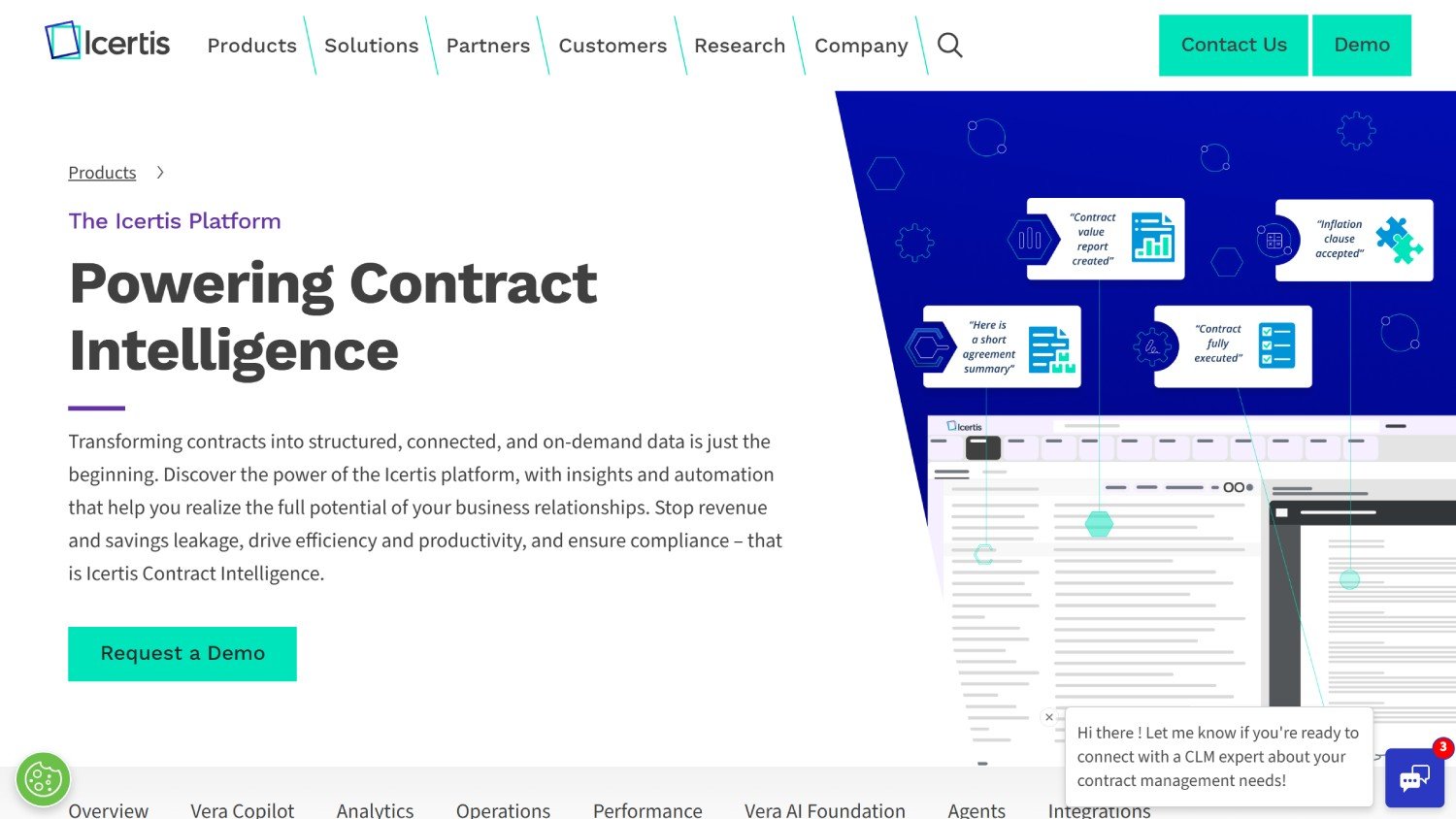
According to Icertis' official product page, Icertis Contract Management (ICM)® is a platform designed to help enterprises run contract operations at scale.
It centralizes contracts in a single repository that serves as a trusted system of record, standardizes how contracts move from draft to execution through governed workflows, and integrates with enterprise systems such as SAP, Microsoft, Salesforce, and Workday so teams can manage contracts without leaving their daily tools.
The platform also includes AI-driven capabilities (via Vera Copilot) to query contracts in natural language, surface summaries and insights, and accelerate drafting, negotiation, and approvals.
Based on Icertis' official product information, the platform organizes its core capabilities around five value propositions. Below, we highlight five features (not the only ones available) that best represent its approach:
Centralized contract repository with structured data — Ingest legacy and third-party contracts into one governed repository with indexing, version history, and contract relationships for full traceability.
AI-driven contract search with Vera Copilot — Query contracts in natural language to find summaries, insights, and key information across all agreements in real time, with filter-based refinement for more precise results.
Standardized workflows with role-based controls — Move contracts from draft to execution through clear, predictable workflows with defined ownership and self-service administration that doesn't rely on IT.
Faster drafting and negotiation — Start from approved templates and clause libraries, redline directly in Microsoft Word, and collaborate across teams to track and resolve deviations from approved terms.
Contract Management within existing enterprise systems — Manage contracts directly within SAP, Microsoft, Salesforce, and Workday, keeping contract details accurate across all systems without manual updates.
As of April 2026, the solution is referenced on the following review platforms:
Icertis does not publish pricing publicly. The platform uses a custom quote model tailored to each organization's needs, typically based on factors such as user volume, selected modules, contract volume, deployment options, and integration requirements. To evaluate pricing for your use case, you'll need to contact Icertis directly and request a quote.
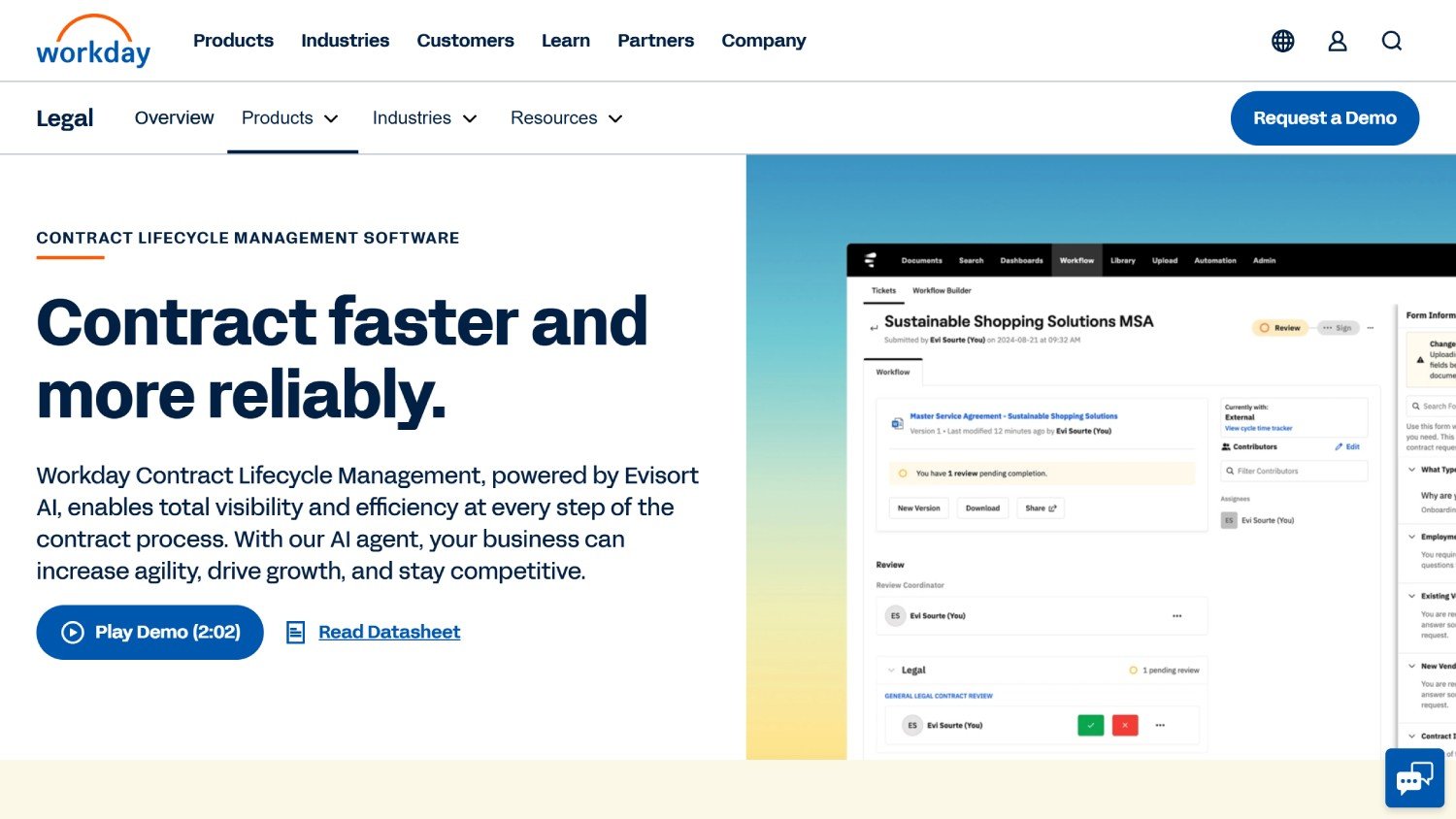 According to Workday’s datasheet, Workday Contract Lifecycle Management® is an AI-native Contract Lifecycle Management platform designed to automate manual contract tasks, surface risks and opportunities, and improve collaboration across legal and business teams. It supports end-to-end contract workflows and includes a unified, intelligent contract repository to centralize contract visibility across the organization.
The platform is positioned to support contract use cases across Legal, Procurement, Finance, HR, RevOps, Compliance, M&A, and InfoSec, providing configurable workflows and dashboards for reporting, compliance, and renewals tracking.
Based on Workday’s official datasheet, the platform includes a broad set of capabilities for contract automation and contract intelligence. Below, we highlight five key features (not the only ones available) that best represent its approach:
As of April 2026, the solution is referenced on the following review platforms:
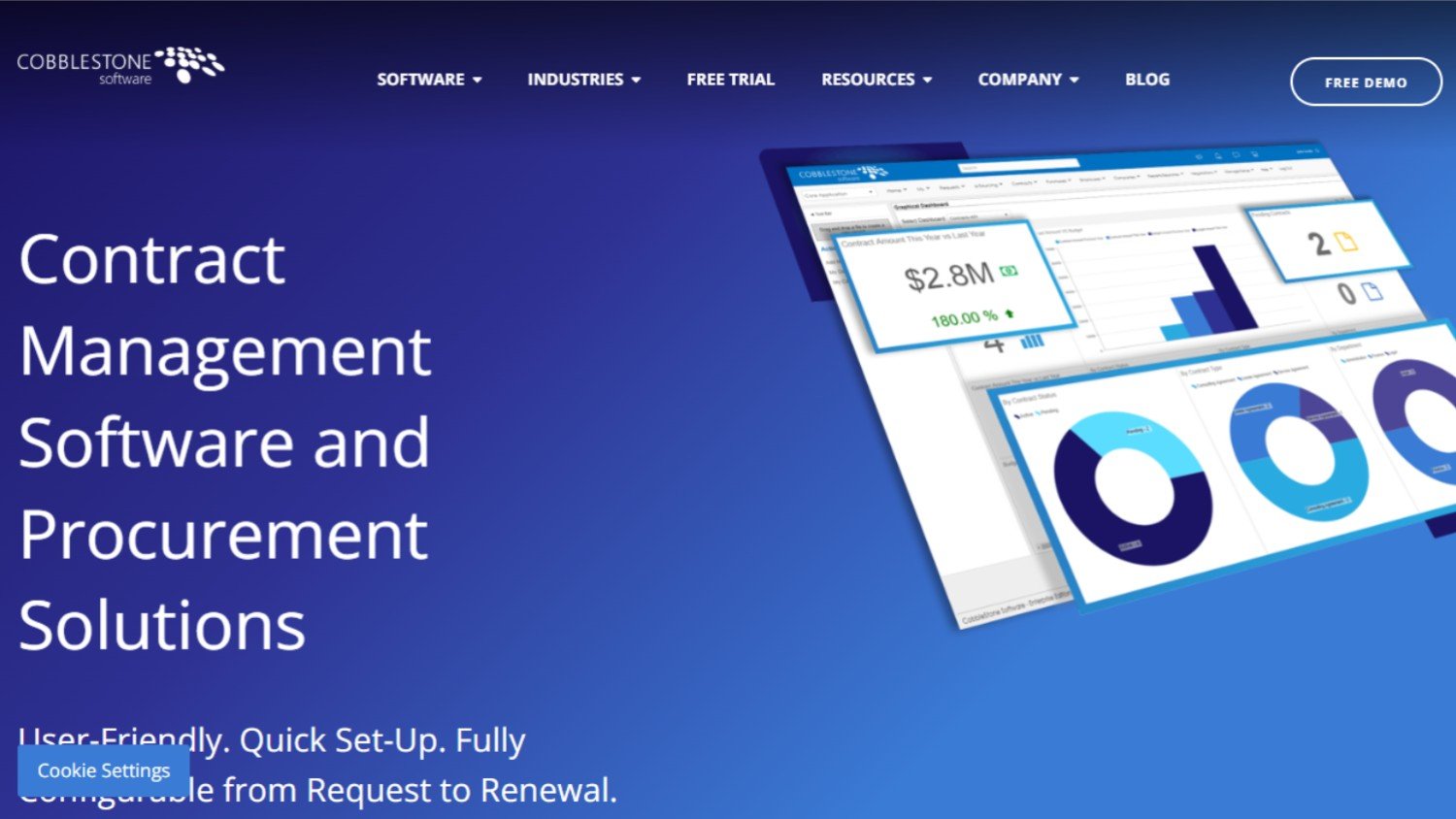 According to Gartner, CobbleStone Contract Insight® is Contract Management software designed to automate the creation, negotiation, execution, and monitoring of contracts. It provides capabilities such as document management, workflow automation, electronic signatures, compliance tracking, reporting, and analytics.
The platform enables centralized storage and configurable approval workflows, supporting organizations that need stronger contract visibility, obligation management, risk mitigation, and adherence to internal policies and regulatory requirements.
Based on CobbleStone’s official product information, the solution is available in three editions:
Based on CobbleStone’s official product information for the Enterprise Edition, CobbleStone Contract Insight includes a broad set of CLM capabilities. Below, we highlight five key features (not the only ones available) that best represent its approach:
As of April 2026, the solution is referenced on the following review platforms:
According to Gartner, CobbleStone Contract Insight uses a tiered subscription pricing model, typically structured around the number of users and configurable modules required. Pricing varies by deployment option (cloud vs. on-premises) and may increase based on add-ons, integrations, or advanced capabilities, with enterprise-level and custom solutions available.
CobbleStone offers a 30-day free trial.
CLM software stands for Contract Lifecycle Management software. In a nutshell, it’s a tool that helps businesses manage the entire lifecycle of a contract — from creation and negotiation to execution, renewal, and expiration.
The goal is to keep contracts organized, make sure nothing gets missed, and reduce manual work. With the right CLM solution, teams can stay on top of key dates, track obligations, and improve overall contract visibility.
Choosing the right CLM software is mostly about matching the platform’s strengths to your contract reality: contract volume, process complexity, stakeholders involved (Legal, Sales, Procurement, Finance), and the level of automation you actually need.
A good CLM tool should help you centralize contracts, reduce manual work across the lifecycle, and give you reliable visibility into risk, renewals, and obligations. The sections below break down the most important capabilities to prioritize when comparing vendors.
CLM tools can vary widely: some focus on self-serve contract workflows for business teams, while others lean into enterprise governance, analytics, or highly configurable automation. Still, most solid CLM platforms share a core set of features that define their value.
Here are five CLM features worth prioritizing:
Most CLM platforms manage renewals and obligations by combining contract data capture with automated monitoring. Once contracts are centralized, CLM tools track key dates (end dates, renewal windows, notice periods, support expirations) and link them to alerts, tasks, or workflow triggers so teams can take action before deadlines are missed.
On the obligations side, CLM tools typically surface commitments and contractual responsibilities through structured fields, searchable clauses, and reporting dashboards. Many solutions also include AI-based extraction to identify obligations, renewal terms, and risk clauses automatically, turning contracts into actionable records that support compliance monitoring, audits, and ongoing governance.
CLM software rarely works in isolation. Contracts impact procurement, Vendor Management, IT services, compliance, budgeting, and renewal planning, so the best CLM tools are the ones that can connect contract data to the systems teams already use.
Integrations, ownership, and pricing transparency are also important evaluation points, especially for organizations that want CLM to support broader operational workflows.
Yes. Many CLM tools integrate with business systems (CRM, ERP, document repositories, collaboration tools), and that ecosystem can extend naturally into IT workflows through ITAM platforms and ITSM platforms. This is especially relevant when contracts involve IT assets and services, such as software licenses, SaaS subscriptions, support agreements, warranties, leasing, maintenance, and vendor commitments.
When CLM data is connected to ITAM/ITSM workflows, teams can use contract context during service delivery and asset decisions - for example, verifying warranty coverage during incident handling, tracking license entitlement during software requests, managing vendor renewals with accurate contract terms, and avoiding cost leakage from missed obligations or unwanted auto-renewals.
InvGate Asset Management and InvGate Service Management are an example of this integrated ecosystem in practice: asset and license contracts are visible from within service tickets, warranties can be checked directly from the incident view, and the integration is native - no middleware required. This makes contract context actionable at the moment it's needed, without leaving the ITSM workflow.
Some vendors publish entry-level pricing, but many CLM providers use quote-based models because pricing often depends on factors like contract volume, modules, integrations, deployment requirements, and implementation services. This is especially common in enterprise-focused CLM tools where packaging is tailored to the organization’s complexity.
If pricing isn’t public, the best approach is to treat the quote process as part of your evaluation. Ask for transparent breakdowns (platform, add-ons, integrations, AI capabilities, implementation services), clarify what is included in each tier, and confirm whether costs scale by users, contract volume, storage, workflows, or integrations. It’s also worth requesting a demo or pilot to validate how much work will be automated in practice.
Disclaimer: All product names, logos, and brands are property of their respective owners. All company, product, and service names used on this site are for identification purposes only. Use of these names, trademarks, and brands does not imply endorsement. Comparisons are based on publicly available information as of April, 2026 and are provided for informational purposes only.


