










Poor Software License Management (SLM) rarely feels like a problem, until it becomes one. Unexpected audit findings, unused licenses draining budgets, compliance risks, and limited visibility into who is using what software are some of the most common pain points IT teams face. Without a structured approach, software spending becomes reactive, fragmented, and unnecessarily expensive.
This is where Software License Management tools make a measurable difference. These solutions help organizations centralize license data, track usage, reduce waste, and stay compliant with vendor agreements.
In this article, we compare 8 Software License Management tools, reviewing their core capabilities, key features, ratings, and pricing models to help you evaluate which option best fits your needs.
Selecting a Software License Management tool is rarely about finding the "most powerful" solution. In practice, the right choice depends on how well a tool aligns with your organization's software environment, licensing complexity, and operational risks. These high-level considerations can help frame evaluation decisions.
Software License Management is the practice of tracking, governing, and optimizing software usage rights within an organization. It encompasses the full operational cycle: from software acquisition and entitlement registration, to usage monitoring, compliance reconciliation, and contract renewal management.
In concrete terms, SLM answers three recurring questions: what software has the organization acquired the right to use, how is that software actually being used, and whether current usage aligns with contractual terms. Software Entitlement Management (the process of recording and validating what an organization is licensed to run) sits at the core of this discipline. The goal is to prevent both under-licensing (which creates compliance exposure) and over-licensing (which wastes budget on unused rights).
The distinction between SLM as a practice and as a software category matters here. SLM software (also referred to as License Management software or SLM software) automates and centralizes this practice, replacing spreadsheets and manual processes with a structured system of visibility and control.
InvGate Asset Management includes a Software Compliance module that covers the core SLM workflows (discovery, entitlement registration, metering, and reconciliation) within a broader IT Asset Management software platform, without requiring separate tooling for each function.
The terms are often used interchangeably, but they describe different scopes of practice.
Software Asset Management (SAM) is the broader discipline. It covers the full lifecycle of software within an organization: procurement, inventory, license governance, SaaS Management, spend optimization, and regulatory compliance. A full overview of platforms that support this scope is available in our guide to Software Asset Management tools.
Software License Management is a focused subset within SAM. It concentrates specifically on license entitlements — what was purchased, how much is being used, whether there are compliance gaps, and when contracts expire. SLM does not typically address the full software lifecycle; it addresses the rights layer.
In practice, this means SLM can exist as a standalone capability in early-stage IT governance, while SAM typically requires more mature processes and cross-functional integration. Many IT Asset Management software platforms, including InvGate Asset Management, cover SLM as part of broader SAM capabilities. This is particularly relevant for teams looking to avoid tool sprawl while maintaining strong license compliance software controls.
At its core, SLM software operates through a recurring workflow: discover what's installed, validate entitlements, reconcile the gap, and take corrective action.
The typical operational flow includes:
The discovery layer differs meaningfully between tool categories. On-premise-focused software license tracking software relies on agents or network scanning to detect installed applications. SaaS-oriented platforms use API integrations and identity-layer data to map application access and usage patterns. Some platforms handle both — a capability worth prioritizing if your environment is hybrid.
InvGate Asset Management combines both methods: an agent for endpoint software discovery (including usage metering) and a Software Compliance module for entitlement reconciliation. Teams managing IT Inventory Management software alongside license governance will find this unified approach reduces the need for parallel tooling.
Software License Management tools are not just administrative helpers, they are risk-reduction mechanisms. When license data is scattered or outdated, organizations expose themselves to operational, financial, and compliance issues that are difficult to detect until they escalate. These tools directly address the structural gaps that make software environments hard to control.
Common operational risks include:
By reducing these risks, Software License Management tools enable measurable organizational outcomes. Teams gain stronger compliance posture, tighter control over software spending, clearer visibility into the application landscape, and better foundations for informed decision-making.
Before diving into the comparison, it is important to clarify that InvGate develops and markets IT Asset Management and IT Service Management solutions, and therefore participates in this software category. Some of the vendors mentioned here may overlap with or compete against InvGate’s capabilities.
Despite this, our objective is to provide clear, neutral, and practical information that helps readers understand the landscape of Software License Management tools. The intent of this analysis is educational and comparative, not promotional.
This comparison is based on publicly available information, including vendor websites, product documentation, knowledge bases, and feature descriptions. We also reviewed user feedback and ratings from platforms such as Gartner Peer Insights, G2, and Capterra, along with independent product materials where accessible.
When possible, we cross-checked functional claims against product demos, technical documentation, or credible secondary analyses. Sources were accessed and reviewed during February 2026.
Each tool was evaluated using consistent, high-level criteria designed to reflect common Software License Management requirements:
These criteria are intended to capture practical decision factors rather than exhaustively document every feature. Information accurate as of February 2026. Subject to change without notice.
Choosing a Software License Management tool is less about feature quantity and more about operational fit. The right solution should reduce risk, improve visibility, and support decision-making without adding unnecessary complexity. Below are key capabilities buyers should evaluate when comparing tools:
License visibility and normalization – Assess how the tool consolidates and standardizes license data from multiple sources, reducing duplication and inconsistencies across vendors and contract types, and enabling calculation of the Effective License Position (ELP: the balance between entitlements and actual usage).
Focusing on these capabilities helps buyers prioritize tools that deliver long-term control and operational clarity rather than short-term feature appeal.
Not all Software License Management challenges look the same. The relevance of certain capabilities often depends on the structure of your software ecosystem, procurement model, and operational complexity.
Framing evaluation through these scenarios helps buyers avoid over-engineering their selection process and instead align tooling decisions with real operational needs.
Information accurate as of February 2026. Subject to change without notice.
Software License Management tools vary significantly in scope, architecture, and target use cases. Some solutions focus primarily on SaaS environments, others specialize in enterprise compliance scenarios, and some are designed for highly technical licensing models such as concurrent or engineering licenses.
The following tools represent a cross-section of approaches commonly evaluated by IT, procurement, and Software Asset Management teams:

InvGate Asset Management is a modern and flexible IT Asset Management solution with robust Software License Management capabilities.
It’s designed to help organizations automatically discover software assets, track license usage, maintain compliance, and optimize costs - all without writing a single line of code. Thanks to its centralized platform and powerful automation features, it gives IT teams full visibility and control over software usage across physical, virtual, and cloud environments.
InvGate Asset Management is best for organizations that want to govern not just their software, but their entire IT ecosystem through a unified platform that extends beyond Software License Management. It delivers an enterprise-grade experience with a pricing model that adapts to organizational maturity and supports long-term growth.
Managing software licenses does not have to be a complex or purely reactive process. With the right structure and supporting tools, organizations can transform Software License Management into a predictable and controlled practice.
This is how to manage licenses with InvGate Asset Management:
Let’s break down each step and examine how InvGate Asset Management supports this workflow.
Effective Software License Management always starts with reliable asset visibility. Organizations need to understand not only what software exists, but also where it is installed and which devices support it.
InvGate Asset Management simplifies this step through its Agent, which automatically detects installed software while also collecting hardware data. This creates a unified inventory where software records are directly tied to physical assets. The Agent also enables software metering, allowing teams to analyze how applications are actually used.
Once software visibility is established, the next step is introducing contractual context. License compliance cannot be evaluated without understanding what the organization is legally entitled to use.
InvGate Asset Management allows teams to upload and manage detailed contract information. The platform distinguishes between asset-related contracts and software-focused agreements, which is critical for maintaining accurate governance models. Software contracts can include associated applications, license counts, allocation logic, and cost structures.
With inventory and contracts in place, organizations can begin validating whether installations align with acquired entitlements. This is where Software License Management transitions from documentation to control.
The Software Compliance module correlates software data with contractual records to detect inconsistencies, potential compliance gaps, and optimization opportunities. Instead of manually reconciling spreadsheets, teams gain structured visibility into licensing risks and misalignments.
Visibility alone is not enough. Sustainable control requires continuous monitoring mechanisms that help teams quickly detect deviations and emerging risks.
InvGate Asset Management enables the creation of dedicated dashboards that centralize license-related indicators. Teams can visualize compliance states, installation patterns, and other governance signals while leveraging alerts and automated reports. This supports proactive management instead of reactive troubleshooting.
When inconsistencies are detected, rapid and controlled remediation becomes essential. Software License Management should not stop at identifying problems, it must also support resolution workflows.
InvGate Asset Management includes operational features that allow teams to act directly on affected assets. For example, if unauthorized or non-compliant installations are identified, organizations can remotely remove software using the Software Deployment capability. This closes the loop between detection and enforcement, reducing operational friction and compliance exposure.
Want to see it in action? Request a demo of InvGate Asset Management.
As of February 2026, InvGate Asset Management holds the following ratings across major review platforms:
InvGate Asset Management pricing is based on IP devices - network-connected assets like computers, servers, and network equipment. Each IP device includes two non-IP devices (monitors, headsets, and similar assets without a network address).
Not sure which plan is right for you? Start with a free 30-day trial - no credit card required. Or contact sales to learn how our platform can help you.
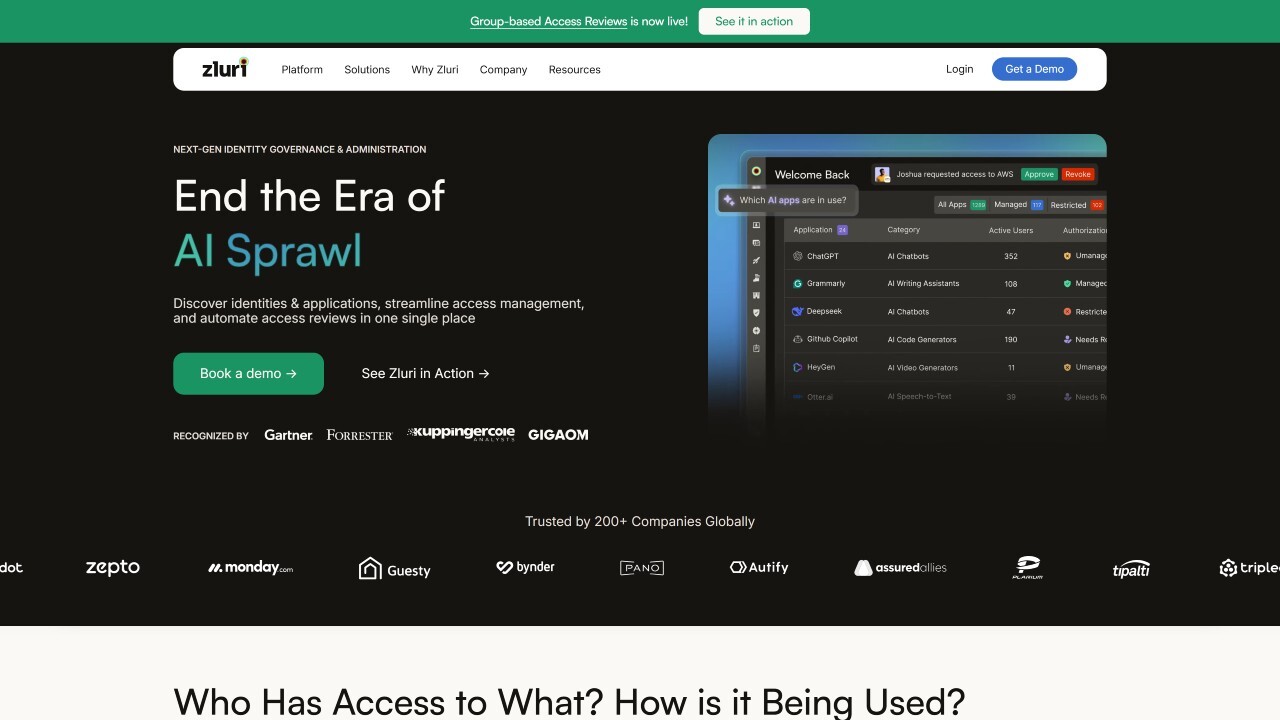 According to G2, Zluri is positioned as a next-generation Identity Governance and Administration (IGA) platform designed to help IT and security teams discover identities and applications, streamline Access Management, and automate access reviews through a unified interface. The platform emphasizes reducing manual effort while supporting organizations in enforcing access controls tied to regulatory frameworks such as SOX, HIPAA, and SOC 2.
In practice, Zluri combines identity-centric governance with SaaS visibility capabilities, aiming to ensure that the right users maintain appropriate access to the right applications while minimizing administrative complexity.
Zluri is particularly suited for SaaS-driven organizations that struggle with application sprawl, shadow IT, and identity governance challenges. It is often considered by teams seeking stronger control over cloud application usage, access patterns, and subscription lifecycles.
As of February 2026, Zluri is referenced on the following review platforms:
Zluri does not publicly disclose detailed pricing on its website. According to Gartner, Zluri follows a subscription-based pricing approach typically structured on a per-user or per-employee basis, with tiered plans that vary by features and usage scope.
The pricing model is designed to align with organizational size and requirements, and custom pricing options may be available for enterprises with more advanced governance or integration needs.
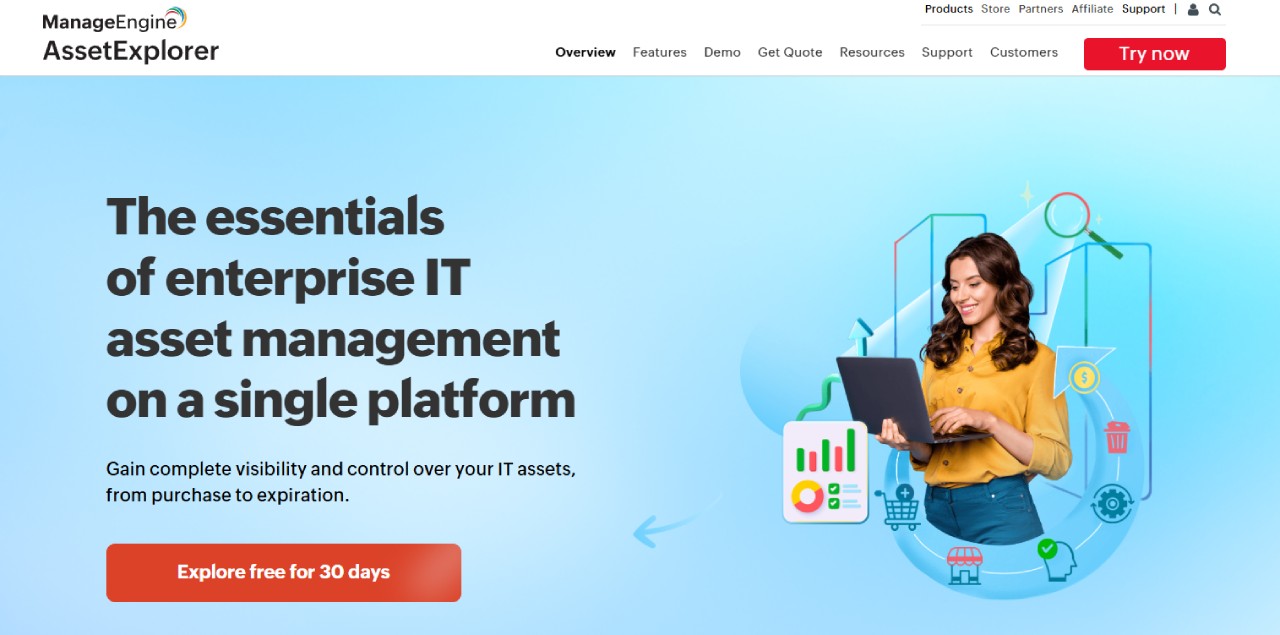
According to Gartner, ManageEngine AssetExplorer is an IT Asset Management solution designed to help organizations track and manage IT assets throughout their lifecycle. The platform provides capabilities for Inventory Management, hardware and software tracking, license compliance, contract and warranty records, as well as mechanisms to support audits and asset utilization analysis.
AssetExplorer also emphasizes automated asset discovery within networks and integration with help desk systems, positioning itself as a tool for maintaining accurate asset data while reducing administrative overhead and cost inefficiencies.
ManageEngine AssetExplorer is typically suited for organizations seeking an IT Asset Management platform with built-in Software License Management capabilities. It is often considered by IT teams that prioritize broad asset tracking, compliance visibility, and integration within the ManageEngine ecosystem.
According to the AssetExplorer product page, these are its main features:
As of February 2026, ManageEngine AssetExplorer is referenced on the following review platforms:
According to the ManageEngine AssetExplorer pricing page, the solution is offered under multiple editions designed to support different usage scenarios and organizational sizes.
Pricing varies depending on both the selected deployment model (cloud or on-premises) and the volume of assets under management. Based on publicly available figures, representative examples include:
As with most asset-based licensing models, final costs depend on infrastructure size and edition selection.
 According to Gartner, EZO AssetSonar is positioned as a comprehensive IT Asset Management platform designed to provide visibility and control across hardware, software, and license management. The solution emphasizes software discovery, license tracking, and normalization capabilities intended to help organizations reduce compliance risks, control IT spending, and manage challenges such as SaaS sprawl and shadow IT.
The platform also highlights integrations with commonly adopted IT and endpoint management tools, aiming to consolidate asset data and reduce manual administrative effort across technology environments.
AssetSonar is typically suited for organizations looking for a cloud-based IT Asset Management solution with strong Software Asset Management and SaaS visibility capabilities. It is often evaluated by teams seeking to manage application sprawl, license allocation, and software governance within distributed or SaaS-heavy environments.
Based on AssetSonar’s product materials, the platform emphasizes the following capabilities:
As of February 2026, AssetSonar is referenced on the following review platforms:
According to AssetSonar’s pricing page, detailed pricing information is not publicly disclosed. The available plans display “Let’s Talk” instead of published figures, which indicates that costs are likely determined through direct vendor consultation.
As a result, organizations evaluating AssetSonar cannot independently verify exact subscription costs or scaling thresholds. Pricing may vary depending on factors such as deployment scope, managed assets, and selected feature sets.
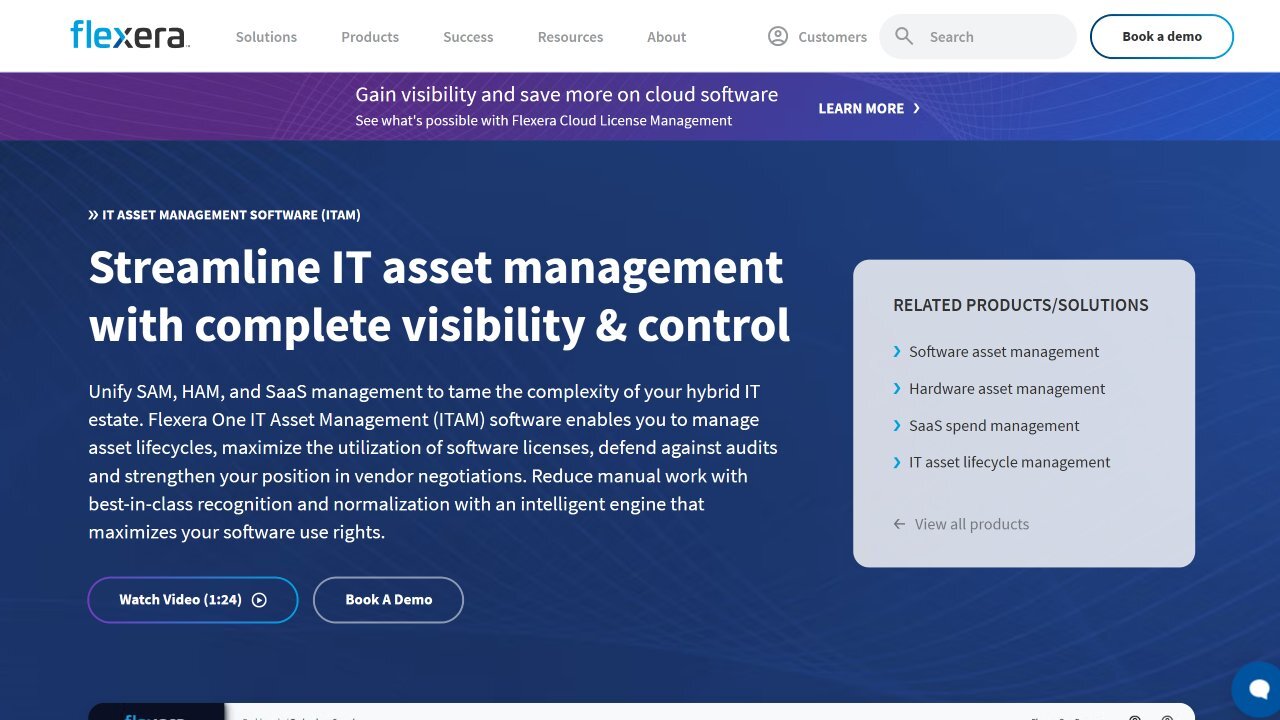
According to the Flexera ITAM Solution Datasheet, Flexera One IT Asset Management is positioned as a solution designed to deliver visibility, control, and optimization across complex hybrid environments. The platform emphasizes asset discovery, normalization, license compliance reporting, usage metering, and risk identification capabilities intended to help organizations manage software, hardware, cloud, and SaaS assets.
The datasheet highlights Flexera’s focus on supporting compliance initiatives, mitigating shadow IT risks, and improving cost efficiency through automation, enriched inventory data, and integrated financial and entitlement intelligence.
Based on the described capabilities and references to hybrid IT estates, complex environments, and large-scale audit scenarios, the solution appears oriented toward organizations with mature IT Asset Management and Software Asset Management requirements.
Based on the Flexera ITAM solution datasheet, key capabilities include:
As of February 2026, Flexera One IT Asset Management is referenced on the following review platforms:
According to Gartner Peer Insights, Flexera One IT Asset Management uses a subscription-based pricing model typically structured around the number of managed assets or devices and the scope of included capabilities. The platform’s licensing may encompass areas such as hardware and software asset management, license optimization, and Cloud Management functionalities.
Flexera does not publicly disclose detailed pricing information. Costs are generally customized based on organizational size, deployment complexity, and selected feature sets, which requires prospective customers to engage directly with Flexera for current pricing details.
According to ServiceNow’s Software Asset Management product page, ServiceNow® SAM is positioned as a solution that enables organizations to track and manage software licenses across the enterprise from a unified platform. The offering emphasizes cost reduction, compliance management, and alignment of software usage with business needs, while operating on the ServiceNow AI Platform.
ServiceNow also frames SAM as part of a broader enterprise automation strategy, leveraging a single data model, workflow automation, and platform-level intelligence capabilities to simplify asset and license governance.
ServiceNow Software Asset Management is typically best suited for large enterprises or organizations already operating within the ServiceNow ecosystem. It is particularly relevant for teams seeking deep workflow automation, centralized governance, and tight integration with CMDB-driven operational models.
Based on ServiceNow’s product materials, key capabilities include:
As of February 2026, ServiceNow Software Asset Management is referenced on the following review platforms:
ServiceNow does not publicly disclose detailed pricing for Software Asset Management. Available commercial information indicates that licensing and subscription costs are typically customized based on factors such as deployment scale, selected modules, and enterprise requirements.
Organizations evaluating ServiceNow SAM must engage directly with ServiceNow to obtain current pricing structures and packaging details.
 According to the Altair SAO Datasheet, Altair SAO is presented as an Advanced Software Asset Optimization tool designed to visualize and analyze global software inventories and utilization rates across facilities, departments, and users. The solution focuses on helping organizations identify underutilized software assets and improve planning and forecasting through detailed usage intelligence.
The datasheet also emphasizes SAO’s orientation toward environments with complex software licensing systems, highlighting Altair’s domain expertise in HPC, business analytics, and license management scenarios.
Based on the capabilities and positioning described in the datasheet, Altair SAO is particularly well suited for engineering-driven organizations and HPC-intensive environments where concurrent licensing, utilization monitoring, and capacity planning are critical operational concerns.
As outlined in the Altair SAO Datasheet, the solution includes:
Pricing is not publicly disclosed by the vendor.
 According to the License Dashboard License Manager Version 12 Datasheet, License Manager is positioned as a Software Asset Management solution designed to help organizations manage and optimize software licenses across data center, cloud, and desktop environments. The platform emphasizes automated entitlement validation, software inventory integration, and mechanisms intended to reduce compliance risks and unnecessary license spending.
The datasheet highlights License Manager’s ability to consolidate historic software records, connect with existing inventory sources, and support optimization scenarios for complex vendors such as IBM and Oracle.
License Dashboard License Manager is typically suited for organizations with mature Software Asset Management practices, particularly those managing complex licensing models in data center or hybrid infrastructures. It is especially relevant for environments where compliance monitoring and vendor-specific optimization are operational priorities.
Based on the License Dashboard License Manager Version 12 Datasheet, key capabilities include:
As of February 2026, License Dashboard License Manager is referenced on the following review platforms:
According to Gartner, License Dashboard License Manager follows a subscription-based pricing model structured around the number of managed software assets or users. The solution is typically offered in tiers that scale with asset volumes, with additional modules and capabilities available as optional add-ons.
Pricing is not publicly disclosed by the vendor and is commonly determined through annual or multi-year agreements tailored to deployment size and organizational requirements.
Many teams assume they can rely on spreadsheets or basic asset tracking for longer. In practice, gaps in license visibility tend to show up early, even in relatively small environments.
A few patterns usually indicate that manual tracking is starting to fall short:
Individually, these are manageable. Together, they point to a lack of control over license position and lifecycle. That’s typically when teams start evaluating tools designed to centralize entitlement data, automate reconciliation, and provide consistent reporting.
Disclaimer: All product names, logos, and brands are property of their respective owners. All company, product, and service names used on this site are for identification purposes only. Use of these names, trademarks, and brands does not imply endorsement. Comparisons are based on publicly available information as of February, 2026 and are provided for informational purposes only. ServiceNow is a registered trademark of ServiceNow, Inc. InvGate is not affiliated with, sponsored by, or endorsed by ServiceNow.
Software License Management is the discipline of tracking, governing, and optimizing software usage rights within an organization. It involves understanding what software is deployed, which licenses or entitlements have been acquired, and whether usage aligns with contractual terms, helping organizations reduce compliance risks and improve cost control.
Although feature sets vary across vendors, most Software License Management tools aim to provide software discovery, normalization, entitlement tracking, compliance evaluation, and reporting capabilities. The importance of each function depends largely on factors such as deployment models, licensing structures, and governance requirements.
Software License Management tools support audits and compliance initiatives by centralizing software, license, and usage data into a structured system. By correlating entitlements with observed deployments and usage patterns, these tools enable organizations to respond more efficiently to audits and detect potential inconsistencies before they become operational or financial risks.


