Many ITSM platforms promise fast deployment but require weeks or months of consulting services before teams can start using them effectively. For organizations with limited budgets, lean IT teams, or aggressive timelines, those implementation costs can become just as significant as the software itself.
Fortunately, not every ITSM platform follows that model. Some solutions are designed to be configured and managed internally, with intuitive administration tools, prebuilt workflows, and implementation processes that reduce the need for external consultants.
In this article, we'll look at some of the best ITSM software options that can be deployed and maintained without heavy reliance on professional services, along with the factors to consider when evaluating them.
Key takeaways
- Most ITSM platforms charge for professional services before your team can do anything independently — that cost rarely appears in the initial quote.
- The platforms in this list can be configured, deployed, and maintained by your own IT admins without external consultants or coding skills.
- No-code workflow builders, pre-built ITSM processes, and guided onboarding are the three signals that predict true implementation autonomy.
- Admin overhead after go-live matters as much as deployment speed: if every workflow change requires vendor involvement, you haven't gained autonomy.
The real cost of consultant-dependent ITSM
When IT teams evaluate ITSM software, most of the conversation focuses on features and per-agent pricing. What gets systematically underestimated is the cost that never appears in the initial quote: the professional services engagement required before your team can operate independently.
This isn't a niche problem. Many vendors require weeks of paid professional services before the team can do anything with autonomy. Add internal IT hours spent on setup, organizational friction from onboarding agents to a platform that isn't live yet, and the ongoing dependency that follows — and the total cost of a consultant-heavy deployment often rivals the annual license fee. Understanding this gap is foundational for anyone evaluating ITSM software for fast implementation.
There are three distinct forms of consultant dependency worth separating when you evaluate platforms:
-
The first is implementation dependency: the platform structurally requires an external partner or certified consultant to configure the environment before any team member can log in and do meaningful work. This is the most visible form, and it's the one vendors least like to acknowledge upfront.
-
The second is configuration dependency: once the platform is live, customizing workflows, categories, approval chains, or SLA policies requires either scripting knowledge or paid vendor involvement. An admin without dev skills hits a wall quickly.
-
The third is post-go-live maintenance dependency: this is the most damaging in the long run. Every time a process changes — a new department onboards, an escalation path shifts, a service catalog item needs updating — the team has to open a support ticket with the vendor or call a certified partner. The platform is live, but it's not really owned.
This post evaluates platforms on all three axes. The question isn't just "can we go live fast?" — it's "can we keep operating and evolving without anyone's permission?"
5 ITSM platforms your team can deploy and run without consultants
The platforms below were selected because they share a common trait: an IT admin with no external help can get from provisioning to first resolved ticket without a professional services engagement structurally blocking the way. Some offer optional consulting; none require it to go live.
Before we get into the list, a quick note: InvGate builds and offers IT Service Management and IT Asset Management solutions, making us an active player in this software market. Some vendors in this article are our competitors. Even so, we aim to deliver accurate, honest, and practical information that helps you make the best decision.
1. InvGate Service Management
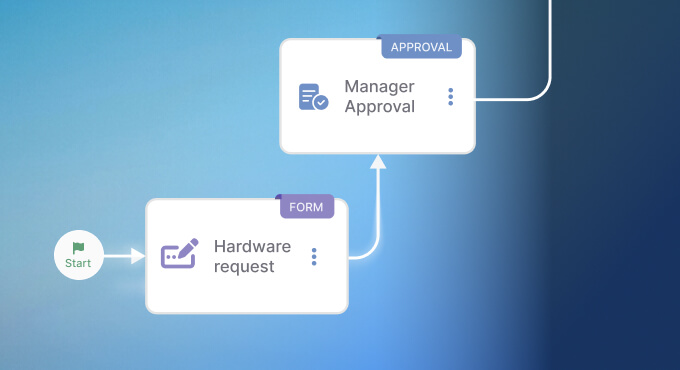
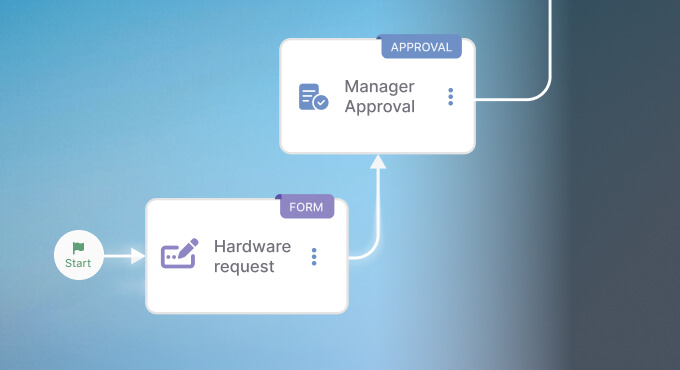
With InvGate Service Management, admins can build and modify workflows across multiple departments without development resources or ongoing support contracts. The no-code workflow builder uses a drag-and-drop visual canvas where every stage — approvals, conditions, automated actions, external triggers — is connected and visible in a single execution path. There's no scripting, no fragile rule builder, and no consultant required to make changes after go-live. Pre-built templates cover the most common ITSM processes so teams don't start from an empty canvas.
ITIL-aligned processes — incident, problem, change, service request — are available out-of-the-box. The self-service portal is deployable without front-end development skills.
Key features for self-implementation:
- Visual no-code workflow builder with drag-and-drop canvas, simplified conditionals, multi-path approvals, and a variables panel designed for non-technical users.
- Pre-built ITSM process templates (incident, problem, change, service request, onboarding, offboarding) available and configurable without starting from scratch.
- Self-service portal and service catalog configurable through the admin interface, no front-end development required.
- Workflows with built-in action connectors for identity providers, collaboration tools, and document systems.
- AI Hub included across plans: ticket routing, knowledge suggestions, automated summarization, and virtual agent available in Microsoft Teams and WhatsApp.
InvGate Service Management is a strong fit for lean IT teams that need to own the full service management lifecycle from day one. See how it works with a 30-day free trial.
2. Freshservice
Freshservice is Freshworks' ITSM platform, positioned at small-to-midsize IT teams that need IT Service Management aligned to ITIL without enterprise-grade complexity. The platform is designed to be deployable without the complexity of traditional enterprise ITSM tools.
Admins configure departments, roles, ticket routing, SLA policies, and automation rules through a settings-driven interface — no developers required. Incident, problem, change, and release management all follow ITIL best practices, but the platform doesn't require an ITIL consultant to configure them. The platform's documentation and in-app guidance help IT teams configure core modules and workflows quickly, making it feasible to launch without heavy reliance on external consultants.
Key features for self-implementation:
- Settings-driven interface for configuring departments, roles, SLA policies, and routing without developer involvement.
- ITIL-aligned incident, problem, change, and release management available out-of-the-box.
- No-code automation rules for ticket assignment, escalation, and notifications.
- In-app guided onboarding, knowledge base, and video tutorials to reduce time-to-value without external support.
- Freddy AI for intelligent self-service and ticket triage, available across plans.
- Self-service portal and knowledge base deployable without front-end development.
- Available as SaaS or on-premise..
3. TOPdesk
TOPdesk is a Dutch ITSM and ESM platform with more than 25 years in the market. The vendor's own positioning states that once set up, the platform is easy to use and maintain without coding or help from consultants — and the modular structure is built to support that. Teams can go live with Incident Management and the service catalog first, then activate Change Management, Problem Management, facilities, and HR service delivery as the scope expands. This directly reduces the complexity of the initial deployment and removes one of the main reasons teams call a consultant: trying to configure everything before going live.
For simpler deployments, the platform's guided setup tools and documentation allow an internal admin to configure the core modules without engaging a partner. TOPdesk does sell and actively market its own consultancy services, and for organizations with multi-department ESM scope or legacy data migration needs, a consultancy engagement becomes more likely in practice. For a standard deployment, though, external help is not structurally required.
Key features for self-implementation:
- Modular licensing: go live with incident and service catalog, add change, problem, and HR later — without reconfiguring the core platform.
- Admin UI-driven configuration for ticket routing, SLA policies, workflows, and self-service portal
- No coding required for post-go-live modifications.
- Pre-built templates and structured onboarding program included.
- Integrations with Microsoft Teams, Slack, and over 100 pre-built connections.
- Available as SaaS or on-premise.
4. SolarWinds Service Desk
SolarWinds Service Desk is a cloud-based IT Service Management platform designed for IT professionals and service desk teams looking to enhance service management capabilities without the implementation overhead typically associated with enterprise ITSM tools. It covers Incident Management, Problem Management, Change Management, Asset Management, and CMDB in a single product.
A configurable, drag-and-drop self-service portal and an easy-to-use knowledge base allow end users to resolve common issues independently, while rule-based automations handle ticket routing, prioritization, escalation, and notifications without manual intervention. SolarWinds offers a Self-Led Onboarding program that provides a project plan, video walkthroughs, and quick links to technical documentation for installation and configuration.
Key features for self-implementation:
- Drag-and-drop self-service portal and configurable service catalog, deployable without front-end development skills.
- ITSM processes (incident, problem, change, asset management, CMDB) available in a single product out-of-the-box.
- Rule-based automations for routing, prioritization, escalation, and notifications — no coding required.
- Self-Led Onboarding program with project plan, video walkthroughs, and documentation included.
- ESM capabilities for HR, Facilities, and Legal without additional products or professional services.
- Native integrations with Microsoft Entra ID, Jira, and SolarWinds Observability for teams already using SolarWinds infrastructure tooling.
5. Xurrent
Xurrent positions itself as a modern alternative to legacy ITSM complexity. The platform's stated approach is to use "just right" configuration and no-code workflows to bring typical deployments from the months-long timelines associated with traditional enterprise ITSM down to a matter of weeks.
Xurrent uses a simple licensing model with free self-service for all users — which changes the total cost math for organizations with large end-user populations relative to agent count. AI capabilities (branded as Sera AI) are built into the platform and cover virtual agent configuration, ticket automation, and incident management response.
Key features for self-implementation:
- No-code workflows with "just right" configuration model, designed to compress deployment from months to weeks
- Free acceptance environment included in the license for safe testing before production changes
- Standardized out-of-the-box structure with ITSM, incident management, and self-service portal ready without heavy upfront design
- Sera AI for virtual agent configuration, ticket automation, and AI-powered incident response
Disclaimer: All product names, logos, and brands are property of their respective owners. All company, product, and service names used on this site are for identification purposes only. Use of these names, trademarks, and brands does not imply endorsement. Comparisons are based on publicly available information as of June 2026 and are provided for informational purposes only.
How to Deploy ITSM Without Consultants
Getting an ITSM platform live without external help isn't just a matter of picking the right tool. It's a matter of sequencing the deployment so that your team isn't trying to configure everything at once, before anyone has had time to validate what actually works in your environment. The following five steps are the sequence that consistently produces faster, more sustainable go-lives for lean IT teams — regardless of which platform you choose.
Step 1: Define your scope before you open the platform
The most common reason teams end up calling a consultant isn't that the tool is too complex — it's that they started configuring without a clear scope. Before you touch a single setting, write down which processes you're going live with first. Incident management and service requests are almost always the right starting point. Problem management, change management, and multi-department ESM can follow. Going live with a narrow, well-defined scope is not a failure — it's how fast implementations stay fast.
Step 2: Map your processes on paper before you map them in the tool
Workflow builders — even the best no-code ones — reward teams that already know what they're building. Spend a few hours documenting your incident lifecycle: how a ticket is created, who it's assigned to, what the escalation conditions are, when an SLA clock starts, who approves a resolution. Do the same for your top three service request categories. When you open the workflow builder with a clear map, configuration takes hours instead of days.
Step 3: Onboard one process at a time
Resist the temptation to configure incident, problem, change, and service request workflows simultaneously before going live with any of them. Activate one process, run it for two to three weeks, collect feedback from agents, and then move to the next. This approach surfaces configuration gaps quickly — when the scope is narrow, every gap is visible. When everything is live at once and something breaks, nothing is.
Step 4: Build the self-service portal after your agents know the tool
Self-service portal configuration often happens last, but it has a high visibility impact on end users. Build it after your internal agents have been using the platform for a few weeks and can tell you which request categories generate the most volume, which knowledge base articles deflect the most tickets, and which fields in your categories are actually necessary. This makes your portal configuration data-driven instead of speculative.
Step 5: Document every workflow before you modify it
One of the most common sources of post-go-live consultant dependency is undocumented workflows. When the admin who built the automation leaves or changes roles, nobody knows why a condition exists or what it connects to. Before you go live with any workflow, create a simple internal document that states: what this workflow does, what triggers it, what the approval chain is, and what happens when it fails. This doesn't require a professional services team — it requires one hour per workflow and a shared drive.
For teams looking for a concrete go-live plan, the ITSM implementation checklist covers what the full deployment process involves at each phase. For a broader look at the best ITSM tools compared, including platforms outside the self-implementation frame, the comparison guide covers a wider set of options.
FAQs
What is ITSM software that doesn't require consultants?
ITSM software that doesn't require consultants is a service management platform that an IT admin can configure, deploy, and maintain using built-in tools — without scripting knowledge, certified partner involvement, or paid professional services. These platforms typically combine no-code workflow builders, pre-built ITSM process templates, and self-guided onboarding to make the full deployment lifecycle manageable by an internal team.
Can I implement ITSM software without professional services?
Yes — for the right platforms. Not all ITSM tools are equal on this point: some vendors structurally route new customers through paid professional services engagements before granting full access to configuration. Platforms built for self-implementation provide a free trial with full feature access, public documentation sufficient to complete the deployment, and no-code tools that don't require developer skills to use. The five-step deployment approach in this guide covers how to sequence that process.
How long does it take to deploy ITSM without a consultant?
Deployment timelines vary depending on scope, but a focused implementation — incident management, service request, and a basic self-service portal — can typically be completed in two to four weeks by an internal IT admin working part-time on the configuration. Teams that try to go live with all ITSM processes simultaneously tend to extend that timeline significantly. Starting narrow and activating processes incrementally is the most reliable path to a fast, stable go-live.
What features make an ITSM platform self-implementable?
Four features consistently predict whether a platform can be deployed without external help: a no-code workflow builder that doesn't require scripting for standard configuration, pre-built ITSM process templates that eliminate the need to design incident, problem, change, and service request workflows from scratch, a self-guided onboarding model included in the base subscription, and public documentation comprehensive enough to complete the deployment without a certified partner. Free trial access with full feature availability is a fifth signal — if you can't configure it before you buy it, self-implementation will be harder than it looks.