










The InvGate Asset Management and Hyper-V integration makes it easier to incorporate Hyper-V virtual assets into the same inventory as the rest of your IT environment. This is important because a reliable IT asset inventory should not stop at physical devices and installed software, it should also reflect the virtual infrastructure supporting day-to-day operations.
When Hyper-V assets are managed separately, IT teams often end up with partial records, scattered information, and less control over what is actually running in the environment. That makes inventory accuracy harder to maintain and adds friction to monitoring and asset management tasks.
With this integration, InvGate Asset Management helps close that gap. In this article, we’ll look at why Hyper-V discovery matters, what the integration brings into the inventory, and how to set it up step by step.
Hyper-V environments can be difficult to track when virtual machines are spread across multiple hosts and inventory updates depend on manual review. Without a clear way to surface that data inside the same asset inventory, teams often end up with outdated records, limited visibility, and extra effort spent checking host by host to understand what is actually running.
That is why Hyper-V discovery matters for IT asset discovery. By bringing virtual machine data into InvGate Asset Management, teams gain better visibility, more control over their virtual environment, and a more unified inventory that reflects both physical and virtual assets.

When Microsoft Hyper-V is configured as a Discovery source in InvGate Asset Management, the platform incorporates virtual machine data into the inventory and surfaces it alongside the corresponding host information.
Depending on the configuration, Hyper-V hosts can also be included as assets, while discovered virtual machines can be reviewed from the host profile and, when converted into assets, through their own profiles.
Before setting up Microsoft Hyper-V as a Discovery source in InvGate Asset Management, make sure the environment meets the supported platform requirements and that the InvGate Asset Management Agent is active on the Windows host.
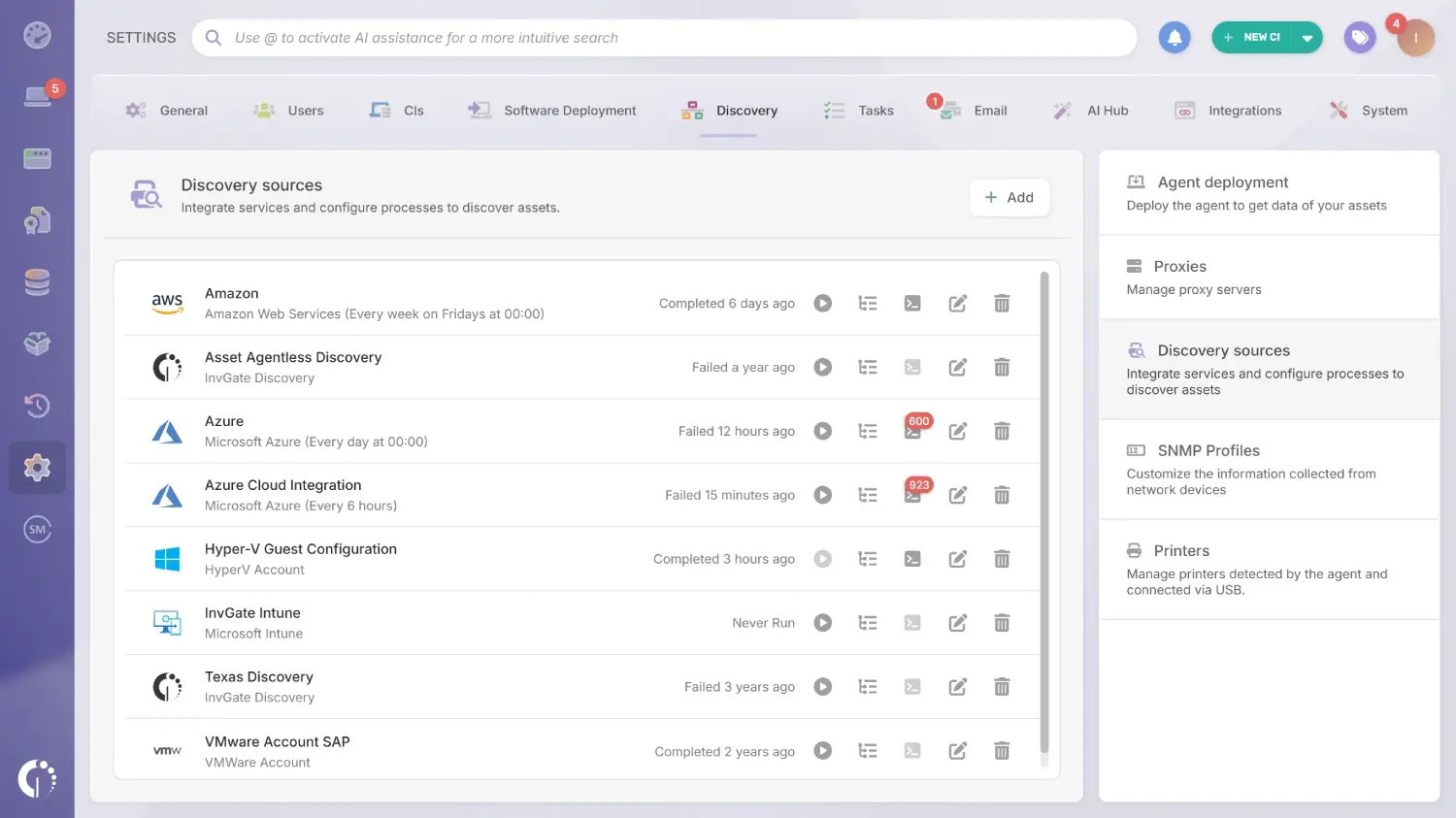
The setup process is straightforward and takes place entirely from the Discovery sources section in InvGate Asset Management. In the following steps, we’ll show you how to add the Hyper-V integration, complete the configuration form, and verify that the first synchronization is working as expected.
To start, go to Settings > Network > Discovery sources, click Add, and select Microsoft Hyper-V from the available options.
This opens the configuration form for the integration. Keep in mind that only one global Hyper-V configuration is allowed.
In the configuration form, complete the required fields:
Once the form is complete, click Save.
After saving the integration, go back to Settings > Network > Discovery sources to review its status. From there, you can see the integration name, type, synchronization frequency, last sync status, logs, and the number of devices found once synchronization completes successfully. To inspect the specific results of this integration, click the button labeled "Results."
For this integration, the manual sync button is disabled by default, since execution is handled through the InvGate Asset Management Agent. After the first run, confirm that the integration completed successfully and check whether the expected virtual machines appear in the results.
If the expected data is missing, first verify that the Agent is active on the Windows host. For Linux virtual machines, also confirm that Hyper-V Integration Services are installed and running, especially the hv-kvp-daemon service, since otherwise the reported information may be incomplete or inaccurate.
After the first successful sync, Hyper-V discovery data is not just collected in the background, it becomes visible in specific inventory views inside InvGate Asset Management. Depending on the setup, users can review virtual machine data from the Windows computer profile of the host and, when a VM has been converted into an asset, from its own virtual machine profile.
This gives IT teams a more practical way to work with Hyper-V environments. Instead of checking each host manually, they can review hosted virtual machines, key configuration data, and related infrastructure details directly from the inventory.
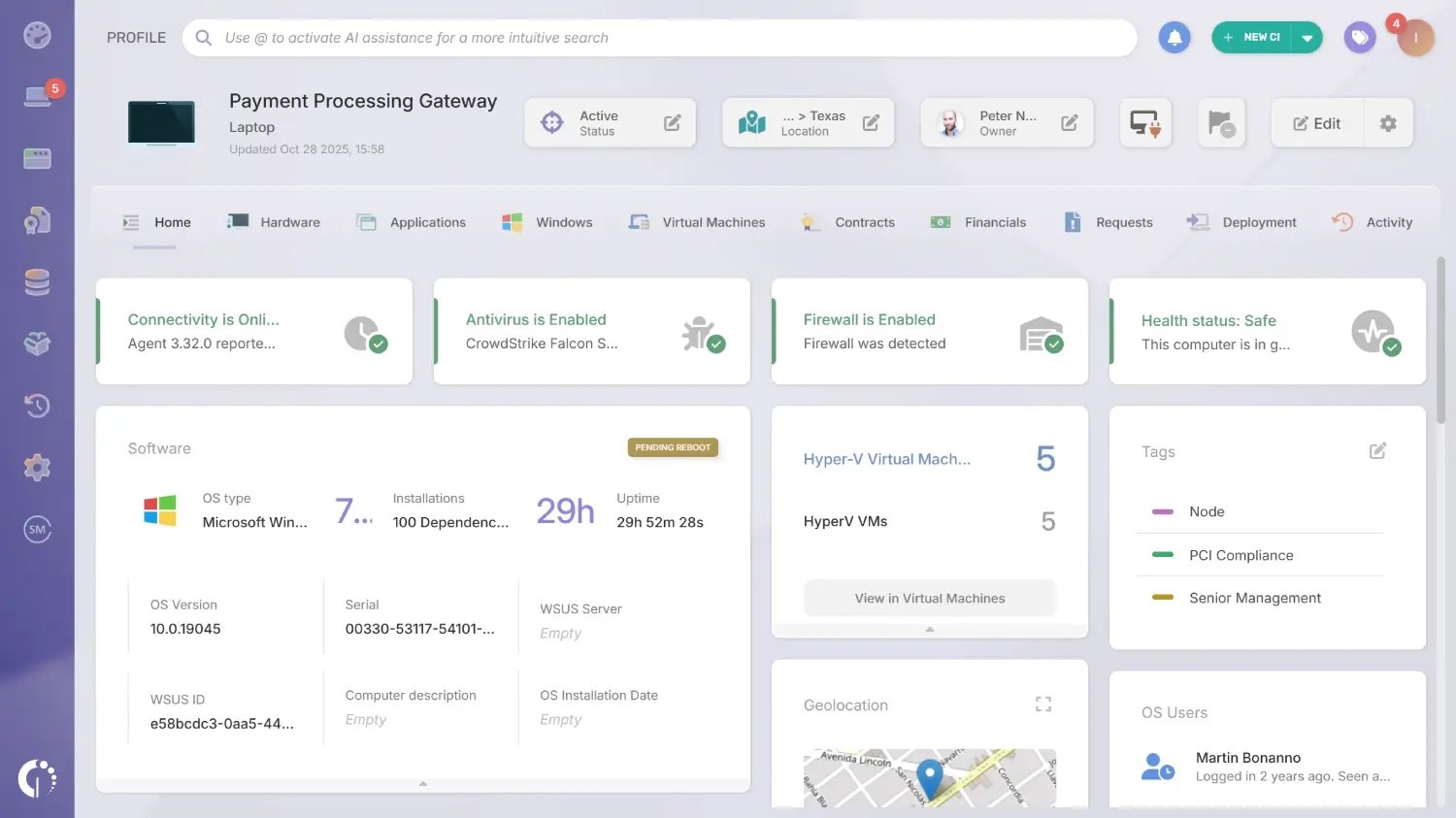
On Windows computer profiles where Hyper-V has been configured as a Discovery source and the InvGate Asset Management Agent is active, the Home tab displays a Hyper-V virtual machines box. This box shows the number of virtual machines managed by that host, regardless of whether those VMs have already been converted into assets.
From there, users can click View in virtual machines to open the virtual machines tab. This gives IT teams a quick host-level view of the virtual environment and makes it easier to confirm how many VMs are running under that host without reviewing the infrastructure manually.
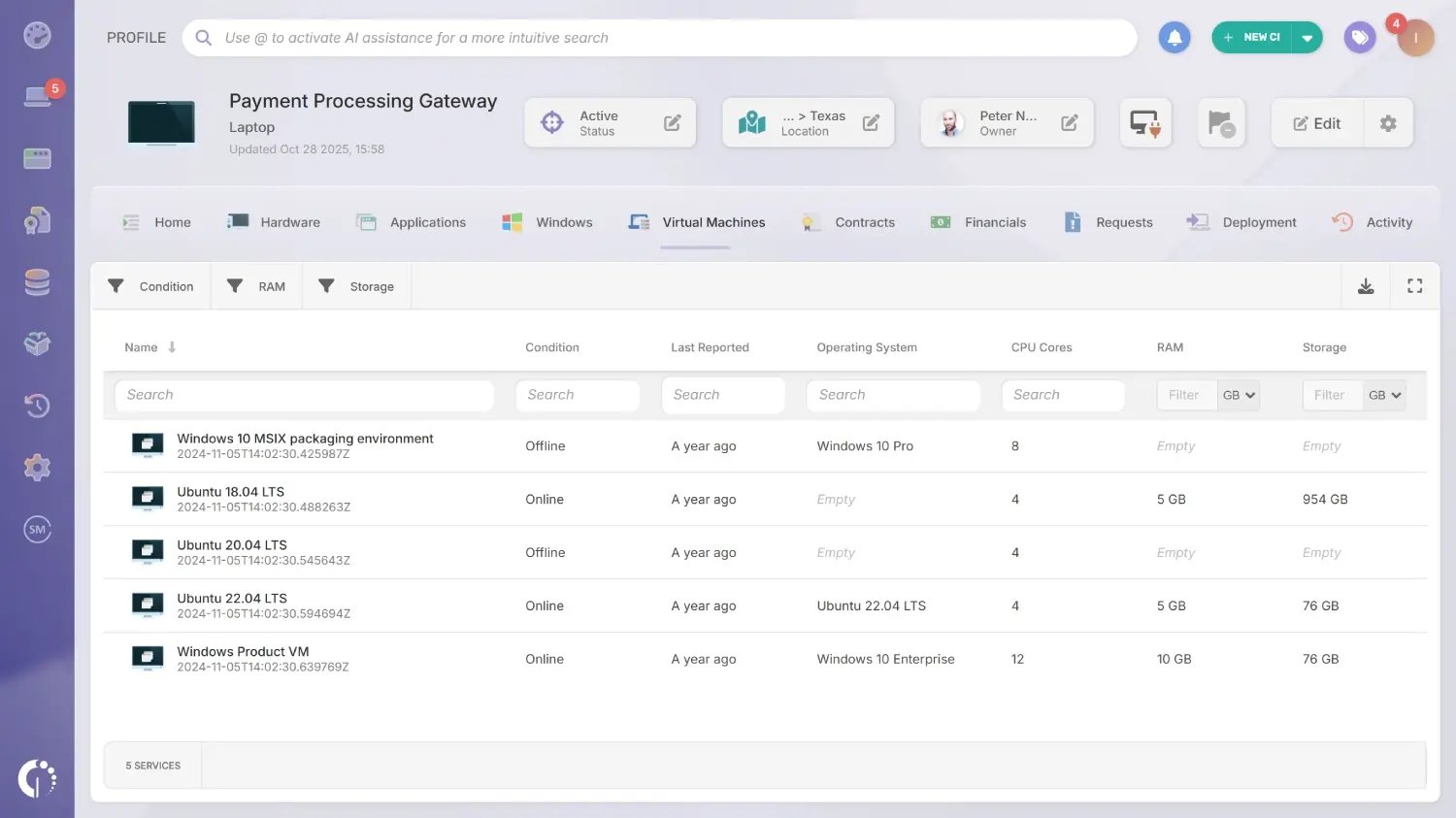
The virtual machines tab lists the VMs hosted on that Hyper-V-enabled Windows machine. In this view, users can review fields such as name, condition, last reported, operating system, CPU cores, RAM, and storage. Quick filters are also available for condition, CPU cores, RAM, storage, and operating system.
When a virtual machine has been converted into an asset, it also gets its own virtual machine profile in the inventory. In the Home tab, users can review details such as the operating system, uptime, serial number, description, host, tags, hardware summary, network information, requests, notes, and source details. The Hardware tab adds more technical information, including CPU, manufacturer, model, RAM, data storage, and virtual network.
Together, these views help teams keep Hyper-V data connected to the rest of the inventory. They provide a clearer picture of what is running on each host and support more consistent tracking over time from within the same platform.
If the integration is configured but no Hyper-V data appears, first check that the InvGate Asset Management Agent is active on the Windows host. In this integration, execution is handled through the Agent, and the manual sync button is disabled by default. Also confirm that the host is within the supported operating systems listed in the documentation: Windows 10/11 Pro and Enterprise, and Windows Server 2008 or later.
If the sync completes but Linux VM details are missing or incomplete, review whether Hyper-V Integration Services are installed and running inside the VM, specifically the hv_kvp_daemon service. Microsoft documents that the Hyper-V data exchange service (KVP) relies on hv_kvp_daemon in Linux guests to share machine metadata with the host, which is exactly the kind of dependency that can affect host-side visibility.
If you need to troubleshoot that specific Linux issue, these Microsoft references are the most useful:
hv_kvp_daemon.Keep in mind that the documentation you shared does not specify a dedicated authentication method, minimum permissions, or required ports for this integration. If expected data still does not appear, the safest checks are the Agent status, supported host OS, whether the correct Hyper-V hosts were included through All hosts or Tags, and whether the VM has been converted into an asset when you expect to see its full profile.
Want to bring Hyper-V virtual machines into a more unified IT inventory? Start your free 30-day trial of InvGate Asset Management and centralize Hyper-V data alongside the rest of your infrastructure.

