










The InvGate Asset Management and VMware integration helps IT teams bring virtual infrastructure into a centralized asset inventory. That matters because a complete, up-to-date IT inventory should include not only hardware and software, but also virtual assets such as ESXi hosts, vCenter instances, and virtual machines.
Without that connection, teams often end up working with fragmented visibility, incomplete operational context, and multiple tools to monitor and manage different parts of the environment. This is especially relevant in VMware environments, with VMware holding 42.23% market share (6sense).
To help solve this challenge, InvGate Asset Management includes dedicated integrations to identify and manage assets from these environments. In this article, we’ll focus on the VMware integration, explain why it matters, and walk through the setup process step by step.
First of all, VMware remains one of the best-known names in virtualization, which is why discovery in these environments is such a relevant capability for IT teams.
But the real reason it matters is operational. Virtual assets play a critical role in many IT environments, and when they are not included in the same inventory as the rest of the infrastructure, teams lose visibility and end up managing part of the environment in separate tools.
That often leads to incomplete inventory records, lower traceability, and more manual work to understand what is running, where it is hosted, and how it relates to the rest of the environment. Adding VMware as a Discovery source helps close those gaps by improving visibility, increasing inventory accuracy, and reducing manual effort.
When VMware is configured as a Discovery source in InvGate Asset Management, the platform can identify and synchronize the main assets that make up your virtual environment. This includes vCenter instances, ESXi hosts, and the virtual machines running on them, so they can all be incorporated into the inventory as managed assets.
Once synchronized, these assets appear in InvGate Asset Management with their corresponding profiles and relationships. In practical terms, this means IT teams can view VMware infrastructure components inside the same inventory they use for the rest of their environment, instead of keeping that information isolated in a separate platform.
Before setting up VMware as a Discovery source in InvGate Asset Management, make sure you have the following:
If you want detailed information for each virtual machine, VMware Tools must also be installed and running on the VMs. Otherwise, the available VM data will be limited.
Below is the basic flow to connect VMware as a Discovery source in InvGate Asset Management and start importing assets into your inventory.
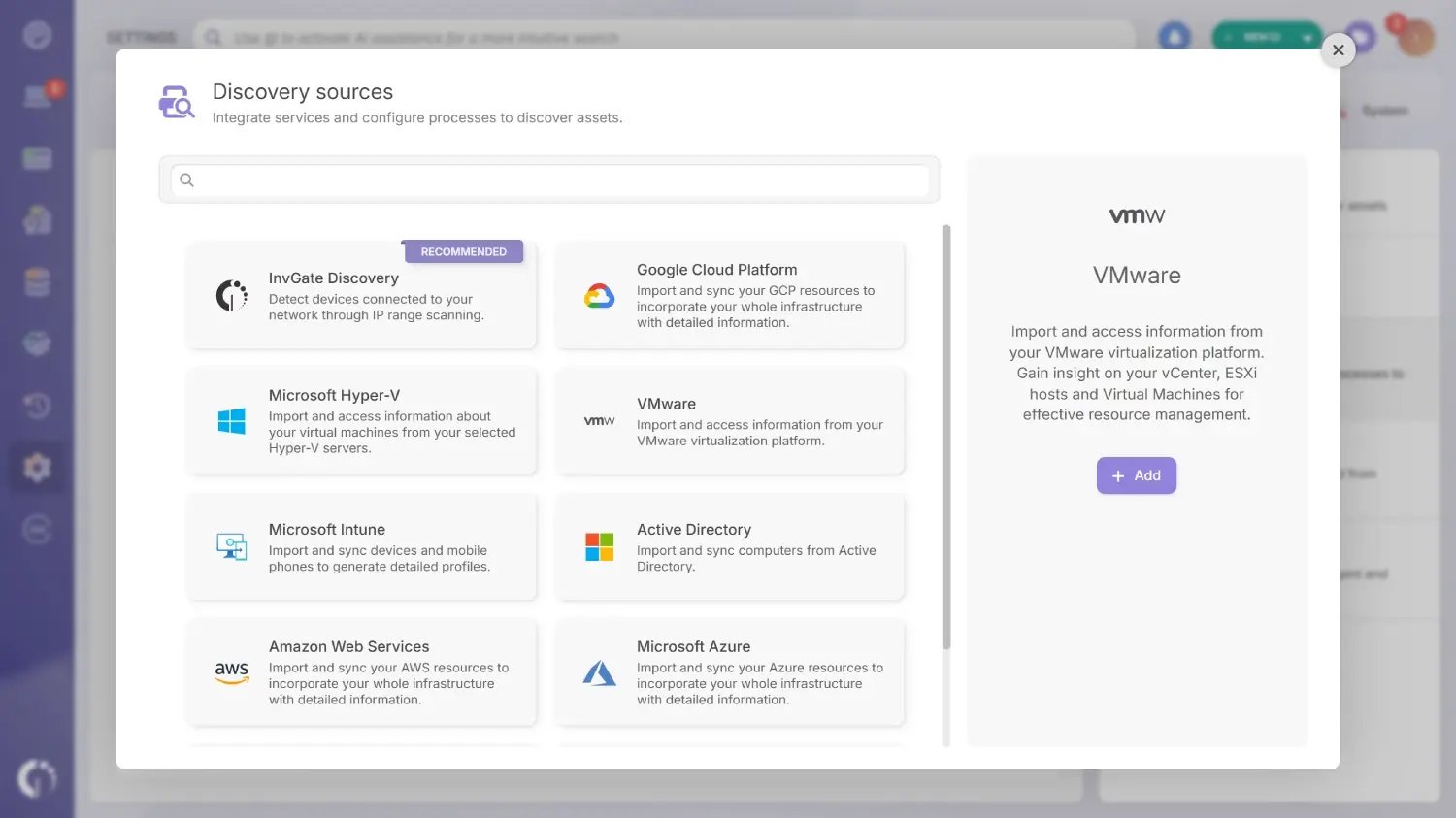
To begin, go to Settings > Network > Discovery sources and click Add. From the list of available sources, select VMware.
This opens the configuration form for the integration, where you will define the connection details and discovery behavior. At this stage, the goal is simply to create the new source inside InvGate Asset Management and move to the connection setup.
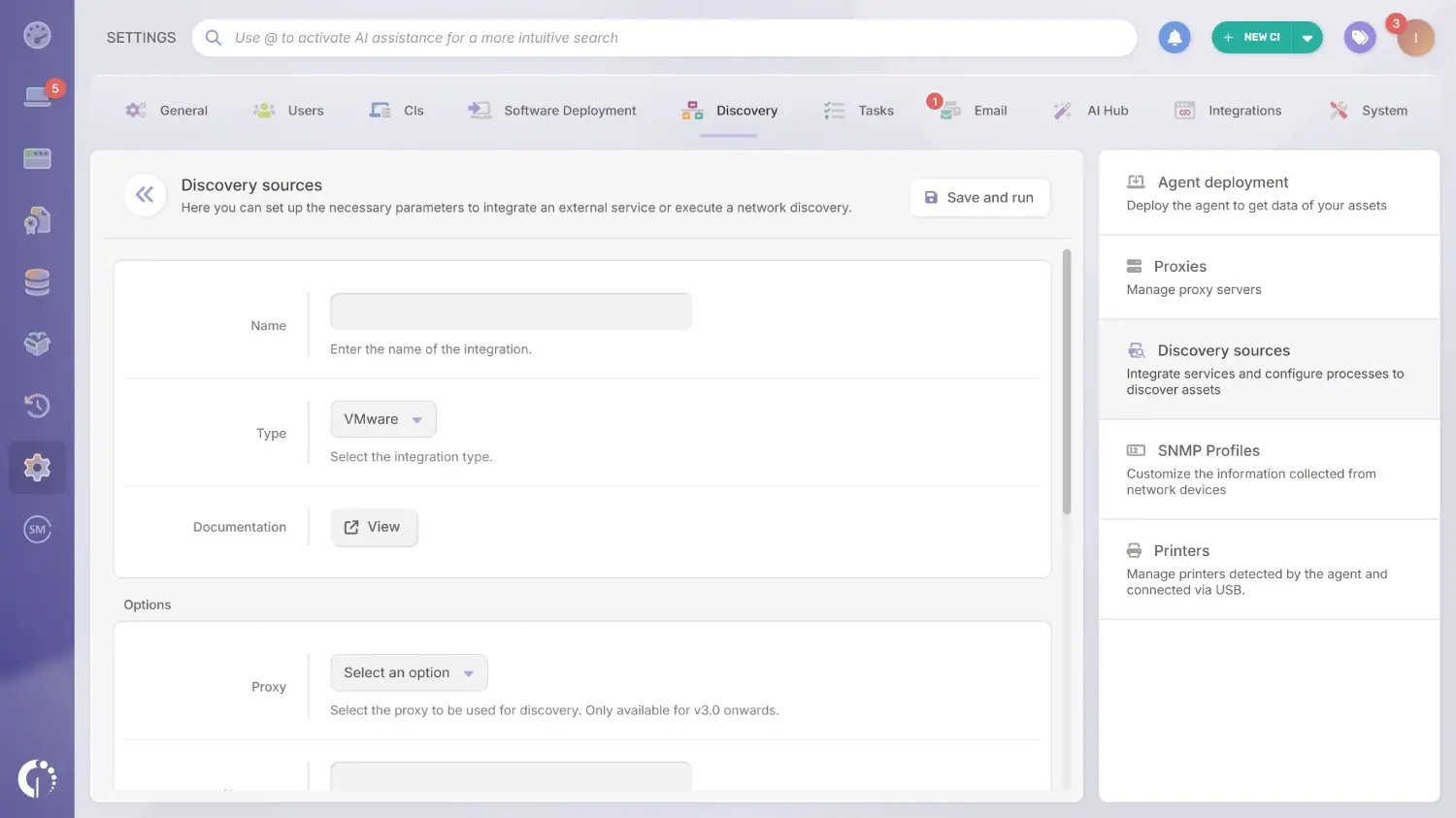
In the configuration form, complete the required fields:
Before saving, make sure the target device has port 443 open and that the user used for the integration has visibility permissions (read) over the vCenter resource details, plus access to the required vSphere API credentials. It is not necessary for this user to be an administrator.
Once everything is complete, click Save.
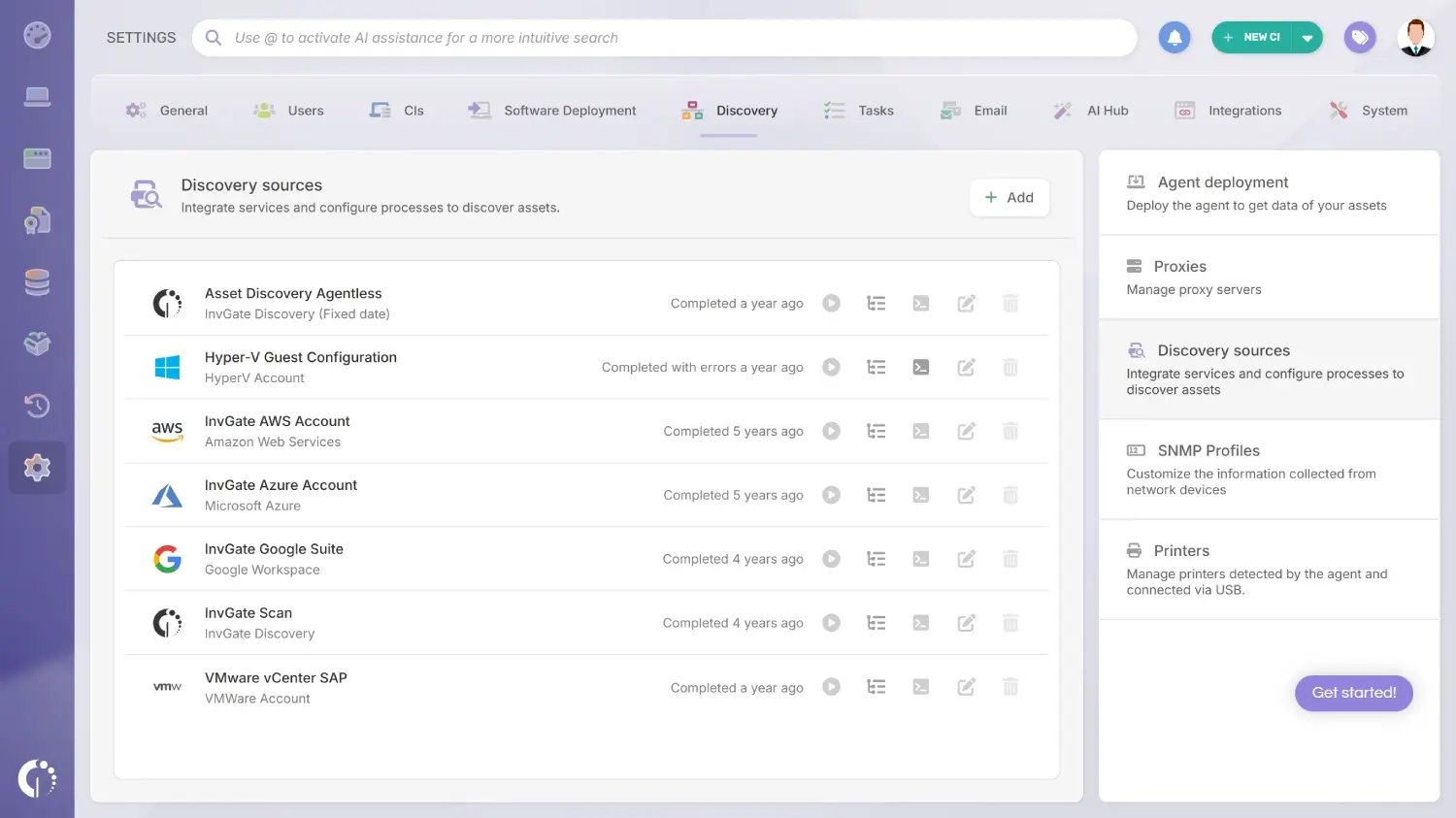
After saving the integration, go back to Settings > Network > Discovery sources to monitor the new VMware source. From there, you can check its status, start a synchronization manually, and review the execution logs.
Once the first sync finishes, confirm that the source completed successfully and review the number of discovered devices reported by the integration. If the sync fails or expected devices are missing, check the connection details, selected proxy, port 443 availability, API access, and the permissions assigned to the VMware user.
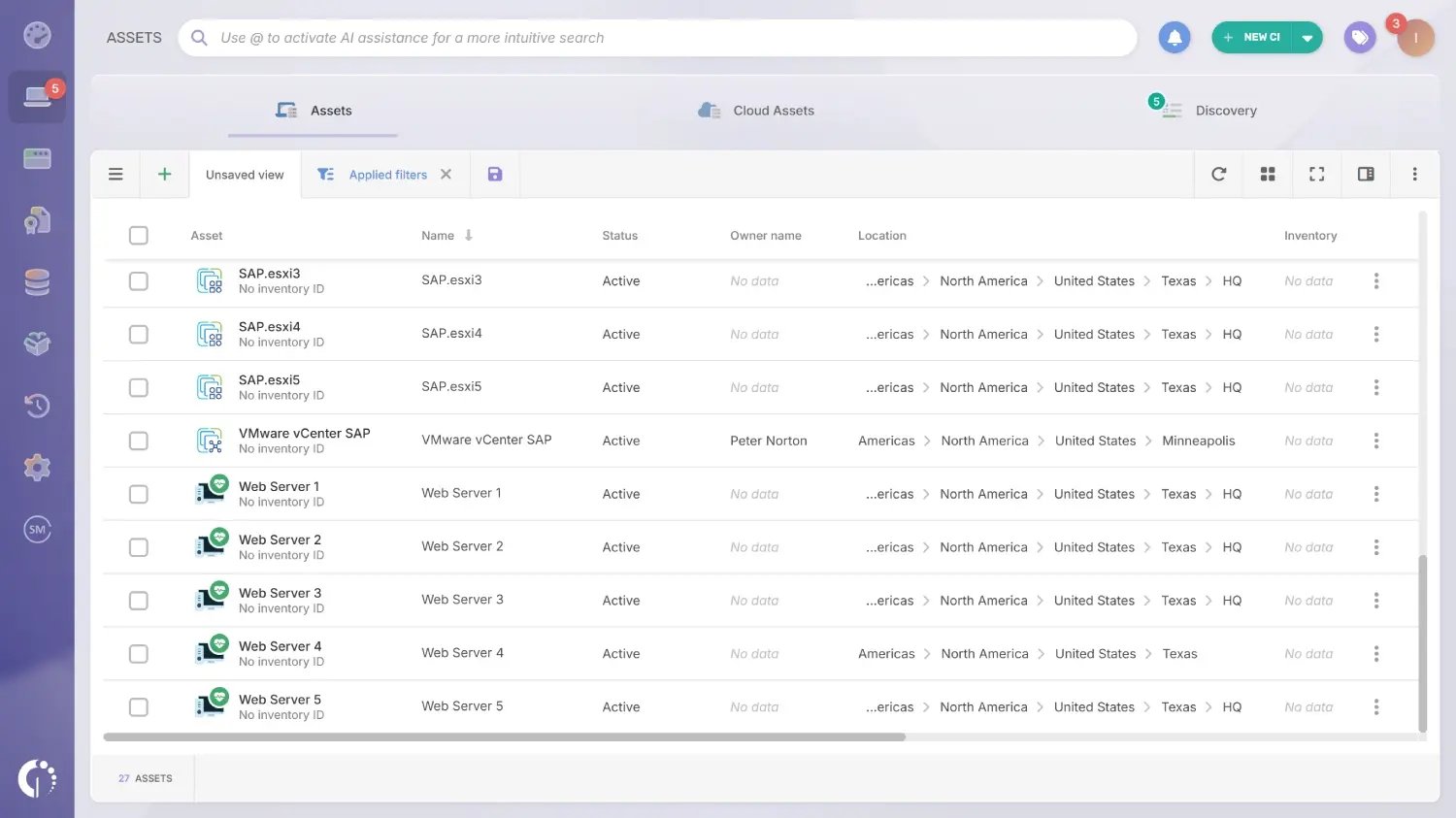
After the first successful sync, InvGate Asset Management incorporates the discovered VMware assets into the inventory as managed assets. Depending on your environment, this includes vCenter instances, ESXi hosts, and virtual machines, each with its own asset profile and related operational data.
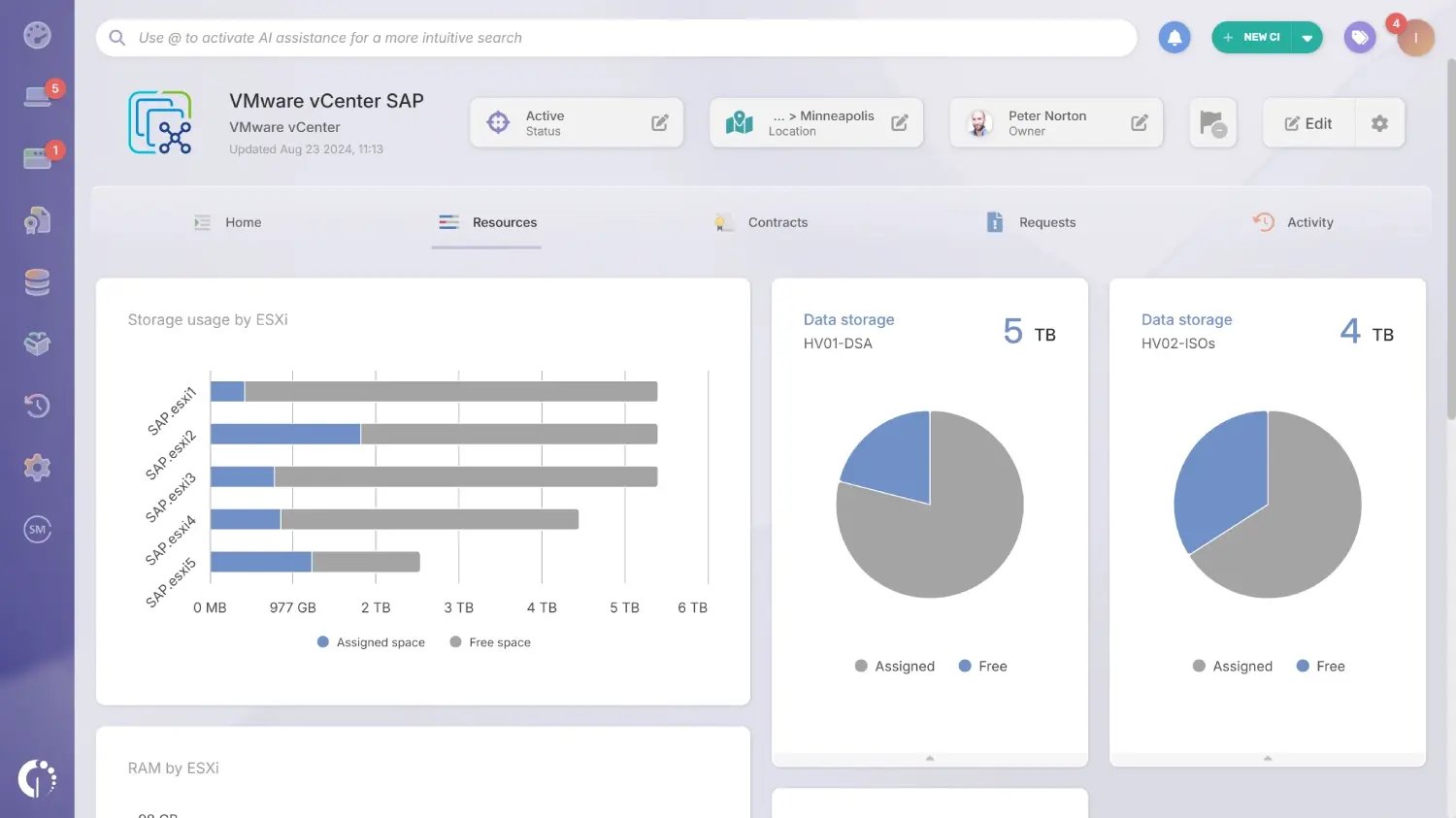
vCenter instances are added to the inventory as assets in InvGate Asset Management. Their profiles include a general summary of the environment, along with resource-level information such as managed ESXi hosts, hosted virtual machines, and assigned tags.
Users can also review source details, attached documents, notes, custom fields, related requests, and associated contracts. In the Resources view, InvGate Asset Management displays infrastructure data such as storage usage by ESXi, data stores, RAM by ESXi, and CPU or core allocation.
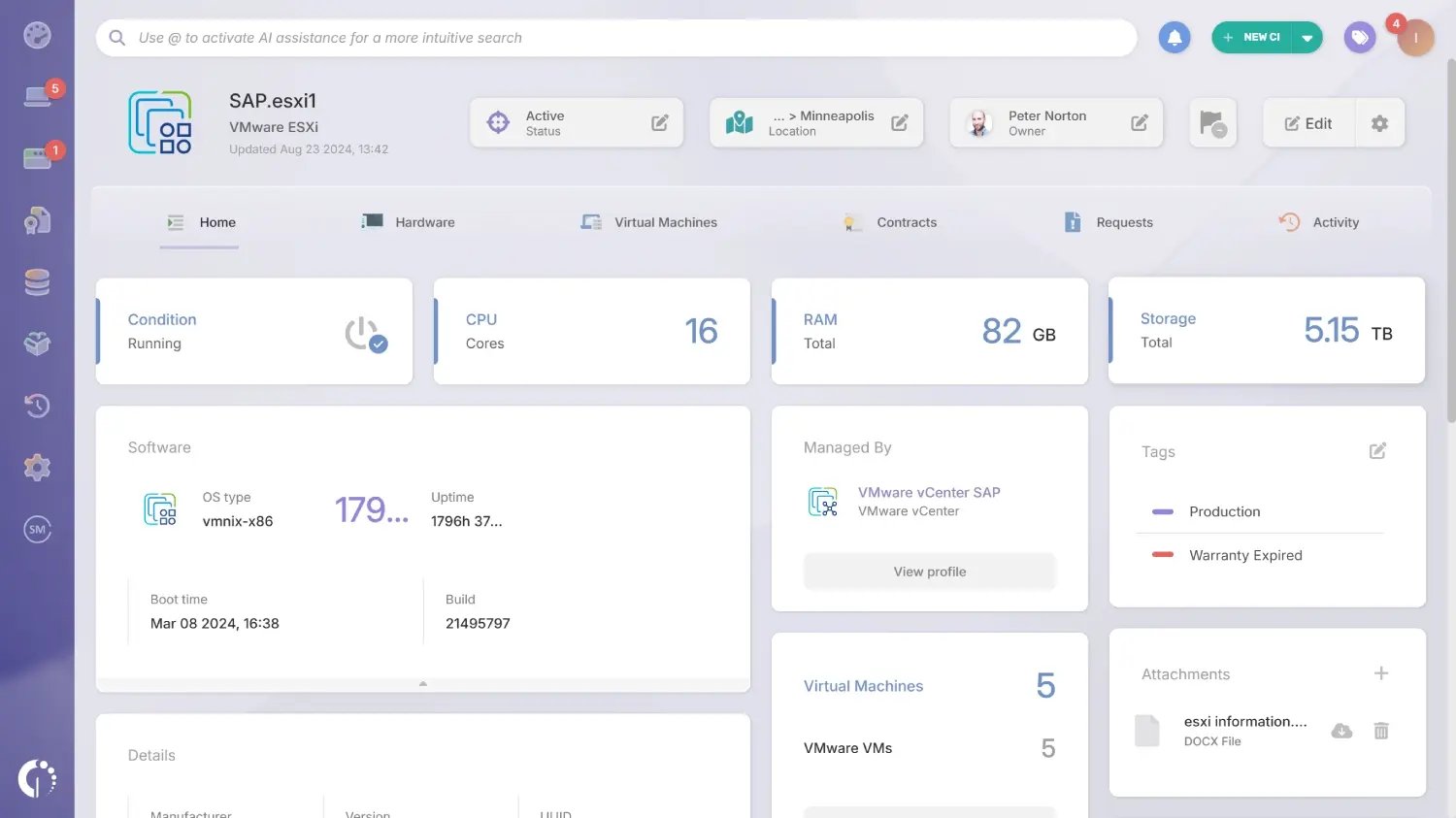
ESXi hosts also appear as individual assets in the inventory. Their profiles provide a summary of the host, including condition, CPU, RAM, storage, software details, version, manufacturer, serial number, and source information.
From the same profile, users can review hardware-level data and access the list of virtual machines hosted on that server. This makes it easier to understand each host as part of the broader virtual environment, without leaving the centralized inventory.
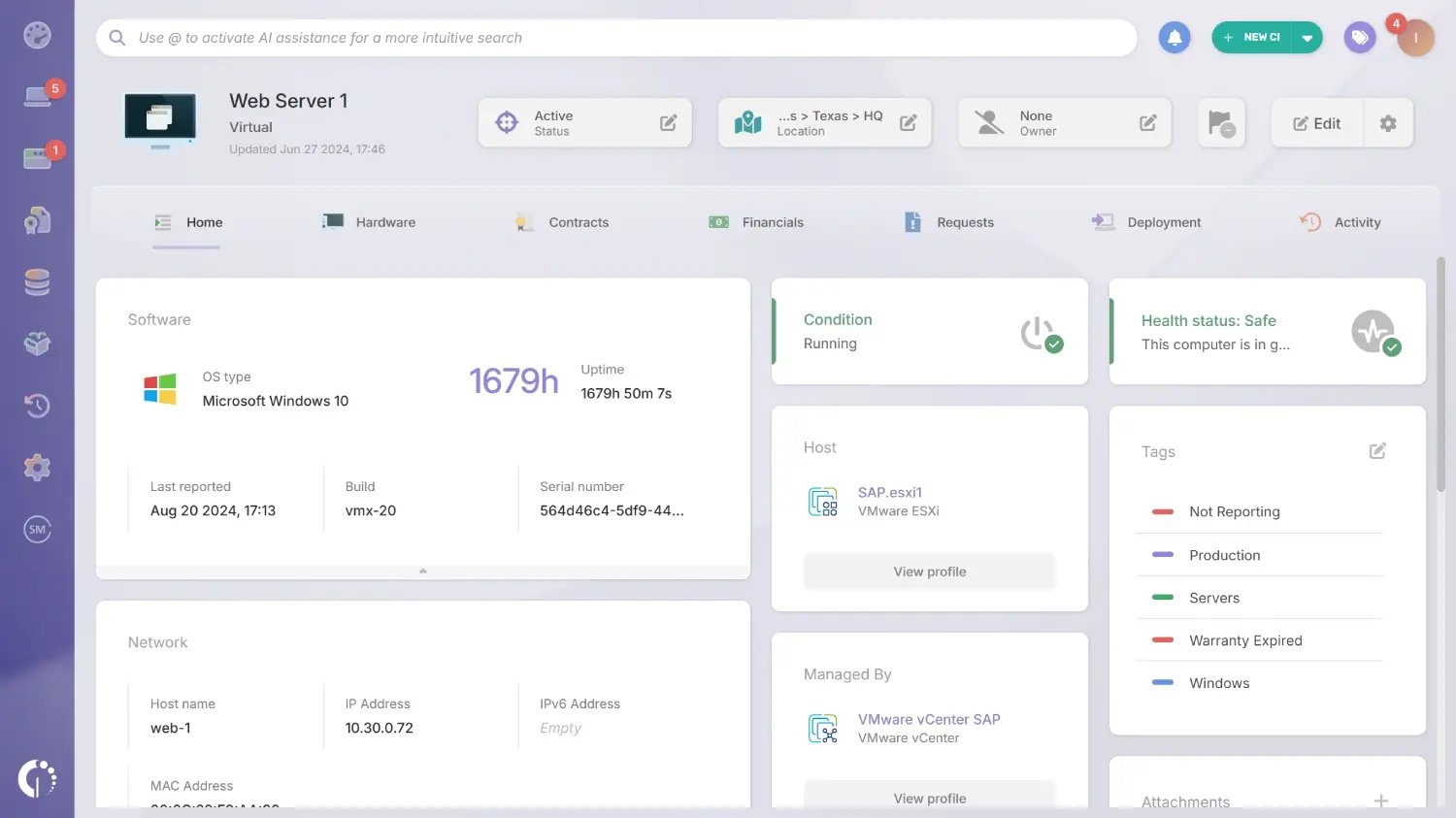
Virtual machines discovered through the VMware integration are incorporated into the inventory as their own managed assets. Their profiles include software details, network information, source details, condition, health status, tags, custom fields, notes, and related requests.
Each virtual machine profile also points back to the ESXi host where it is running, which helps users move across the environment and understand how virtual assets relate to their underlying infrastructure.
Want to bring your VMware assets into a centralized inventory? Start your free 30-day trial of InvGate Asset Management and see how Discovery sources help you identify and manage virtual infrastructure alongside the rest of your IT environment.

