











In financial services, IT is a regulated activity. Every asset, every access decision, and every change carries potential audit consequences. When a central bank examiner arrives or a Payment Card Industry Data Security Standard (PCI DSS) assessment begins, IT teams need to produce a complete, traceable record of what they manage, where it is, and who has access to it.
Most can't do that without a multi-week manual exercise. Financial services IT Asset Management (ITAM) gives institutions the operational foundation to meet that bar without reconstructing evidence every time a regulator walks in. This article covers what financial services firms need from IT Asset Management software and five platforms worth evaluating.
Three requirements define the context:
First, audit traceability. Regulators operating under frameworks like DORA (Digital Operational Resilience Act), PCI DSS, SOX (Sarbanes-Oxley Act), and ISO/IEC 27001 require complete evidence of every asset, change, and access decision. Without a system that maintains that record continuously, IT teams assemble compliance documentation from spreadsheets and email threads, which is slow, unreliable, and indefensible under scrutiny.
Second, hardware visibility across branches. Banks and insurance firms manage hardware across dozens or hundreds of locations: ATMs, branch workstations, servers, and network equipment. In practice, inventory lives in disconnected spreadsheets, purchase orders don't connect to the assets they generated, and total cost of ownership is spread across systems IT can't easily cross-reference. The result is unplanned replacements, untracked devices, and no basis for proactive refresh planning.
Third, software license control. Financial institutions run dense technology stacks with per-user licenses tied to specific business lines, and complex vendor agreements with IBM, Oracle, and Microsoft that carry significant audit exposure. Without visibility into what is installed versus what is licensed, firms routinely overpay on renewals or face penalties when vendors conduct their own audits.

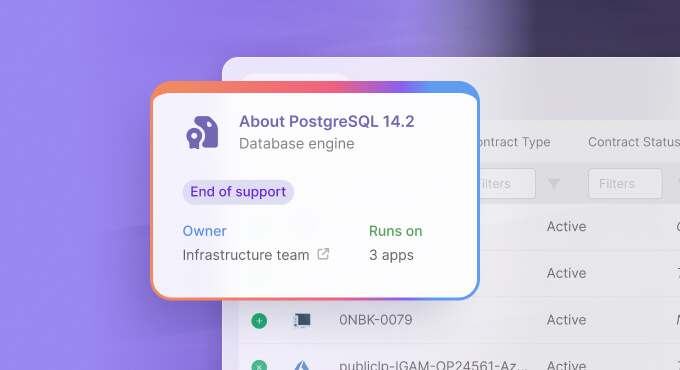
InvGate Asset Management gives financial institutions a centralized, continuously updated inventory of hardware, software, and cloud resources across every branch and business unit.
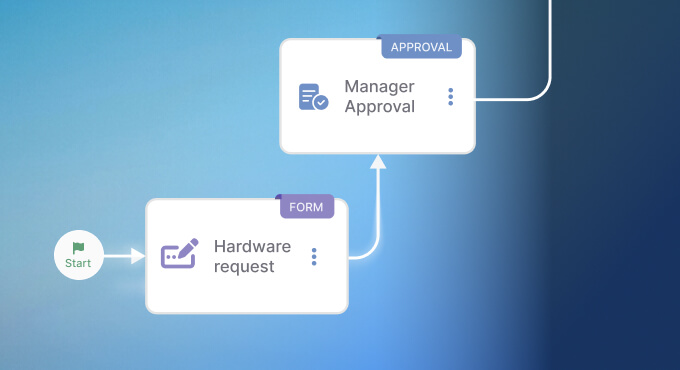
For hardware, every asset record captures acquisition cost, depreciation, warranty expiration, end-of-life date, assigned location, and owner, with procurement linked directly to received assets so nothing arrives unrecorded.
On the software side, the InvGate Asset Management Agent detects installed applications and pulls usage and cost data. The Software Compliance module shows the compliance status of each license contract by comparing acquired licenses against detected software in use. Authorization policies complement this by classifying software as approved, under review, or prohibited, with unauthorized installs flagged and documented automatically.
The platform is available as cloud (SaaS) and on-premises, with feature parity between both models — relevant for institutions with data residency requirements or air-gapped environments. Every asset change and reassignment is logged, giving IT teams a complete chain of custody to respond to regulatory requests without manual reconstruction.
InvGate has verified adoption across the financial sector, with clients including Banco Supervielle, Banco Galicia, Banco Macro, Allianz Mexico, and Clearview Federal Credit Union.
Start a 30-day free trial or talk to Sales to find the right plan.
According to ServiceNow's official website, ServiceNow Hardware Asset Management (HAM) automates the hardware lifecycle from procurement to disposal using the CMDB (Configuration Management Database) as a single source of truth. Every workflow action, approval, and asset state change is logged in an immutable audit trail.
For financial institutions, the platform's GRC (Governance, Risk and Compliance) modules connect asset data directly to DORA, PCI DSS, and SOX compliance workflows, and ServiceNow maintains ISO/IEC 27001 and PCI DSS certifications on its own infrastructure. For firms already operating on the ServiceNow platform, HAM integrates asset visibility into the same environment where incident, change, and service request management already run.
ServiceNow HAM is designed for enterprise organizations already operating on the ServiceNow platform. Pricing is not publicly listed and requires a custom quote from the sales team.
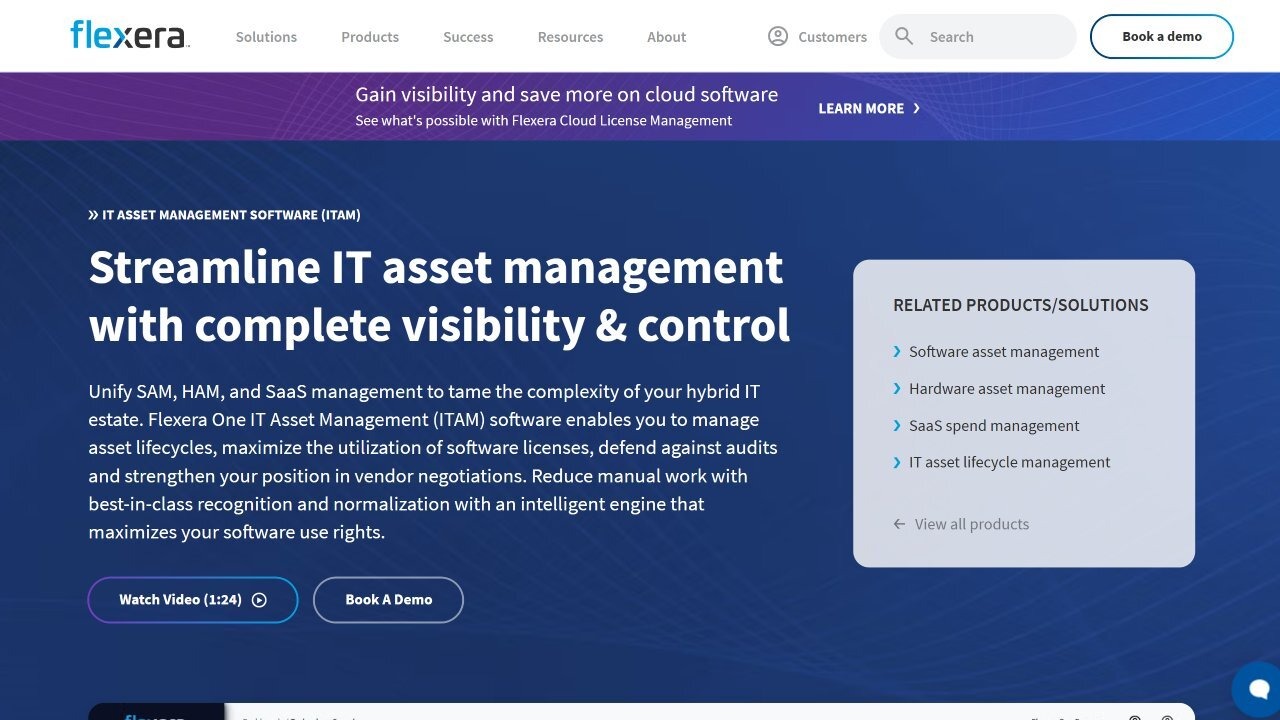
According to Flexera's official website, Flexera One IT Asset Management is designed for organizations with complex hybrid licensing environments. It reconciles software license entitlements against actual installation and usage data to produce what Flexera describes as a defensible effective license position (ELP).
The platform is IBM-certified and Oracle-verified, meaning its usage data is accepted by major vendors in audit and negotiation scenarios. For financial institutions managing large legacy software estates, Flexera One's depth of license optimization goes beyond what general-purpose ITAM tools provide.
Flexera One does not publicly list pricing. Prospective customers are directed to contact the sales team for a quote.
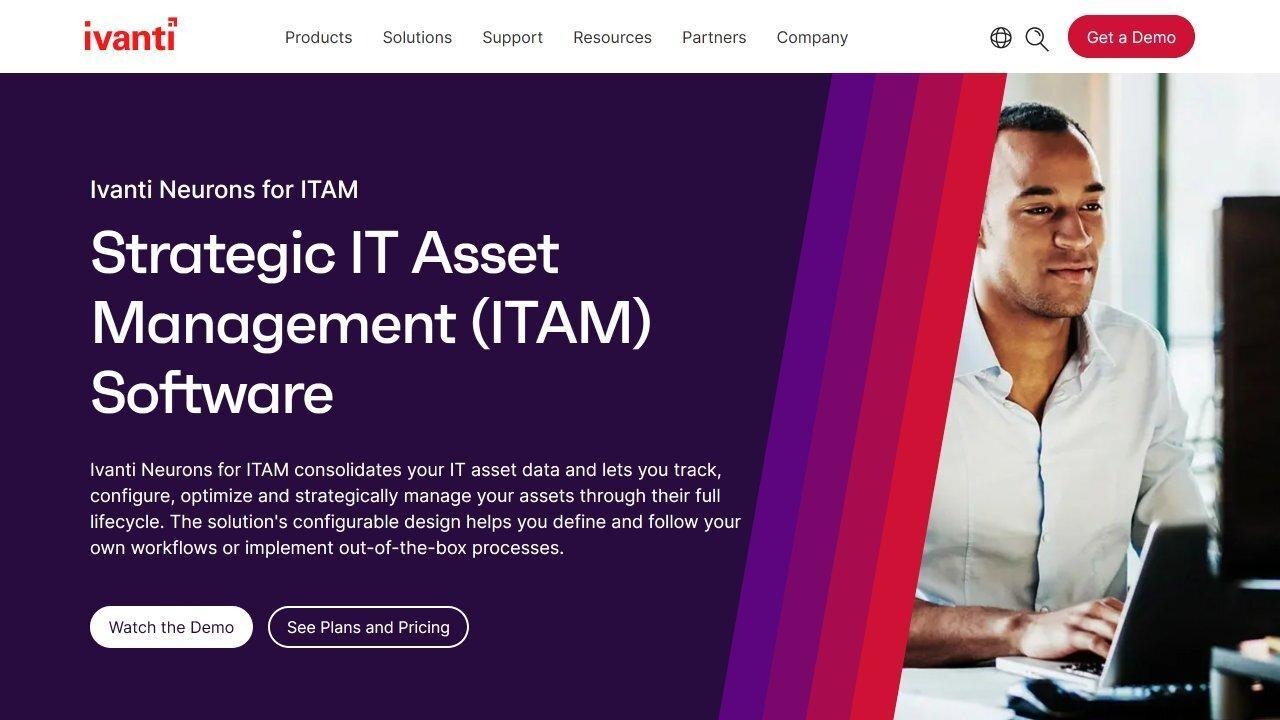
According to Ivanti's official website, Ivanti Neurons for IT Asset Management (ITAM) tracks hardware and software assets from procurement to disposal, including lifecycle status, location, stock, and warranty information.
The platform consolidates asset data into a single repository and integrates with Ivanti's discovery and endpoint management tools to keep records accurate as devices move between employees and locations. Vendor scorecards and contract tracking give IT and procurement teams the data needed to manage supplier relationships and control costs across distributed environments.
Ivanti does not publicly list pricing for Neurons for ITAM. Organizations are directed to contact the sales team for a custom quote.
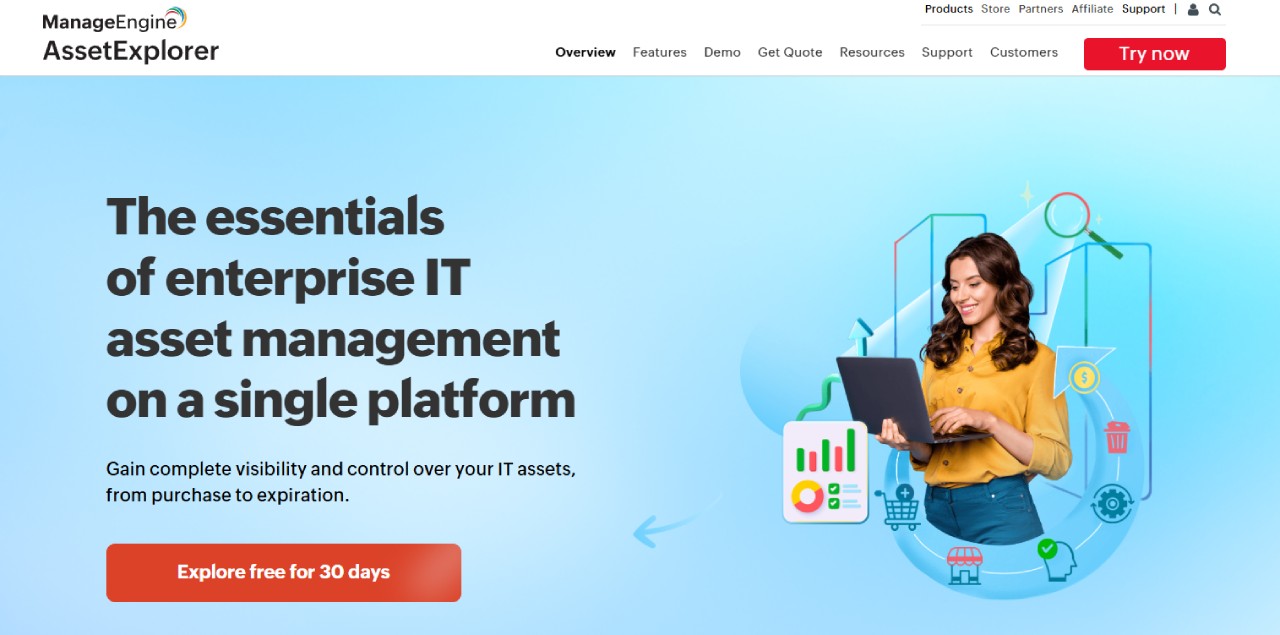
According to ManageEngine AssetExplorer's official website, AssetExplorer covers hardware and software asset tracking from procurement to disposal, with automated discovery, software license management, purchase order tracking, and contract expiration alerts. It supports both cloud and on-premises deployment, making it a practical option for financial firms with data residency requirements. The platform integrates with directory services and other ManageEngine products, which simplifies deployment for organizations already using that ecosystem.
Per ManageEngine's official pricing page, the cloud version starts at $1,245 per year for 250 assets and the on-premises version at $955 per year. A 30-day free trial is available for the cloud version.
The right financial services IT Asset Management platform depends on the institution's size, regulatory obligations, and software complexity.
Enterprise firms already on ServiceNow will benefit from its GRC integration and immutable audit trail. Institutions with large legacy software estates and vendor audit exposure will find Flexera One's license reconciliation depth worth the investment. Mid-market organizations, including community banks, credit unions, and regional insurers, will find ManageEngine AssetExplorer a structured and transparent option.
For financial services IT teams that need centralized asset visibility across branches, documented procurement-to-asset traceability, software license compliance, and flexible deployment, InvGate Asset Management covers all of those requirements without enterprise-level complexity or cost.
Disclaimer: All product names, logos, and brands are property of their respective owners. All company, product, and service names used on this site are for identification purposes only. Use of these names, trademarks, and brands does not imply endorsement. Comparisons are based on publicly available information as of June 2026 and are provided for informational purposes only. ServiceNow is a registered trademark of ServiceNow, Inc. InvGate is not affiliated with, sponsored by, or endorsed by ServiceNow.


