









A contract expiration reminder is an automatic alert that tells the right people a contract is about to end, early enough to renew, renegotiate or cancel it. IT teams set them up for software licenses, SaaS subscriptions, hardware warranties, support agreements and leases, because each of those dates can trigger an automatic renewal or leave equipment without coverage. These alerts belong to the monitoring stage of Contract Lifecycle Management, which runs from the signature until the agreement ends.
This guide shows how to automate contract expiration reminders in InvGate Asset Management step by step, from the native template to a second alert that escalates what nobody acted on. It also includes a table with how far in advance to send each reminder by contract type, the reasons a missed date gets expensive, and answers to common questions.
InvGate Asset Management is IT Asset Management software that keeps contracts in the same inventory as the hardware and software they cover, so reminders go out on a schedule and nobody has to watch a spreadsheet. It offers an enterprise experience without the complexity or the price of one, with a no-code automation engine and ready-made templates for the most common alerts.
The setup takes five steps: open the template, schedule it, choose the contracts, pick the recipients and add a second reminder. Three optional additions then cover hardware warranties, saved contract views and requests in InvGate Service Management.
Reminders read the dates stored in each contract, so those dates need to be in place first. Check these points before you create the automation:
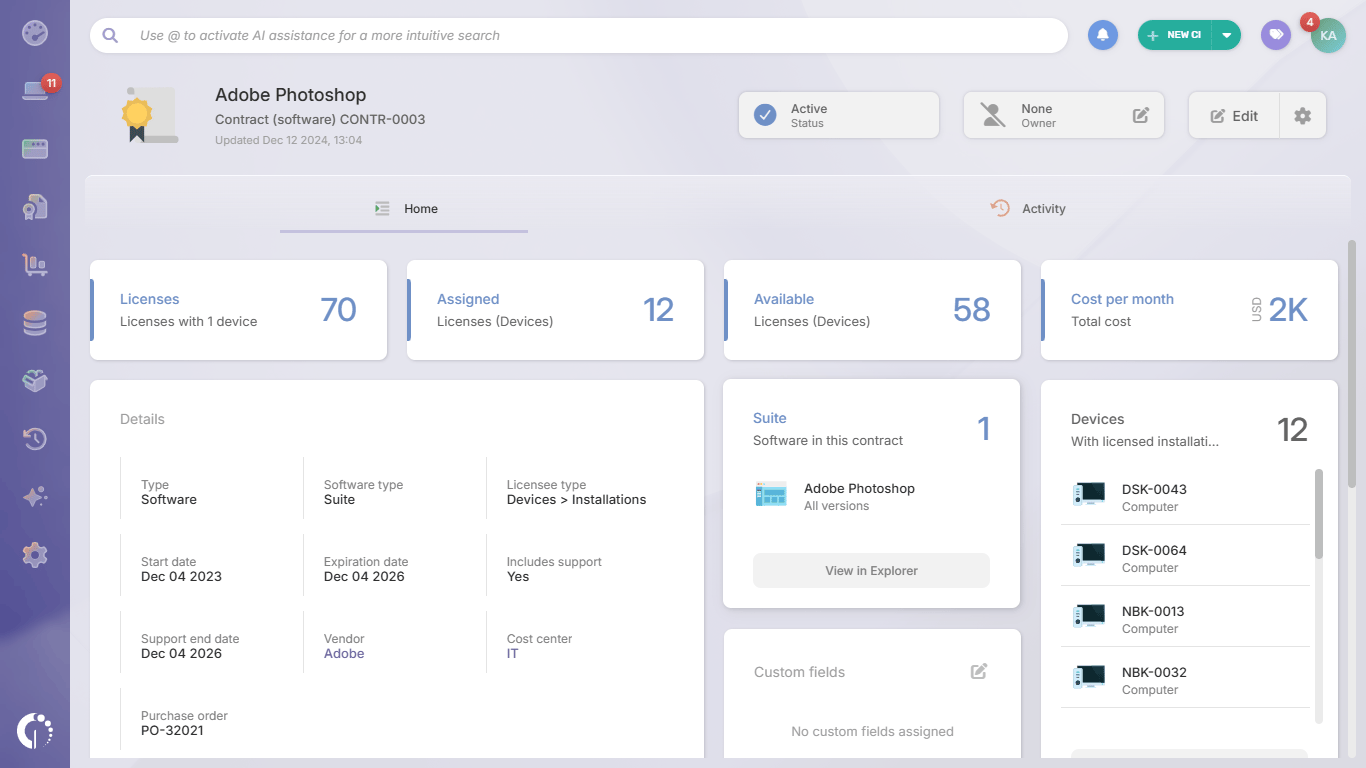
Go to Settings > CIs > Automations and create a new automation from a template. Select Contract renewals approaching without review, a native automation designed to keep contracts from renewing before someone has reviewed them.
The template comes with a schedule, a condition and an action already set, and every part can be edited. The next three steps adjust each one to your contracts.
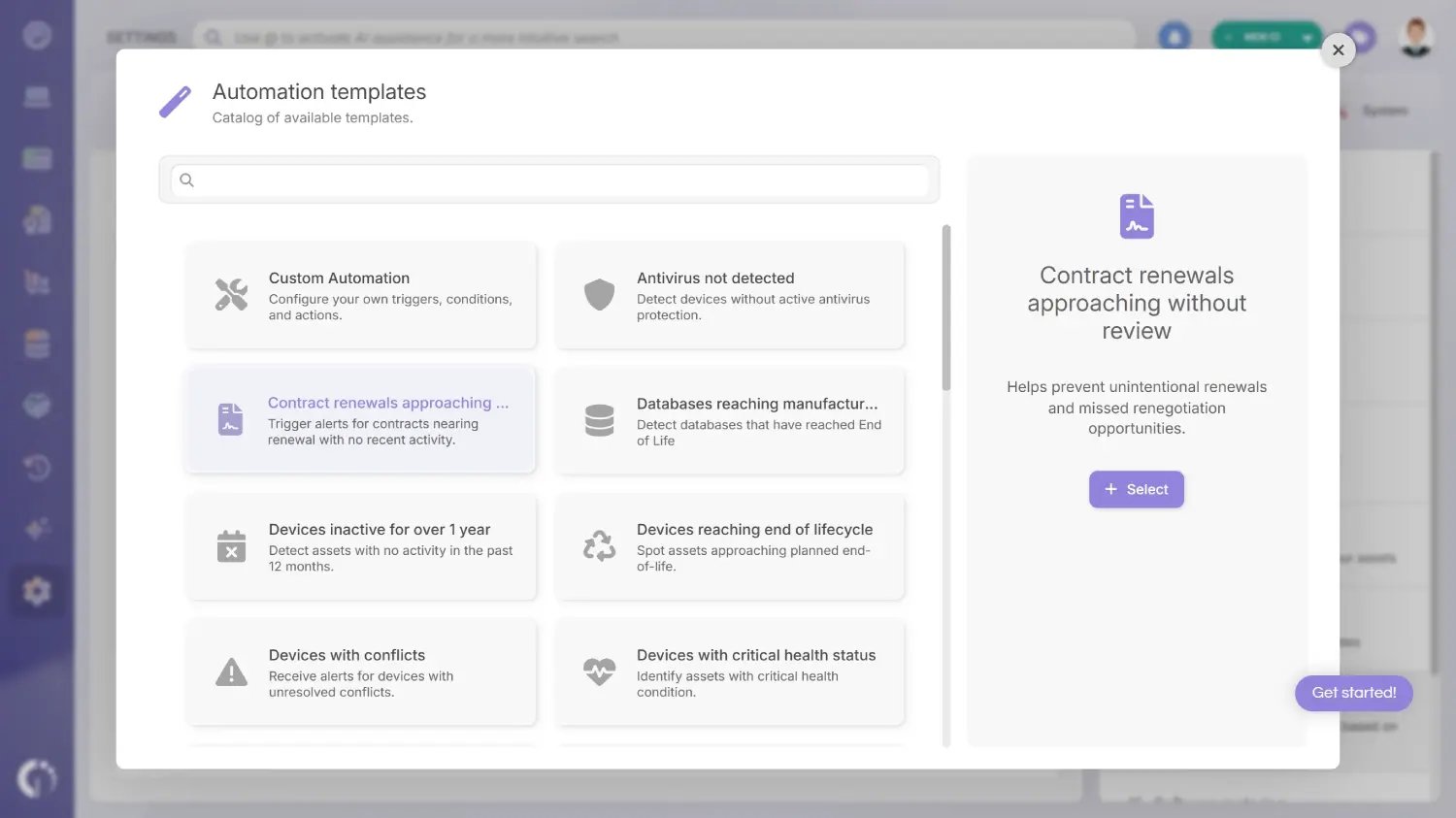
The template uses the Scheduler event, so it runs on a calendar you define. Set a start date and time, then choose the repetition in Repeat; the template's example is every two weeks, on Monday.
Weekly or biweekly runs suit most teams. A contract that enters the window appears in every report until someone renews, cancels or updates it, which turns the reminder into a recurring review list.
The condition Contract > Expiration date > is in the next (days) > 30 defines the reminder window. Change the number of days to match the contract type, using the windows suggested in the next section.
To send separate reminders per kind of agreement, add conditions on other contract fields. They work like the filters in the Contracts explorer:
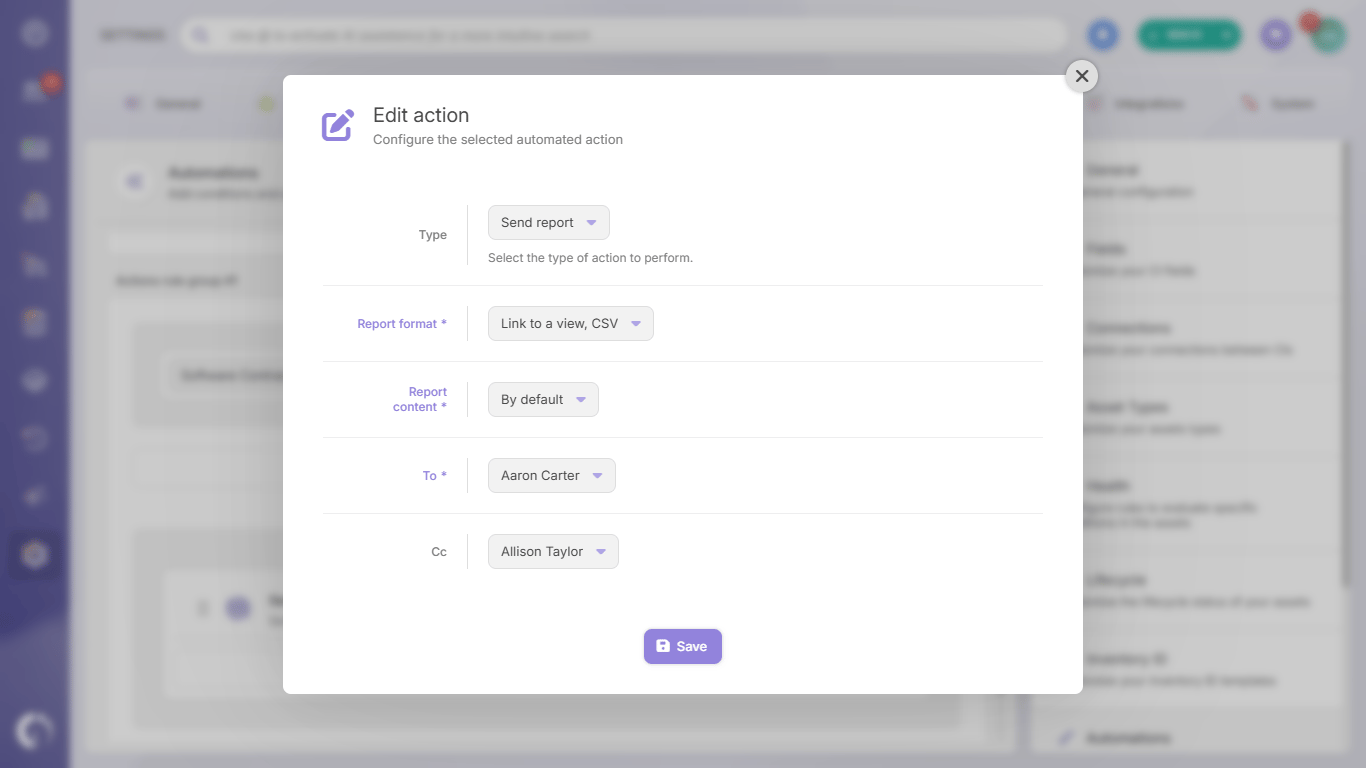 The template's action is Send report, which emails a CSV file and a link with every contract that matches the condition. Recipients can be specific email addresses or the contract owner.
To send a plain email, use the Send email action. It can go to administrators, the contract owner, the owner's manager, specific users or fixed addresses. Save the automation once the recipients are set.
One alert is easy to miss during a busy week, so the table below pairs every contract type with a first and a second reminder. Create a second automation with a shorter window and different recipients, such as the IT manager or Procurement, to escalate the contracts nobody has acted on.
Keep the first reminder for the person who owns the contract and has to gather usage and cost data. The second one goes to whoever approves the renewal or the cancellation.
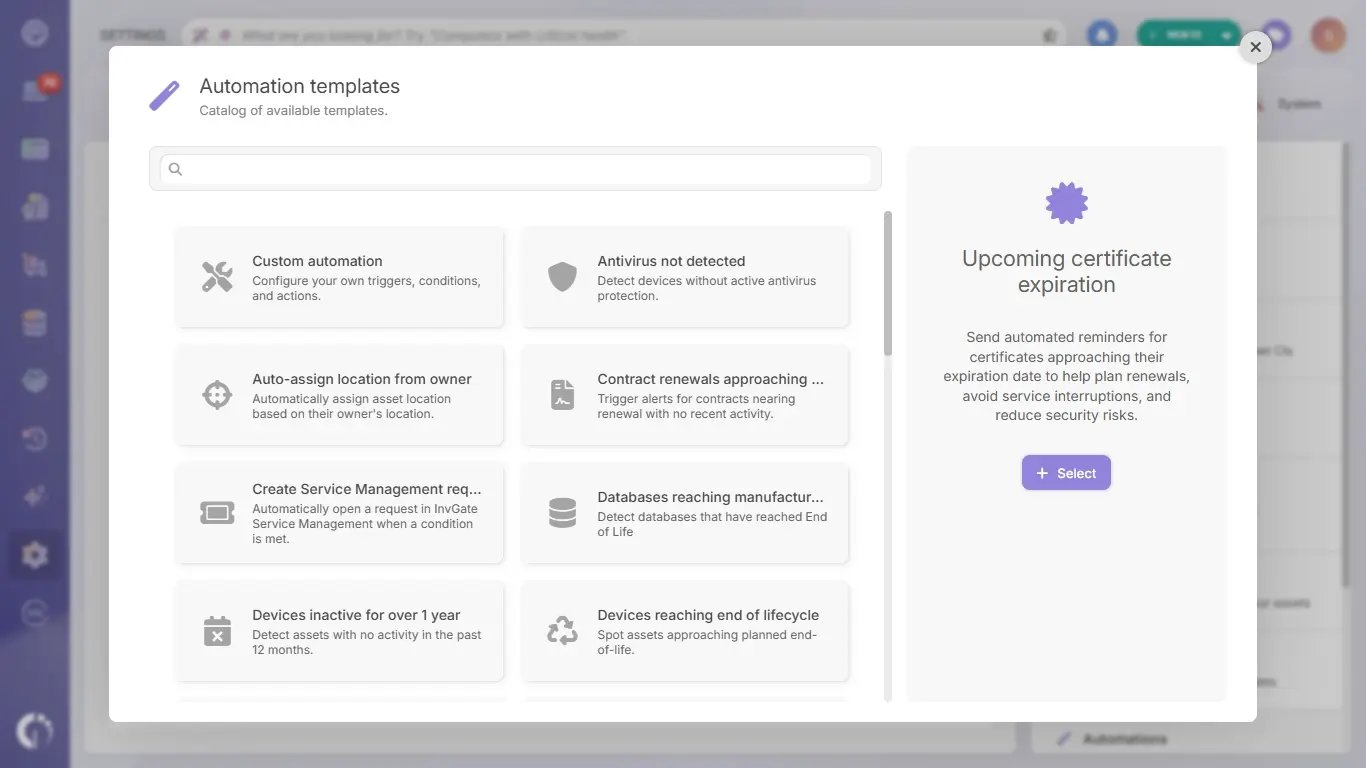 Hardware warranties appear twice in the inventory: as Warranty contracts and as the warranty expiration date stored on each device. For the device date, the native "Upcoming warranty expiration" template sends reminders for assets approaching the end of their warranty, so you can plan replacements or extensions.
Warranty APIs keep that date current for Dell, Lenovo, IBM and Apple devices by pulling it from the manufacturer with the serial number. Together with coverage lookups and a warranty dashboard, these alerts make up the Warranty Management process.
The Contracts explorer can also deliver the list on a schedule. Filter contracts by expiration date, for example those ending in the next 90 days, save the view and enable scheduled delivery with its recipients, date and frequency.
A saved view works well as a standing report for Finance or Procurement, who plan around the full set of upcoming renewals. You choose the columns, so the report can carry cost, provider and owner next to each date.
When InvGate Asset Management is integrated with InvGate Service Management, an automation can create a request for each renewal. The renewal then lands in a queue with an owner, a status and a history, and gets handled like any other piece of IT work.
The action to create the request is native, and the automation is built as a custom one with the same Scheduler event and Expiration date condition used above. This option fits teams that already track renewals and purchases as requests.
The right moment for a contract expiration reminder depends on what the contract asks of you before it ends. Many agreements renew automatically unless you give notice by a set date, so the reminder has to arrive ahead of that notice deadline, with time to review usage and negotiate.
The windows below are our recommendation for each contract type. The last column cites the vendor rule that makes each deadline matter; when a contract states its own notice period, add it to the window.
Contract dates rarely sit in one place: licenses live with Procurement, warranties with the service desk and leases with Finance. Automated reminders bring them together and give IT four concrete advantages:
For an IT Asset Management (ITAM) team, these reminders also keep the inventory reliable. Every contract carries an end date, an owner and a next step.
A contract expiration reminder works when it reaches the right person before the notice deadline, with enough time to decide. In InvGate Asset Management, it takes a native template, a schedule, a condition on the expiration date and a second automation to escalate what nobody touched.
To set up your first reminders on your own contracts, start a 30-day free trial. If you'd rather walk through your renewal calendar with someone, talk to Sales.
These are the questions IT teams ask most often when they set up contract expiration reminders. Each answer sums up a point covered above.
A contract expiration reminder is an automatic alert sent before a contract ends so the people responsible can renew, renegotiate or cancel it in time. In IT, it covers software licenses, SaaS subscriptions, warranties, support agreements and leases.
The first reminder goes to the contract owner, who checks usage and costs. The second goes to whoever approves the decision, such as the IT manager, Procurement or Finance, so contracts nobody acted on get escalated.
It renews for another term under its renewal terms, unless someone gives notice before the deadline the contract sets. That is why the reminder for an auto-renewing contract adds the notice period to its window, so it arrives while canceling or renegotiating is still possible.


