










Retail IT teams operate under a pressure profile that most service desk tools weren't designed to handle. Incidents directly impact operations. Support is spread across dozens or hundreds of locations with different schedules, time zones, and connectivity levels. And IT often has to coordinate with Maintenance, Facilities, and HR on the same incident, without a shared system to track any of it.
This post covers the best service desk software options for retail that actually address those problems — starting with what makes retail IT different, what to look for, and a vendor-by-vendor breakdown of the tools worth considering.
Key takeaways
Most IT teams deal with incidents. Retail IT teams deal with incidents that stop business in real time.
The urgency profile in retail IT is fundamentally different from a corporate office environment, and the tooling needs to reflect that. A POS terminal that goes offline at a checkout counter isn't just a support ticket — it's a blocked revenue stream. An unresponsive label printer in a warehouse slows fulfillment. A network failure in a single store during a peak shopping window can affect thousands of transactions.
Beyond urgency, there are four structural challenges that make retail IT distinctly complex:
Distributed support across dozens or hundreds of locations. A retail chain isn't a single office — it's a network of stores with different operating hours, local teams, connectivity levels, and sometimes different languages. A ticket from a store in one time zone doesn't have the same SLA window as one from another region. Without location-aware routing and scheduling, those distinctions get lost.
No structure, no traceability. Many retail IT teams still manage support through WhatsApp groups, direct calls, or shared email inboxes. Incidents get resolved — sometimes — but there's no record of what happened, how long it took, or whether the same issue keeps coming back. Without a ticketing system, there are no metrics, and without metrics, there's no way to improve.
Cross-department coordination that falls through the cracks. When a store's cooling system fails, that's Maintenance. When a new employee can't log into the POS on day one, that's IT and HR. When a store relocates, that involves IT, Facilities, and Operations. These workflows touch multiple departments, and if each one is working in a separate system — or no system at all — the handoffs take days instead of hours.
High staff turnover. Retail has one of the highest employee turnover rates of any sector. That means constantly onboarding new store staff into systems and processes. A well-configured self-service portal — where employees can resolve common issues or submit structured requests without opening a ticket — significantly reduces the load on IT agents and doesn't depend on institutional knowledge that walks out the door every few months.
These are the operating conditions for IT managers at mid-to-large retail organizations. And they're exactly the problems that InvGate Service Management was built to address — as demonstrated by retailers like Auto Mercado, which has been running its IT, Maintenance, and Customer Service operations on InvGate for over 12 years, and Dia Argentina, which manages service delivery across 1,000 stores from a single platform.

Before comparing vendors, it's worth being explicit about what "good" looks like for a retail IT team. These are the criteria that should drive the evaluation:
Multi-location support. Can you create separate help desks per location or region, each with its own calendar, SLA configuration, and agent assignments? This is non-negotiable for any team managing more than a handful of stores. A flat, single-instance setup doesn't scale to distributed retail.
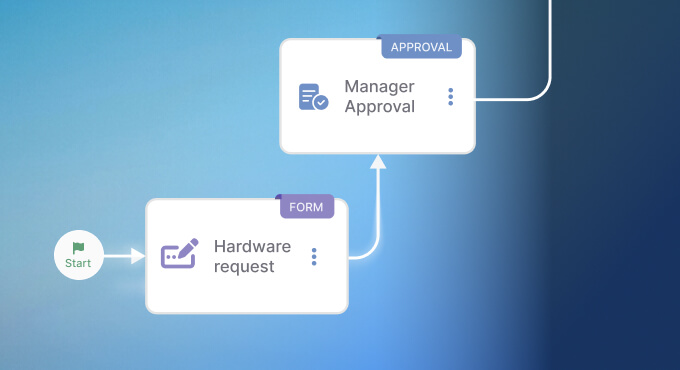
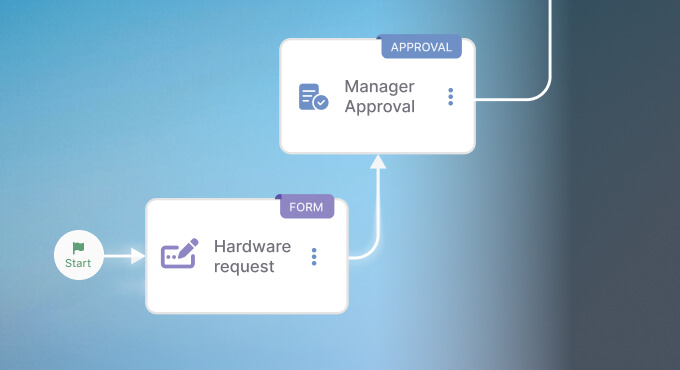
No-code workflow automation. Retail IT teams don't have development resources to maintain custom scripts every time a process changes. The platform needs a visual workflow builder where escalations, approvals, and routing logic can be configured and updated by an admin — without writing code.
Service catalog and self-service portal. Store employees shouldn't need to call IT to request a password reset or report a printer issue. A well-structured service catalog, visible to the right roles at the right locations, reduces inbound ticket volume and gives employees a consistent experience regardless of which store they're in.
Cross-department ESM. The moment Maintenance and Facilities start routing their own requests through the same platform as IT, the value multiplies. One platform, one ticket history, one reporting layer — instead of three separate systems that don't talk to each other.
Mobile access. Technicians working across physical stores need to act from the field. A mobile app that lets agents update tickets, close incidents, and access the knowledge base without returning to a desktop is a meaningful operational advantage.
Reporting by location. You need to be able to compare incident volume, resolution time, and SLA compliance across stores — not just in aggregate. Pattern detection at the location level (one store generating 40% of all POS-related tickets) drives proactive maintenance and staffing decisions.
Implementation speed. Retail operations move fast. A platform that takes six months to configure and deploy is a platform that will generate a lot of resistance internally.
Methodology note: InvGate builds and offers IT Service Management and IT Asset Management solutions, making us an active player in this software market. Some vendors in this article are our competitors. Even so, we aim to deliver accurate, honest, and practical information that helps you make the best decision. The tools below were selected based on how well they cover the evaluation criteria above, their documented presence in retail environments, and user feedback on platforms like Gartner Peer Insights.
InvGate Service Management is an ITSM and ESM platform with strong documented adoption in multi-location retail — from supermarket chains and restaurant franchises to pharmacy chains and neighborhood grocery networks. It's designed for mid-market and enterprise organizations that need to run complex, cross-department service operations without relying on developers to maintain the system.
The platform has 15 ITIL practices accredited and includes a no-code workflow engine with drag-and-drop configuration, allowing teams to design and modify service processes without scripting. It supports multi-department service delivery and can be configured without dedicated development resources.
Key features relevant to retail IT:
Proven in retail:
Auto Mercado, a leading supermarket chain in Costa Rica with over 40 stores and more than 3,400 employees, has been running IT, Maintenance, and Customer Service on InvGate Service Management since 2012 — now managing 15 help desks with over 40 agents handling an average of 5,000 tickets per month. Read more about how Auto Mercado improved retail operations with InvGate.
Farmacity, one of Argentina's largest retail pharmacy chains, scaled from 15 to over 65 help desks covering more than 10 business areas after adopting InvGate Service Management as part of an ESM strategy. Before that, they had a homegrown ticketing solution that only IT agents could access, forcing store staff to rely on phone calls and emails for every request.
Considerations: InvGate Service Management is strongest for mid-market to enterprise retail organizations that need multi-location, multi-department service management. Teams looking primarily for customer-facing support (e-commerce, omnichannel service to end consumers) will find the tool's focus is on internal IT and ESM operations.
Explore retail IT operations with InvGate or request a 30-day free trial to see how it handles your specific setup.
ManageEngine ServiceDesk Plus is an ITSM platform from Zoho's enterprise software division, with a dedicated retail IT help desk page and explicit positioning in that space. It combines IT Service Management, IT Asset Management, and a CMDB with enterprise service management capabilities for departments including HR, facilities, and finance.
Key features relevant to retail IT:
Considerations: ManageEngine ServiceDesk Plus has a broad feature set that covers most ITSM requirements. Users on review platforms note that the depth of configuration options can create a steeper learning curve, particularly for teams without prior ITSM tool experience.
Freshservice is a cloud-native ITSM platform from Freshworks, designed for organizations that want full ITSM functionality with a lower onboarding barrier. It covers incident, problem, change, and asset management through a unified dashboard, with a strong emphasis on usability and out-of-the-box automation.
Key features relevant to retail IT:
Considerations: Freshservice balances usability and enterprise capability well, which makes it attractive for retail IT teams moving away from email-based support for the first time. Some key features — including AI copilot capabilities — are only available in higher-tier plans.
ServiceNow is the dominant enterprise platform for large-scale ITSM, ITOM, HR service delivery, and cross-functional workflow automation. Organizations with more than 1,000 employees and complex, multi-system IT environments are its natural fit — and large retail enterprises at that scale do run ServiceNow successfully.
Key features relevant to retail IT:
Considerations: ServiceNow does not publish public pricing, and contracts are negotiated on a case-by-case basis. Its breadth of functionality makes it a strong fit for large retail organizations with complex processes, multiple support teams, and the resources to manage the platform over time. Smaller retail IT teams or organizations that are still building their ITSM practice may want to carefully evaluate implementation effort, administrative overhead, and total cost of ownership alongside the platform's capabilities.
TOPdesk is a Dutch-origin ITSM platform with strong adoption in Europe, particularly in services-oriented sectors. It covers incident management, problem management, asset management, and ESM capabilities across IT, HR, Facilities, and Finance from a shared portal.
Key features relevant to retail IT:
Considerations: TOPdesk has a solid ITIL foundation and is often noted for approachable implementation and strong post-sale support. Its geographic footprint is strongest in Europe — teams evaluating it for retail chains in North America or Latin America should verify local support availability, partner network depth, and regional references during the evaluation process.
Disclaimer: All product names, logos, and brands are property of their respective owners. All company, product, and service names used on this site are for identification purposes only. Use of these names, trademarks, and brands does not imply endorsement. Comparisons are based on publicly available information as of April 2026 and are provided for informational purposes only. ServiceNow is a registered trademark of ServiceNow, Inc. InvGate is not affiliated with, sponsored by, or endorsed by ServiceNow.
What is retail service desk software?
Retail service desk software is an IT service management platform designed to help retail IT teams manage internal support operations across one or more store locations. It centralizes incident reports, service requests, and maintenance workflows into a structured ticketing system — replacing informal channels like email, phone, or messaging apps. Purpose-built options include location-specific SLA configuration, cross-department service delivery, and reporting by store or region.
How is a retail IT service desk different from a customer service help desk?
A customer service help desk is designed for external-facing support — handling consumer inquiries, order issues, returns, and omnichannel communication with customers. A retail IT service desk is an internal tool for managing IT incidents, hardware failures, software requests, and cross-department workflows among employees. The two tools serve different teams, different processes, and different workflows. Retail IT teams need ITSM capabilities (incident, problem, and change management, SLA tracking, CMDB) that customer service platforms don't provide.
What features should retail IT teams prioritize in a service desk tool?
The most important features for retail IT environments are: multi-location support with per-store SLA and calendar configuration, no-code workflow automation for escalation and routing, a self-service portal with role-based visibility, cross-department ESM for IT, Maintenance, Facilities, and HR, mobile access for field technicians, and location-level reporting. Implementation speed and the ability to operate without a dedicated development team are also significant practical criteria.
Can a service desk platform manage multiple store locations from a single instance?
Yes, modern ITSM platforms designed for multi-site environments can manage hundreds of locations from a single instance. InvGate Service Management, for example, supports multiple help desks within the same platform — each with its own SLA policies, working hours, agent assignments, and service catalog — allowing a central IT team to maintain visibility and control across every location while giving each store a consistent support experience.


