


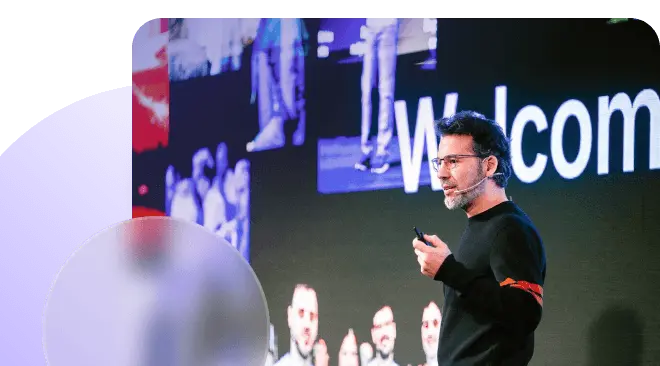




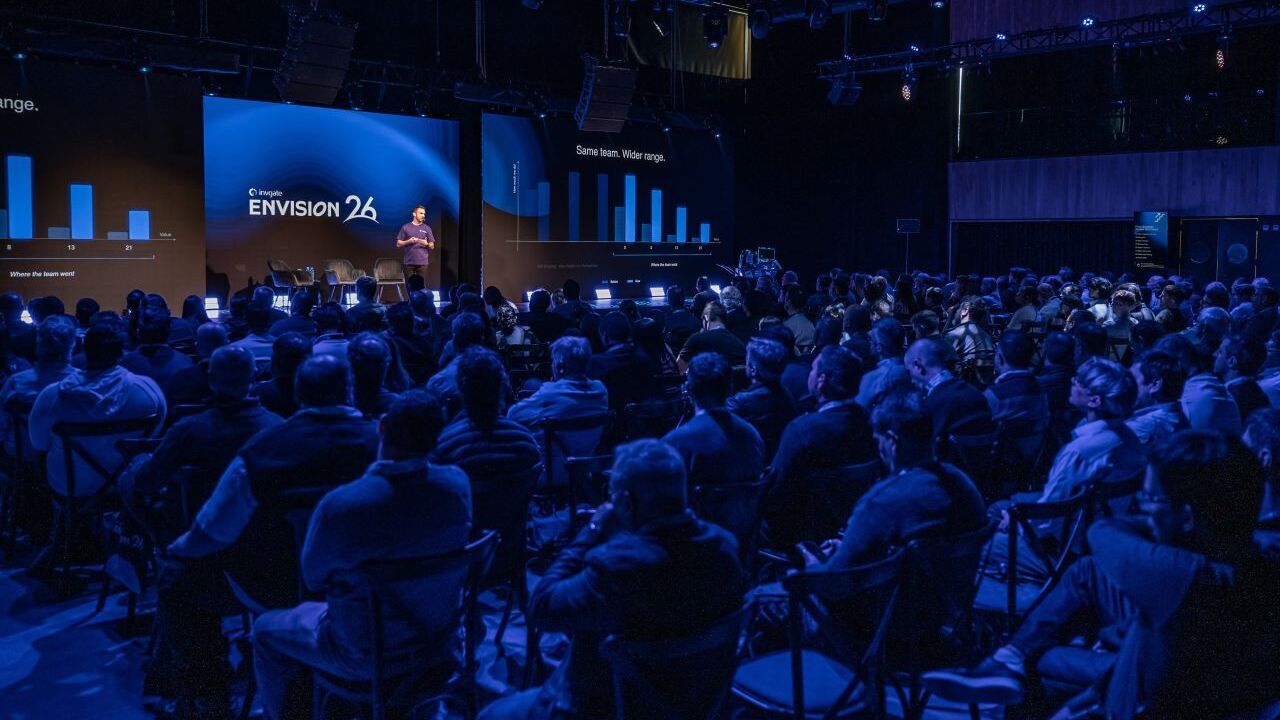

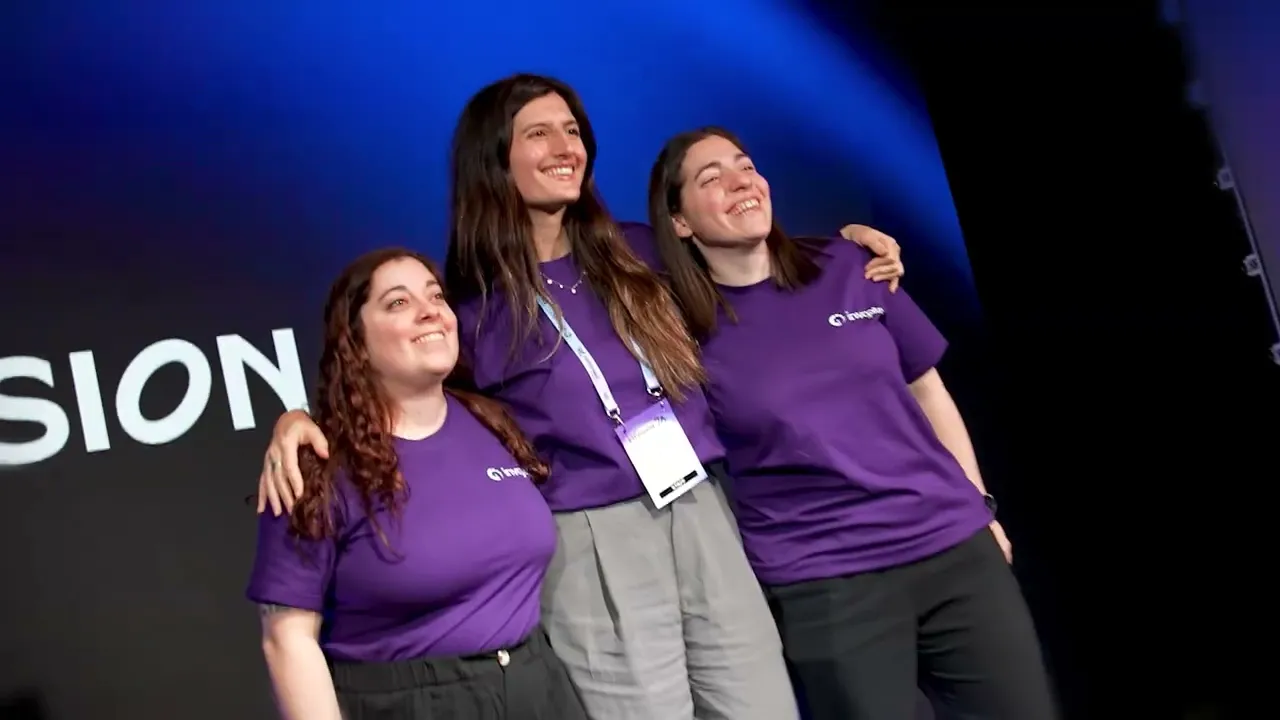
The third edition of ENVISION, InvGate’s global user conference, took place in Buenos Aires on Thursday, September 24. Customers, partners, IT leaders, and technology experts came together for a full day of conversations, product announcements, success stories, and networking around the changes reshaping IT.
Artificial intelligence was naturally at the center of many of those conversations, but the discussion went beyond the technology itself. Across keynotes, roundtables, product sessions, and conversations with customers, the same questions kept resurfacing: What happens when AI moves from experimentation into day-to-day operations?
Here are some of the ideas that shaped ENVISION’26.
Ariel Gesto, CEO and co-founder of InvGate, opened the day exploring some of the noise surrounding AI. As companies rushed to attach the word “agent” to new products and initiatives, experimentation was relatively easy. Scaling those experiments was where the cracks started to appear.
For Ariel, the model itself was never the whole story.
That idea, that useful AI depends on the environment around it, became one of the threads running through the day. Organizations have accumulated more tools, more workflows, more data, and more layers of technology, while the teams and processes responsible for managing them have not necessarily grown at the same pace.
As Ariel put it: “Complexity multiplies on its own. Simplicity has to be designed.”
InvGate co-founder and CRO Gonzalo Sainz-Trápaga approached the same moment from a different angle. His session asked attendees to look beyond the immediate race to adopt AI and think about where the puck is going. Every technological shift creates companies that understand the change early, others that adapt later, and some that keep optimizing a model that seems to be disappearing underneath them.
The CIO roundtable brought that question down to the organizational level. Patricio Flynn from Ternium, Claudio Piccardo from Pluspetrol, and Marcela Fernie from Banco Industrial discussed what AI adoption actually looks like inside large companies.
Their conversation quickly moved past tools. They talked about redesigning processes, building the right data foundations, developing new skills, and dealing with a cultural shift that affects entire organizations.
Pablo Vergne, VP of Product at InvGate, connected those ideas to product strategy later in the morning. If AI is going to take action inside an organization, it needs context on one side and rules on the other: enough information to understand the environment, and enough structure to know what it should be allowed to do.
The InvGate Asset Management and InvGate Service Management sessions showed how we are translating that broader vision into the products themselves.
On the InvGate Asset Management side, Bárbara Sabakdanian and Gabriel Goldentul presented a roadmap increasingly focused on giving organizations a more complete map of their technology environment, including parts of it that traditional inventories have struggled to represent.
Atlas, InvGate Asset Management’s AI agent for data completeness, is evolving beyond external catalog lookups to using information already available inside a customer’s environment to suggest missing owners, locations, and financial data, while exposing the reasoning behind those suggestions.
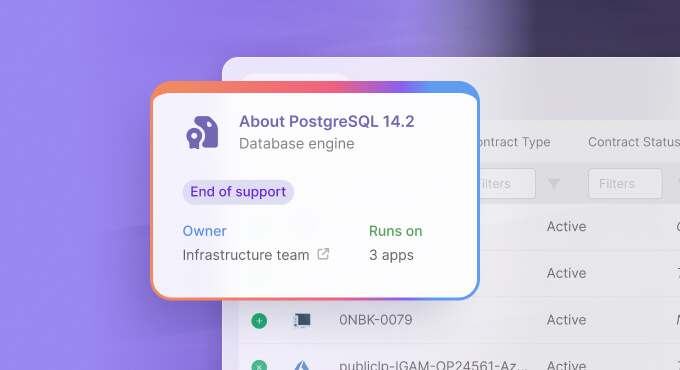
InvGate also presented new ways of expanding what can be governed as an asset. Digital Assets brings items such as automation workflows and certificates into the inventory, while AI Assets is designed to give organizations a place to register agents, models, MCP servers, skills, plugins, and other pieces of their growing AI estate. Physical inventory is getting attention too, with new audit capabilities built around QR and RFID scanning.
What connected them at ENVISION was the attempt to make an increasingly messy technology landscape visible enough to manage.
That need came through just as strongly in the Asset Management community roundtable with Tara Fenwick from Pennant Services, Cristian Baubeau from Marval, O’Farrell & Mairal, and InvGate’s Matt Beran.
Baubeau described Asset Management as a discipline for decision-making and security, not simply inventory. Fenwick stressed the work that has to happen around a tool: her team focused on people and processes first, including putting the right talent in place to maintain trustworthy data.
That sentiment also appeared in a very different customer story later in the afternoon. Carlos Reyes explained how Liberty Latin America approached the problem of fragmented incident management across more than 40 countries. The company was dealing with multiple platforms, too much manual administration, and no common view of its KPIs.
Its first move was standardization: understand which services each market provided, identify what they had in common, and establish common processes and measurements. Observability and consolidation followed, ultimately bringing operations that had been spread across numerous tools into a unified approach with InvGate.
InvGate Service Management’s announcements picked up that same question of how work gets designed and carried out. Eugenia de Aramburu and Sofía Abate showed a redesigned self-service portal that brings the Virtual Service Agent and AI-generated answers much closer to the center of the user experience.
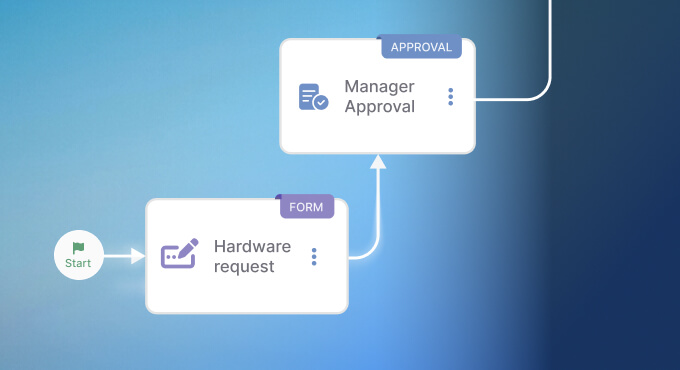
They also presented AI-Powered Workflow Generation, which lets an administrator describe a process in natural language, answer some clarifying questions, and receive an editable first version of the workflow rather than beginning with a blank canvas.
Two international speakers brought outside perspectives to many of the same questions.
David Nalley, Director of Developer Experience at AWS, offered perhaps the day’s clearest warning against starting with AI simply because AI is available.
AI capabilities are changing so quickly that beginning with a particular model or feature can turn the problem-solving process backwards. Nalley suggested starting with the work the customer actually needs done and then deciding what kind of technology belongs there.
Sometimes that will be AI. Sometimes, a deterministic automation that reliably gets from A to B will be faster, cheaper, and more appropriate.
Ali Arsanjani, Director of Applied AI Engineering at Google Cloud, approached the problem from an architectural perspective. His session drew lessons from Service-Oriented Architecture and applied them to a world of AI agents.
He argued that greater autonomy also creates greater responsibility to understand what the system is doing, and proposed that just as there should be no service without a goal, there should be no agent without a verifier and an evaluation gate.
After a full day spent talking about artificial intelligence, Liliana Gary, InvGate’s President and co-founder, closed ENVISION’26 by turning the conversation toward something much older: how people learn from and trust one another.
Gary suggested that AI can give us more information and increasingly capable answers. That may make trusted human context more valuable, not less.
A colleague saying this happened to me, this is how I dealt with it, and this is what I would recommend brings experience, context, and trust into the answer. Those qualities become especially important in a world already saturated with information.
“In a world where intelligence is increasingly available,” Gary said, “what will really matter is the people we surround ourselves with and the relationships of trust we build.”
That idea also connects directly to how InvGate has tried to build its products and its community: solving complicated problems in ways that make working life simpler, while remembering that people ultimately operate the technology, make the decisions, and live with their consequences.
AI is going to keep getting more capable. ENVISION’26 offered a useful reminder that taking advantage of it will involve considerably more than choosing a model. It means building reliable context, designing processes deliberately, governing new forms of autonomy, and deciding where human judgment belongs.
Those are questions the IT community will be working through for some time. This year, at least, we got to work through some of them together.


