Universities rely on technology across nearly every part of campus operations. IT teams support students, faculty, researchers, and administrative staff while maintaining the systems that keep teaching, learning, and institutional services running. Alongside traditional endpoint and network support, they often manage requests related to enterprise applications, identity and access, classroom technology, and shared services for multiple departments.
Finding help desk software that fits a university's IT environment isn't always straightforward. Higher education brings predictable spikes in demand, a diverse user base, and support workflows that extend well beyond IT.
In this guide, we'll look at the best help desk software for universities, compare their strengths, and highlight the features that matter most when evaluating a platform.
Why university IT support is different
University IT teams typically support a broad mix of services across campus, including:
- End-user support: Password resets, MFA, email, software, classroom technology, printing, Wi-Fi, VPN, and device support.
- Enterprise applications: Student Information Systems (SIS), Learning Management Systems (LMS), ERP platforms, library systems, research applications, identity management, and integrations.
- Campus infrastructure: Networks, servers, cloud services, computer labs, classroom technology, audiovisual equipment, and residence hall connectivity.
- Institutional technology services: University websites, portals, business applications, security services, integrations, and data platforms.
That breadth creates requirements that many general-purpose help desk tools weren't designed to address.
Common challenges for university IT teams
- A constantly changing user population. New students arrive every term, others graduate, faculty and staff join or leave, and permissions change throughout the academic year. Identity and access management is a continuous process rather than a one-time setup.
- Support requests from multiple departments. IT often shares a service management platform with departments such as the Registrar, Student Services, Human Resources, Facilities, Finance, and the Library, each with its own request types, workflows, and service expectations.
- Predictable seasonal spikes. Enrollment, move-in week, the start of the semester, and final exams can dramatically increase ticket volume. Self-service and automation help absorb those peaks without expanding the support team.
- Sensitive student and employee data. Service requests may involve academic records, financial information, or employee data, making role-based permissions, audit logs, and access controls important considerations.
- Limited budgets and lean teams. Many institutions are expected to support thousands of users while keeping staffing and software costs under control, increasing the value of automation and efficient request routing.
What to look for in a university help desk
A help desk for higher education should support both day-to-day IT operations and the broader service needs of the institution. Features worth prioritizing include:
- Multiple service desks or department-specific queues.
- Self-service portals and knowledge bases to reduce repetitive requests.
- Workflow automation for approvals, routing, and common service requests.
- Integration with identity providers, SIS, LMS, ERP, and directory services.
- Role-based permissions and detailed audit trails.
- Support for seasonal demand without requiring significant manual effort.
- Reporting and dashboards for service levels across departments.
- The flexibility to expand into Enterprise Service Management (ESM) if other campus departments adopt the platform.
Best help desk software for universities
Methodology note: InvGate develops IT Service Management and IT Asset Management software, so we’re directly involved in the same market as some of the vendors mentioned here. Even so, our purpose is to share reliable and unbiased information to help you evaluate your options. We assessed each platform on core ITSM functionality, ease of implementation and use, scalability across team sizes, deployment flexibility, AI, and automation capabilities. Our analysis draws on official product documentation, hands-on testing where possible, and verified user reviews.
1. InvGate Service Management
InvGate Service Management is a no-code ITSM and Enterprise Service Management (ESM) platform designed to support multiple service desks from a single environment. Universities can manage IT, Student Services, Facilities, Human Resources, the Registrar, and other administrative departments with independent queues, workflows, SLAs, and service catalogs while keeping reporting and administration centralized.
InvGate has verified higher education deployments, including Universidad Austral, which modernized its service management practices by replacing email- and phone-based support with structured, ITIL-aligned workflows.
Key features for universities:
- Multiple help desks with independent queues, SLAs, service catalogs, and branding.
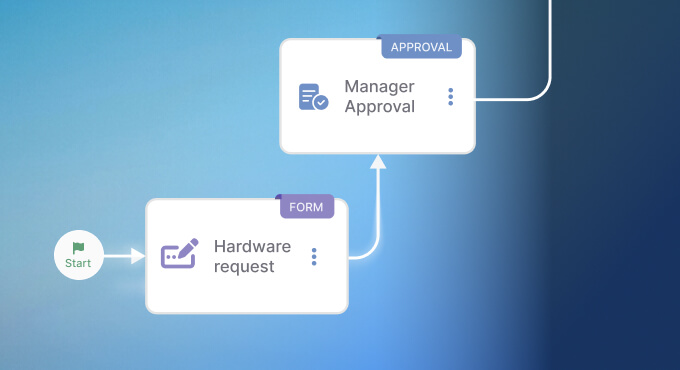
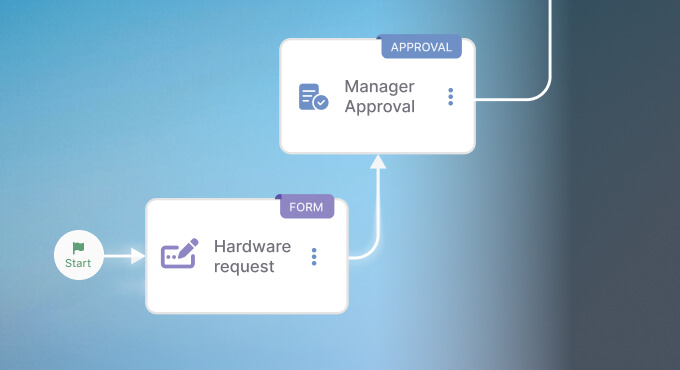
- No-code workflow builder for automating requests, approvals, and routing.
- Self-service portal and knowledge base to reduce repetitive requests.
- AI-powered Virtual Service Agent for request deflection.
- AI Hub with agent assistance, solution recommendations, knowledge creation, and intelligent request routing. All AI features are included in every pricing tier.
- SSO, LDAP, and Active Directory integration.
- Role-based permissions and audit logs.
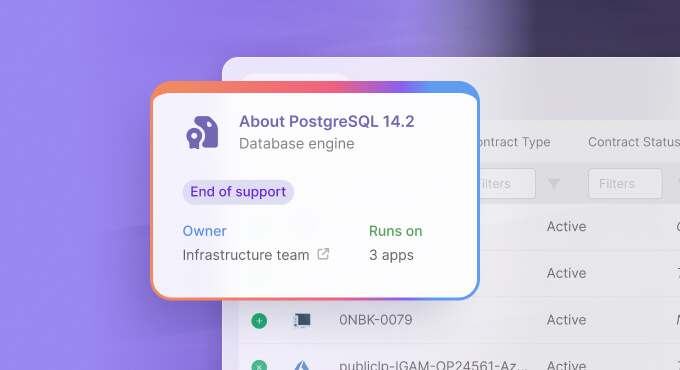
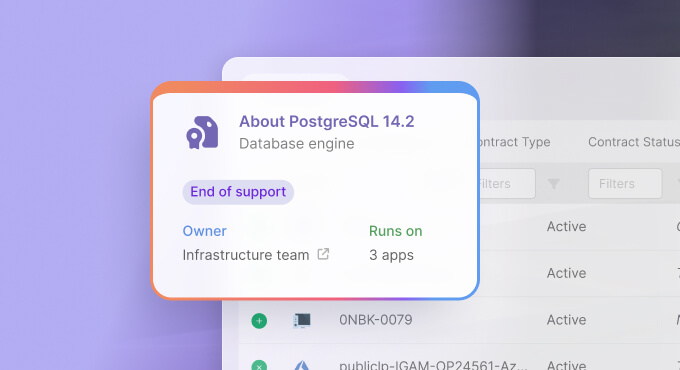
- Native IT Asset Management integration with InvGate Asset Management for managing hardware, software, and related incidents.
- Dashboards and reporting across departments and services.
- Enterprise Service Management capabilities that allow additional university departments to adopt the platform over time.
Pricing: InvGate offers flexible pricing plans that scale to meet the unique needs of your organization.
- Starter: 24.98/agent/month billed annually and 5 agents minimum - $1499/year.
- Pro: $500/agent/year. 5-50 agents.
- Enterprise: Custom pricing for larger organizations.
See how it works — request a 30-day free trial.
2. Freshservice
Freshservice is a cloud-based ITSM platform that balances ease of administration with a broad set of ITIL capabilities. Universities looking for a SaaS solution with modern automation, AI features, and support for multiple administrative departments will find it well suited for medium and large IT organizations.
Key features for universities:
- Multiple service desks through Business Teams.
- Freddy AI for self-service, ticket categorization, and automation.
- No-code workflow automation.
- Service catalog and employee portal.
- Knowledge base for self-service.
- Asset Management and CMDB.
- Workflow approvals and SLA management.
- Integrations with Microsoft 365, Google Workspace, and other campus systems.
Pricing: It offers 3 subscription levels with published price, the prices with annual billing are:
- Starter: $19 per agent, per month.
- Growth: $49 per agent, per month.
- Pro: $99 per agent, per month.
The fourth tier, Enterprise, requires a quote. - Checked on July 2026 (US) official website.
3. TOPdesk
TOPdesk has a long history in higher education and other public-sector organizations where multiple departments deliver services through a shared platform. Its service-oriented approach makes it a strong option for universities that want to standardize requests across IT and administrative teams without adding unnecessary complexity.
Key features for universities:
- Shared service desk for multiple departments.
- Self-service portal.
- Knowledge base.
- Workflow automation.
- Service catalog.
- Asset and Configuration Management.
- Facilities Management modules.
- Cloud and on-premise deployment.
Pricing: TOPdesk's pricing is based on the number of agents and offers volume discounts. The rates below are for 50 agents:
- Essential: $58 per agent/month
- Engaged: $83 per agent/month
- Excellent: $114 per agent/month
For fewer than 50 agents, per-agent costs are higher. For example, the Essential plan costs $76 per agent/month for up to 10 agents and $68 per agent/month for up to 20 agents. For deployments exceeding 50 agents, users must request a custom quote.
- Checked on: July 2026 (US), official website.
4. Jira Service Management
Jira Service Management is best suited for universities where IT works closely with software development, research computing, or engineering teams. Institutions already invested in the Atlassian ecosystem can connect service requests with development work while using the same platform for incident and change management.
Key features for universities:
- Native Jira Software and Confluence integration.
- Custom workflows and automation.
- Service catalog.
- Self-service portal.
- Knowledge base.
- Asset Management.
- Incident and Change Management.
- Marketplace integrations.
Pricing: The following rates apply to a 50-agent deployment.
- Standard: Starting at $20.63 per agent / per month.
- Premium: Starting at $52.16 per agent / per month.
Plus, they offer a free tier for up to 3 agents. The enterprise tier requires a quote.
Checked on: July 2026 (US), official web.
5. ManageEngine ServiceDesk Plus
ManageEngine ServiceDesk Plus is a mature ITSM platform that combines service management, asset management, and configuration management in one product. Universities that need on-premise deployment, extensive ITIL functionality, or an all-in-one platform often consider it alongside larger enterprise solutions.
Key features for universities:
- Cloud and on-premise deployment.
- Incident, Problem, Change, and Release Management.
- Integrated Asset Management.
- CMDB.
- Self-service portal and knowledge base.
- Workflow automation.
- Service catalog.
- Dashboards and SLA reporting.
Pricing:
Cloud pricing tiers:
- Standard: Starts from $13 / technician / month
- Professional: Starts from $27 / technician / month
- Enterprise: Starts from $67 / technician / month
Note: For Professional and enterprise tiers, price changes also according to the amount of assets. There are also available add-ons.
- Checked on: July 2026 (US), official website.
Disclaimer: All product names, logos, and brands are property of their respective owners. All company, product, and service names used on this site are for identification purposes only. Use of these names, trademarks, and brands does not imply endorsement. Comparisons are based on publicly available information as of July 2026 and are provided for informational purposes only.
How to choose the right ITSM tool for higher education
Before committing to a platform, run through these questions with your IT leadership team. They reflect the decisions that will determine whether a tool succeeds or stalls in a higher education environment.
-
Do you need multi-department support from day one, or just IT? If Facilities, HR, or Student Services are already on your roadmap, choose a platform with native ESM capabilities — not one that requires add-ons or complex configuration to extend beyond IT. Starting with an IT-only tool and retrofitting it for ESM later is consistently more expensive than getting it right upfront.
-
Do you have on-premise or data residency requirements? FERPA and institutional data governance policies may restrict where student-related ticket data can be stored. On-premise deployment narrows your options — ManageEngine ServiceDesk Plus is the clearest fit on this list for that constraint.
-
How fast do you need to be live? If your next semester starts in six weeks, implementation timeline is a hard constraint. Platforms that require professional services or multi-month configuration cycles are effectively off the table. Prioritize tools with documented fast-deploy tracks and no-code setup.
-
Can your IT team configure workflows without outside help? In higher education, IT departments are often lean. A platform that requires a consultant to modify a workflow category is one that will get stale fast. No-code configurability is not a convenience — it's an operational requirement for teams that move quickly and don't have implementation budget on standby.