Public sector IT teams are under constant pressure to improve service delivery without adding staff or dramatically increasing budgets. The technology is often the easiest part of a modernization project. The real work is fitting that platform into organizations where small IT teams support many departments, operational practices have evolved over decades, and every investment has to go through long procurement cycles, but demonstrate measurable value quickly as well.
Those constraints will ultimately shape every decision, from replacing a help desk to introducing automation.
This article looks at the challenges behind public sector IT modernization and the practices that help organizations make meaningful progress. The perspectives throughout come from Keith Bluestein, Deputy CIO of the Judicial Branch of Arizona in Maricopa County; Gabriel Colon, Assistant Director at the City of Coppell, Texas; and Lance Spranger, CIO of Waukesha County, Wisconsin, who shared their experiences as part of InvGate's public sector IT forum.
1st challenge: Serving multiple "businesses" under one roof
Private-sector IT usually serves one business model. Public sector IT serves many, simultaneously, out of the same office. A county government might run IT for parks, courts, public works, and finance at once. Each of those functions has its own priorities, its own funding source, and its own definition of a successful year. There's no single "the business" to align IT strategy with — there are a dozen of them, each on a separate budget cycle, each with legitimate claims on IT's time and attention.
Another challenge comes from the way government is structured: the rules aren't consistent across government tiers. Federal agencies operate under a shared, legislated framework for IT spending and service delivery, which gives federal IT leaders a consistent playbook across hundreds of agencies. That consistency disappears below the federal level. State and local IT shops often have no equivalent framework, so practices that are non-negotiable in one layer of government may not exist as a concept in another. A judicial branch and a federal agency might be auditing IT spend against entirely different baselines, even though both fall under "government IT."
"The challenge was moving from one industry focus to 17 different industries... they all have a business model behind every one of them, as well as the unique funding sources that they all have."
— Lance Spranger, CIO, Waukesha County, WI
2nd challenge: Enterprise expectations on a lean budget
Public sector IT teams are routinely measured against a standard their headcount was never built to meet. A mid-sized city might run its entire IT operation on a handful of people, while internal departments expect dashboards, automation, and uptime comparable to a private enterprise many times their size. The work doesn't shrink to fit the org chart. What has to change is how much manual effort each task requires — automation, self-service, and the right tooling exist to close that gap.
Resource constraints also explain why many public sector organizations turn to managed service providers (MSPs) to supplement small internal teams. Even then, technology still determines how efficiently work gets done. Every unnecessary handoff, manual approval, or email chain adds time to a request, regardless of who owns it. A well-designed service desk reduces that overhead with automation, self-service, and standardized workflows, allowing both internal teams and external providers to work from the same processes instead of relying on manual coordination.
"Leaning into an MSP for our ticketing and our help desk really just added roadblocks to servicing our departments because you had a process on top of a process."
— Gabriel Colon, Assistant Director, City of Coppell, TX
3rd Challenge: Procurement risk and legacy inertia
Public sector purchasing carries a level of accountability that doesn't exist in most private-sector contexts. Spending taxpayer dollars on the wrong platform can be a very visible mistake, and the person who signed off on it is answerable for it. That pressure pushes decisions toward the safest-looking option: the industry-standard platform, the recognized brand, the vendor that's already in the analyst reports. If it's the established leader, the decision is at least defensible.
The problem is that "defensible" and "right for this team" aren't the same thing. Some of the dominant brands in ITSM carry significant implementation overhead, licensing costs, and, in many cases, require specialized skills to operate and scale that a lean public sector team simply doesn't have. The result is a pattern that plays out across agencies of every size: a platform purchased in good faith, implemented partially, and then left in that state for years — because getting real value out of it would require resources the team was never given. The tool becomes legacy not because it aged out, but because it was never fully adopted to begin with.
"It was almost unusable. You really needed specialized people to work on that."
— Keith Bluestein, Deputy CIO, Judicial Branch of Arizona, Maricopa County
That inertia is hard to break. Replacing a partially-deployed platform means acknowledging the original decision didn't work, which carries its own political cost. And the same risk aversion that drove the first choice tends to drive the evaluation of the next one.
What can short-circuit that cycle isn't always a formal procurement process or an analyst report — it's often a conversation with a peer at a comparable agency who has already made the switch and can speak to what it actually took. That kind of ground-level intelligence answers the question formal research rarely does: did this actually work for a team like mine?
What actually works
Across government tiers, the pattern holds: successful modernization comes from sequencing the transition carefully, communicating it clearly, and introducing it effectively to the departments that will use it. The platform matters, but technology is usually the easiest part to solve.
1. Sequence the rollout rather than attempting everything at once. The most durable modernization projects pick a starting point tied to a function with a clear internal champion and a measurable, visible payoff, then use that early win to build credibility for the next phase. Asset management is a common entry point: a CFO or finance team that needs accurate reporting on IT spend is a natural ally, and a clean asset report is a straightforward win to point to when making the case for the next investment.
2. Prioritize fit over features. The most expensive or most feature-complete platform isn't automatically the right one for a small team. A useful filter: would this tool require a dedicated full-time administrator to get value from it? If so, it may not be sized for the reality of the organization. The goal isn't to mirror a large enterprise's IT footprint — it's to find something the existing team can actually operate and improve over time.
"We kinda quit searching for the perfect tool. Search for the one that fits."
— Gabriel Colon, Assistant Director, City of Coppell, TX
3. Treat adoption as the primary project. Standing up a unified intake system or self-service portal is the easy part. Getting departments to actually use it is the real work — and most resistance has less to do with the tool than with what departments are afraid of losing. Teams that have always relied on personal relationships with a known IT contact don't switch to a centralized system because it exists; they switch when someone shows them specifically what changes for the better. Identifying what a holdout department is actually protecting — whether that's control over who can submit requests, visibility into their own queue, or something else — and addressing that specific concern is more effective than a generic efficiency pitch.
4. Build a change champion network, not just a launch plan. Top-down announcements rarely drive adoption on their own. Selecting trusted connectors within each department — people who aren't necessarily formal leaders but who others turn to — and equipping them to carry the message and surface feedback is one of the more reliable ways to sustain adoption past the initial rollout.
5. Rely on peer networks alongside analyst research. Talking to peers at comparable agencies who've already implemented a tool provides a level of practical diligence that a vendor demo or published report can't. The most useful signal is often whether a team similar in size and structure was able to get real value out of a platform without dedicated implementation resources.
Putting it into practice: InvGate Service Management for public sector IT
The challenges above don't require a large, complex platform to address — they require one that a small team can actually operate. That's the design principle behind InvGate Service Management: an ITIL-aligned platform built for organizations that need real functionality without the implementation overhead or dedicated administration that enterprise tools tend to assume.
In practice, that means teams can get a working service portal up quickly, configure workflows without professional services, and extend the platform to other departments as adoption grows — without starting a new implementation project each time.
"I don't need a full-time administrator... if something were to happen, anybody can come in and be an administrator of this tool because it's so simple."
— Gabriel Colon, Assistant Director, City of Coppell, TX
That operability also changes what a lean team can say yes to. Automation, dashboards, self-service — capabilities that previously required budget or headcount the team doesn't have, become things the existing team can build and maintain on their own.
"The amount of work that we can produce is a lot bigger than our org chart."
— Gabriel Colon, Assistant Director, City of Coppell, TX
InvGate Service Management is built to close those gaps without adding operational weight. A few of the capabilities that make a direct difference for public sector teams:
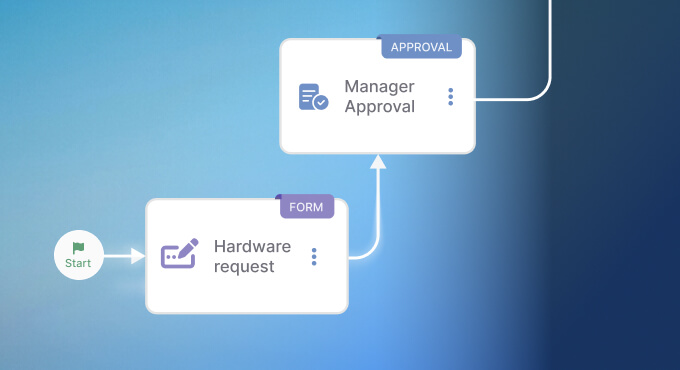
- No-code workflow builder — configure, modify, and automate processes without external help or professional services hours.
- Unified service catalog — consolidates requests across IT and other departments like HR, Finance, and Facilities in a single portal.
- Virtual Service Agent — an AI-powered chatbot available via web, Slack, or Teams that handles common requests and deflects tickets before they reach the team.
- Knowledge Discovery — surfaces relevant knowledge base content automatically during ticket resolution, reducing time spent on documentation efforts and repeat issues.
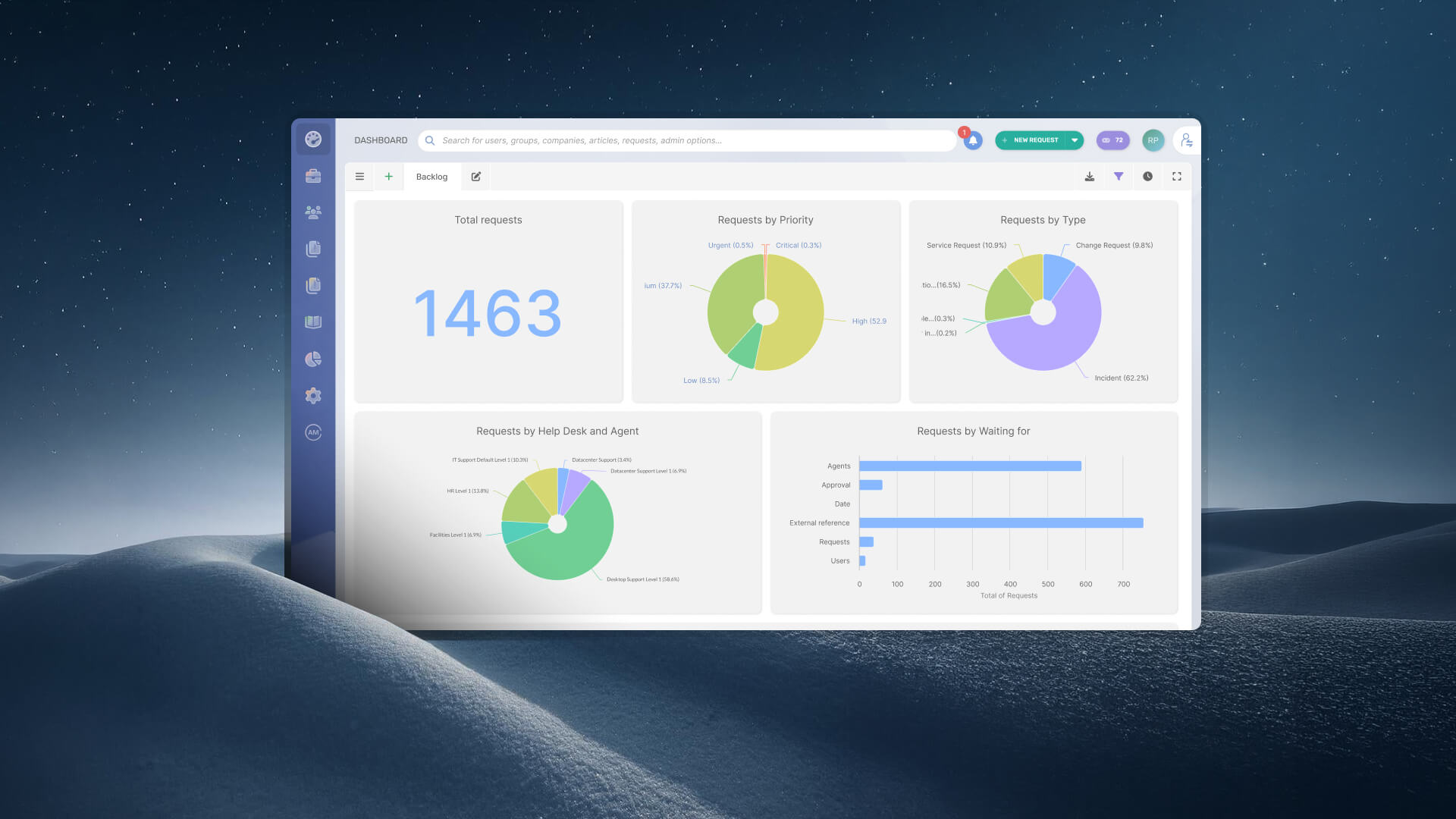
- Built-in analytics and dashboards — real-time visibility into team performance and service delivery without a separate BI tool.
If you're ready to explore what a right-sized platform looks like in practice, InvGate Service Management offers a 30-day free trial. Start yours today!