











ITSM software for oil and gas organizations must support service management across distributed operations, with clear controls for access, change approvals, incident handling, and audit trails. Integration with existing systems, support for contractors and remote teams, and visibility into service performance are also relevant evaluation criteria.
This article compares five ITSM platforms for oil and gas organizations, outlining their capabilities, deployment options, and suitability for different service management requirements. The focus is IT service management for technology operations, excluding OT management and field asset tracking.
Methodology note: InvGate is a vendor in the ITSM market and is included here alongside competing tools. Capabilities and pricing were compiled from official vendor sources and checked in October 2026.
ITSM requirements in oil and gas reflect the scale and distribution of operations, the number of teams and contractors involved, and the need for controlled changes to business-critical systems. Organizations may need to bring Incident Management, service requests, change approvals, and asset information into a more consistent operating model while integrating with existing tools and processes. Low-code configuration can help internal teams adapt workflows and approval rules without relying on developers for every change.
Change Management deserves particular attention. Changes to systems supporting production, refining, transportation, or other energy operations require clear approval paths, impact assessments, and documented rollback plans. ITSM software should maintain an auditable record of who authorized a change, which systems or assets it affects, and how implementation and recovery are managed.
We evaluated each platform based on its incident and change management capabilities, workflow configuration, asset visibility, audit trails, integration options, and support for distributed teams.
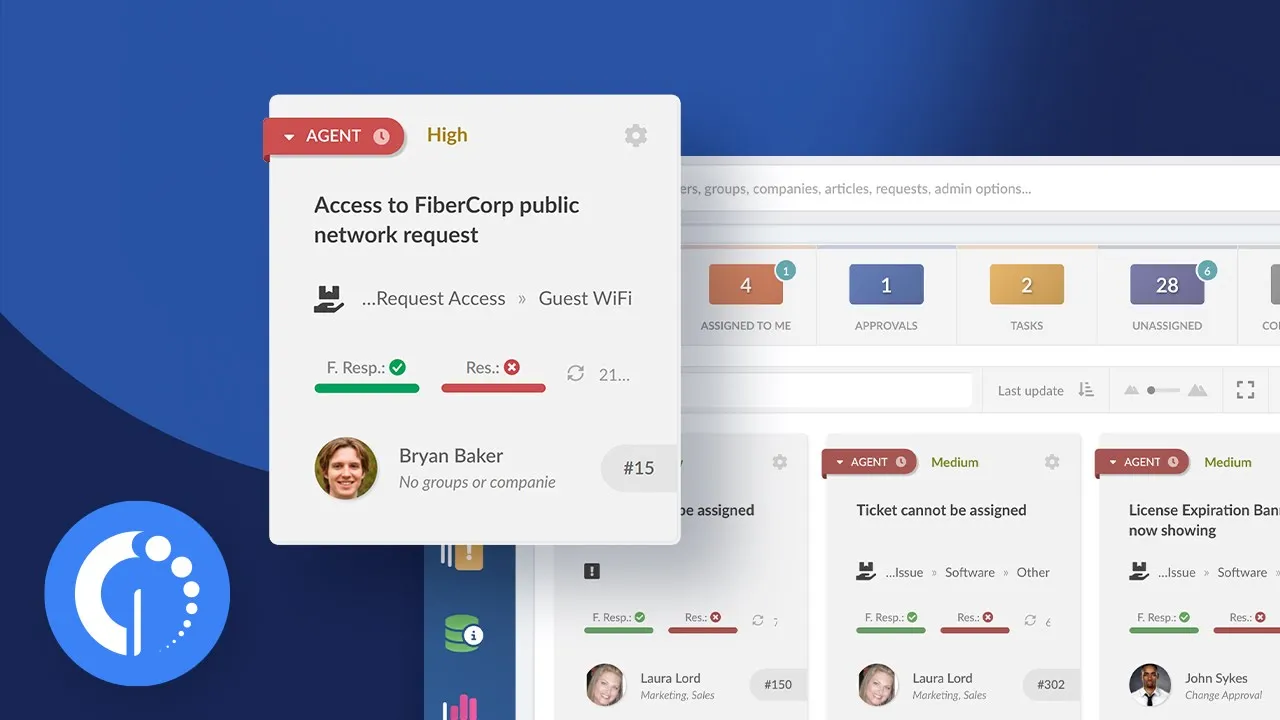
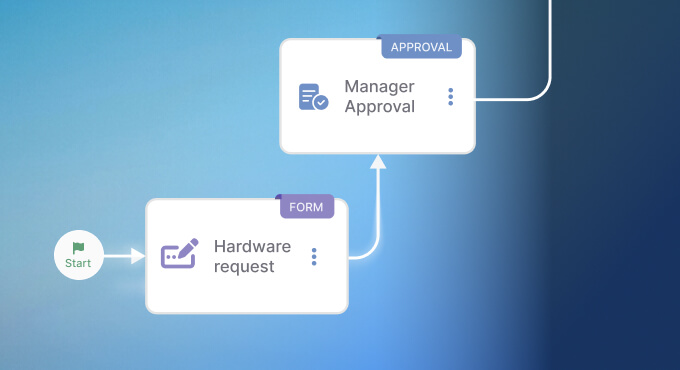
InvGate Service Management is a no-code, ITIL-aligned ITSM platform with verified adoption across the oil and gas sector, including Pluspetrol, PECOM Servicios Energía, Vista Energy, Pampa Energía, Tecpetrol, Transener, Compañía General de Combustibles, and Cotemar. Energy companies have used it to replace fragmented toolsets including BMC Helix and TopDesk, consolidating Incident Management, request fulfillment, Change Management, and asset inventory into a single platform. It also supports multi-stage approval workflows for Change Management. Security teams can query the full change log and admin activity trail without IT compiling reports manually.
Scale is where this shows up in practice. After moving to InvGate, offshore wind developer JERA Nex bp — a company of more than 750 employees — went from logging around 2,500 tickets a year to 500–600 a month, capturing and resolving far more requests without the backlog growing.
The platform is available as cloud (SaaS) and on-premises with feature parity between both models.
Pricing:
Start a 30-day free trial or talk to Sales to find the right plan.
According to ServiceNow's official energy and utilities page, ServiceNow is designed for connected operations in oil and gas, covering incident, problem, change, and Request Management, IT/OT dependency mapping, and compliance workflows. Its Change Management module provides multi-stage approval chains, automated readiness checks, and 360-degree release visibility. For enterprise oil and gas organizations already on the platform, its depth and GRC integration are the industry standard.
ServiceNow is designed for enterprise organizations with dedicated admin teams.
Pricing: not publicly listed, requires a custom quote.
According to Freshservice's official website, Freshservice is a cloud-based ITSM platform covering incident, problem, change, and request management with a no-code Workflow Automator. Its omnichannel intake accepts requests via email, portal, Slack, and Microsoft Teams, which is relevant for oil and gas workers at remote sites without regular portal access. For energy companies leaving complex, scripted platforms behind, Freshservice's low-overhead configuration is a practical alternative.
Pricing: It offers 3 subscription levels, the prices with annual billing are:
Freddy AI Copilot (agent assistance) is an add-on costing $29 per agent per month, available only for Pro plans and above. - Verified in October 2026 on the official web.
According to Jira Service Management's official website, JSM covers incident, problem, change, and request management with native integration into Jira Software and Confluence. Its Change Management module connects development tools to change workflows for automatic ticketing and approval, and its Assets module provides a CMDB for tracking configuration items and dependencies. For oil and gas organizations with technical IT teams already working in the Atlassian ecosystem, JSM keeps Service Management connected to existing tools.
Pricing: Pricing varies depending on the number of agents, with lower per-agent costs available at higher volumes. For example, the following rates apply to a 50-agent deployment:
- Verified in October 2026 (US), official web.
According to ManageEngine ServiceDesk Plus's official website, ServiceDesk Plus is an ITIL-aligned ITSM platform covering incident, problem, change, and request management, with a service catalog and Asset Management included. It supports cloud and on-premises deployment and is configurable through a visual interface without scripting, which makes it a practical option for oil and gas teams that need structured workflows without complex implementation overhead.
Pricing: Differentiated pricing for cloud subscription and on-premises. Cloud pricing tiers:
Note: For Professional and enterprise tiers, price changes also according to the amount of assets. - Verified in October 2026 (US), official web.
This section is about the IT help desk — the team and tooling that support laptops, access, connectivity, and business applications for people across the operation. Maintenance of field equipment like pumps, compressors, and turbines is a different job, handled by a CMMS, not an ITSM platform.
In oil and gas, requests reach IT from wells, plants, terminals, and corporate offices, and they rarely come through a single channel. A field supervisor may email, an engineer may message in Microsoft Teams, and an office worker may open a ticket in the portal. The help desk has to capture all of it in one queue with consistent tracking.
Contractor access is the other constant. Crews from different firms rotate on and off sites, so IT needs to provision and deprovision accounts quickly, scoped to the right systems and the right duration. Per-site SLAs keep response times realistic for remote locations, and a solid knowledge base lets shift workers resolve common issues themselves when support hours don’t line up.
The right ITSM for oil and gas depends on organizational scale, process maturity, and change governance complexity.
ServiceNow is the enterprise standard for large organizations with dedicated implementation teams. Jira SM suits technical teams with existing Atlassian tooling. Freshservice and ManageEngine offer structured ITSM without scripting overhead.
For energy organizations in the 1,000–10,000-employee range that have outgrown a legacy tool and want enterprise-grade change governance and the option of on-premise hosting — without the cost and long rollouts that usually come with it — InvGate Service Management is built for that environment.
Oil and gas companies use IT help desk and ITSM platforms such as InvGate Service Management, ServiceNow, Freshservice, Jira Service Management, and ManageEngine ServiceDesk Plus. The right fit depends on scale, deployment needs (cloud or on-premise), and how strict change governance has to be. Maintenance of field equipment is handled separately by CMMS tools, not these platforms.
Support for remote sites works best when requests can arrive through several channels — portal, email, and Microsoft Teams — and land in a single tracked queue. Per-site SLAs set realistic response times, and a self-service knowledge base lets shift workers resolve common issues when the help desk is offline. Reliable contractor onboarding and offboarding keeps access secure as crews rotate on and off.
An IT help desk supports technology — devices, access, connectivity, and business applications — for the people who work across the operation. Field service or CMMS software manages the maintenance of physical field equipment such as pumps, compressors, and turbines. They solve different problems, and most oil and gas operators run both.
Disclaimer: All product names, logos, and brands are property of their respective owners. All company, product, and service names used on this site are for identification purposes only. Use of these names, trademarks, and brands does not imply endorsement. Comparisons are based on publicly available information as of October 2026 and are provided for informational purposes only. ServiceNow is a registered trademark of ServiceNow, Inc. InvGate is not affiliated with, sponsored by, or endorsed by ServiceNow.


