InvGate Service Management and HaloITSM are both full ITSM platforms — Incident, Request, Change, and Problem Management, a service catalog, a CMDB, and the automation that ties them together — so the choice between them rarely comes down to a missing feature. It comes down to three things: how each one is priced, how it handles IT Asset Management, and how much effort it takes to configure.
InvGate Service Management vs HaloITSM at a glance
InvGate figures come from its product, pricing and security pages at invgate.com; HaloITSM figures come from Halo's product, pricing and AI pages at usehalo.com. Both sets were checked in October 2026, and InvGate's Gartner Peer Insights rating on November 4, 2026. The feature comparison draws only on each vendor's own documentation.
The sections below work through the rows that usually decide it: pricing, configuration, AI, Asset Management, deployment and security.
Pricing models: per-agent plans vs one all-inclusive price
The clearest structural difference between the two platforms is how each one charges, and it can change the total noticeably depending on how many agents you run against how many end users.
InvGate Service Management uses per-agent plans, and end users and approvers are unlimited and free. The people who raise requests and sign off on them never count toward a license, so cost tracks the size of your IT and service teams rather than the size of the organization they support.
HaloITSM takes a different route: one all-inclusive price per agent that covers the full feature set, with named or concurrent licenses offered at the same rate and free for end users. Halo also builds in onboarding packages that are required and priced to each project, so the first-year figure includes more than the per-agent license.
Workflows, approvals, and service beyond IT
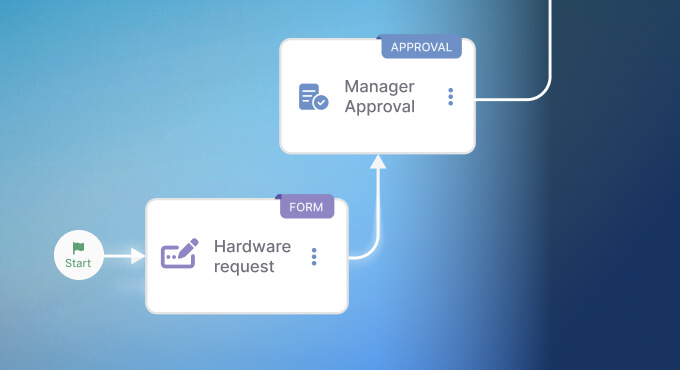
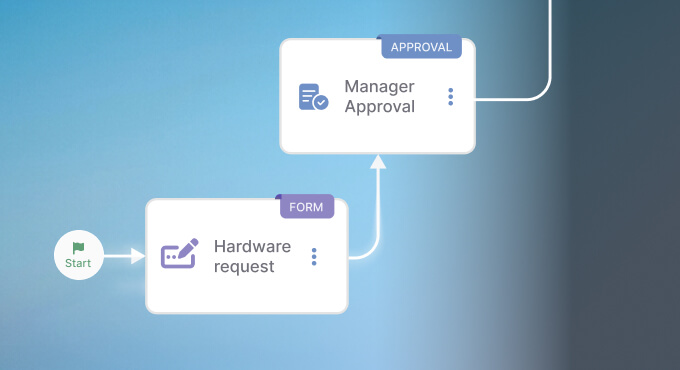
Both platforms let you build workflows, forms, and approvals without writing code, so neither one locks configuration behind a development team.
InvGate Service Management does this through a visual, no-code builder, where the service desk designs request flows and approval chains directly. The same configuration carries past IT: HR, Legal, Facilities, and Finance can run their own services on the platform without extra licenses, which makes it a practical base for enterprise service management rather than a help desk that other teams borrow.
HaloITSM covers the same ground with no-code forms, workflows and automations, plus federated administration that lets different areas manage their own part of the platform. It also ships with incident and major incident handling, request and service catalog, change and problem management, and more than 1,000 built-in reports out of the box.
AI: InvGate AI Hub vs Halo AI
Both vendors fold AI into the core product rather than selling it as a separate tier.
InvGate AI Hub is included on every Service Management plan, with no add-on fee and no credit pool to top up. It works across three areas: assistance for agents (solution recommendations, ticket summaries and rewritten responses), proactive detection that flags major incidents and drafts the announcement, spots requests at risk of breaching their SLA, and predicts the risk and impact of a change before it is approved, and Knowledge Management that generates articles and pulls answers out of resolved tickets.
Alongside the AI Hub, InvGate's Virtual Service Agent is a conversational agent that answers user questions and resolves common requests on its own across the self-service portal, Microsoft Teams, WhatsApp and Slack; it can also open, track and comment on requests and move approvals along.
HaloITSM bundles Halo AI into every plan as well. Its AI agents come in two forms: conversational agents that triage, log and escalate requests across web chat, Microsoft Teams, Slack, and the self-service portal, and process agents that act on their own within role-based permissions. The platform-intelligence layer adds features like surfacing matching tickets and knowledge articles, suggestions for categorization, routing and SLA-breach warnings, and clustering of recurring tickets.
IT Asset Management and CMDB
This is where the two products are built differently, and it is worth thinking through before the decision is made.
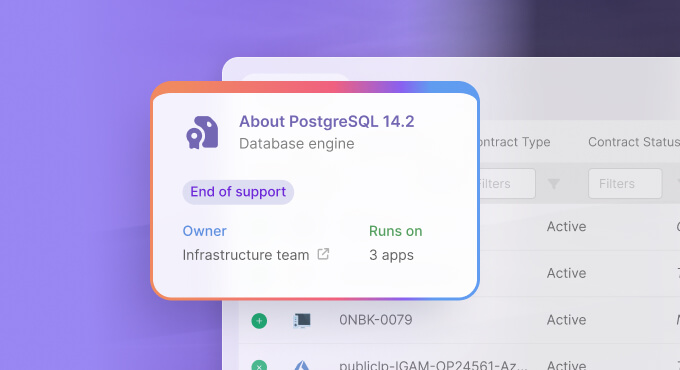
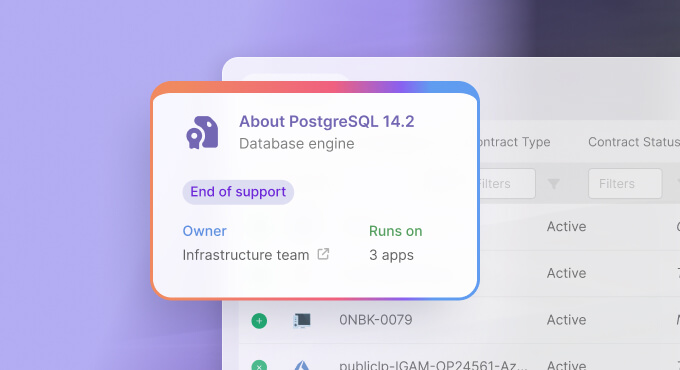
HaloITSM keeps the CMDB and IT asset management inside the same platform as the service desk, so hardware, software and configuration items sit next to tickets and changes under one license and one bill.
InvGate handles asset Management through InvGate Asset Management, a separate product with its own pricing that integrates natively with InvGate Service Management. For a team that needs real depth in IT Asset Management — discovery across physical, virtual and cloud, software compliance, lifecycle and infrastructure mapping, and more — InvGate's dedicated product has more room to grow, even though it means running two connected products.
Deployment and security
Both platforms run in the cloud or on-premise. InvGate Service Management offers on-premise deployment on its Enterprise plan, while HaloITSM offers Halo Cloud, a private cloud and on-premise.
On certifications, InvGate publishes ISO 27001:2022 and SOC 2 Type II. Halo lists a longer set on its product page — ISO 27001, SOC 2 Type II, GDPR, Cyber Essentials Plus, IRAP and HIPAA — and, for US public sector buyers, it achieved FedRAMP certification in August 2026. Where FedRAMP authorization is a hard requirement, that difference is likely to settle the decision on its own.
When HaloITSM is the better choice
HaloITSM is the stronger fit in two situations.
The first is an organization that wants service management, customer service, CRM and PSA on one platform from one vendor. Halo sells all of these on the same underlying product, so a company looking to consolidate several tools — not only ITSM — can do it without stitching separate systems together.
The second is a US federal agency, or a contractor working with one, where FedRAMP authorization is non-negotiable. Halo's FedRAMP certification makes it eligible for that work without a separate accreditation effort.
When InvGate Service Management is the better choice
InvGate Service Management is the better fit for an enterprise organization moving off a legacy or heavily customized tool that wants to configure the platform without developers. The visual builder keeps workflows, forms and approvals in the hands of the service desk team, asset management runs as a dedicated product with a native integration, and implementation typically takes weeks rather than months.
It also tends to win on customer sentiment: InvGate was named a Customers' Choice in the 2025 Gartner Peer Insights™ Voice of the Customer for IT Service Management Platforms.
HaloITSM is one of several tools worth weighing here; a companion article on alternatives to HaloITSM covers the wider field for teams that want to look past a head-to-head. (Editor's note: link to https://blog.invgate.com/haloitsm-alternatives once that article is published.)
Want to see how InvGate Service Management fits your team? Start a free trial and try it with your own workflows, or talk to our team to work through the details for your organization.
InvGate Service Management vs HaloITSM FAQ
Is InvGate Service Management cheaper than HaloITSM?
They price differently — InvGate uses per-agent plans with free end users and approvers, while Halo charges one all-inclusive price per agent — so the cheaper option depends on your ratio of agents to end users. Compare the current numbers on InvGate's pricing page and Halo's pricing page.
Do InvGate and HaloITSM support on-premise deployment?
Both do. InvGate Service Management offers on-premise on its Enterprise plan, and HaloITSM offers on-premise alongside Halo Cloud and a private cloud option.
This comparison is based on information published by InvGate and Halo and on each vendor's public documentation as of October 2026, with InvGate's Gartner Peer Insights rating verified on November 4, 2026. Product capabilities, certifications and pricing change over time; check each vendor's official pages for the current details.
Gartner and Peer Insights™ are trademarks of Gartner, Inc. and/or its affiliates. All rights reserved.
Gartner Peer Insights content consists of the opinions of individual end users based on their own experiences, and should not be construed as statements of fact, nor do they represent the views of Gartner or its affiliates. Gartner does not endorse any vendor, product or service depicted in this content nor makes any warranties, expressed or implied, with respect to this content, about its accuracy or completeness, including any warranties of merchantability or fitness for a particular purpose.