Outsourcing the service desk to a managed service provider solves a real problem early on: it gives a lean IT team coverage without the cost of hiring. Over time, that same arrangement can become the bottleneck it was meant to prevent. Every ticket routes through a third party. Every exception needs approval. What should take thirty minutes takes a day, because the people closest to the problem aren't the ones allowed to fix it.
This is a pattern playing out across IT teams of every size, not a flaw specific to any one provider. As ticket volume grows and internal teams build up their own technical capacity, the math on outsourcing shifts. The question worth asking isn't whether MSPs are good or bad. It's whether the arrangement still fits the team's current size, skill set, and speed requirements.
Signs your IT service desk has outgrown its MSP
The cost of an MSP relationship isn't only the monthly invoice. It's the layer of process sitting between a request and its resolution. Every ticket that needs sign-off before action adds hours, sometimes days, to something an internal team member could close in the time it takes to read the ticket.
In InvGate's public sector IT forum, Gabriel Colon, Assistant Director for the City of Coppell, TX, described this exact dynamic before his team brought support in-house.
That delay compounds: end users lose confidence in the service desk, start finding workarounds, and satisfaction scores drift down long before anyone flags the MSP contract as the cause.
There's also a knowledge gap built into the model, and the feeling of being boxed in by it. As Colon put it, "I kinda felt like we were sucked in into the whole MSP sphere. Like, oh, we're in this bubble where we can't do our own things. We can't control this, we can't control that."
An external provider doesn't carry the same context about internal systems, past incidents, or how a department actually works day to day. Every ticket starts from a lower baseline of understanding, which shows up as more back-and-forth and slower resolution on anything that isn't routine.
A few signs the arrangement has stopped serving the team:
- Routine, low-risk tickets still require third-party approval before action.
- Resolution times have crept up even as ticket volume stays flat.
- End users are creating workarounds instead of submitting tickets.
- CSAT on IT support has declined without an obvious internal cause.
- IT leadership has little visibility into ticket status until something escalates.
- Cost per ticket keeps climbing as volume grows, with no equivalent gain in speed.
How to know if your team is ready to bring IT support in-house
The technical case for bringing support in-house is often the easy part. The harder part is the decision itself. Leadership worries about headcount, about losing MSP coverage during a transition, about the sunk cost already put into the current contract. That hesitation is reasonable, and it's also usually where good transitions stall.
The way through it isn't a single leap. Teams that make this shift successfully often start with one function rather than the whole scope of the MSP contract, using a natural point like contract renewal or expiration to trigger the change rather than trying to break a relationship mid-term. A single pilot, like introducing Asset Management or one category of ticket, gives the team a way to prove the model works with far less risk than an all-at-once switch. Contract timing also matters here. Waiting for the current MSP agreement to reach its natural end avoids paying twice, and gives the internal team a real deadline to prepare toward instead of an open-ended migration.
Signs a team is ready to bring support in-house:
- Internal staff already understand the systems and context better than the MSP does.
- Existing team members have capacity that isn't being used, because the MSP is handling work they could take on.
- Routine requests are taking longer through the MSP than they would internally.
- Leadership wants direct accountability for resolution times and service quality.
- The cost of outsourcing no longer scales sensibly with current ticket volume.
Building a small team that delivers enterprise-level support
Bringing support in-house doesn't mean rebuilding what the MSP had. It means starting from how the team actually works today. Before adding any tooling or automation, map the workflows as they currently run: what comes in, who touches it, where it gets stuck. That mapping is what makes automation useful rather than decorative. Automating a broken process just makes the broken process faster.
The platform choice matters as much as the process work. A lean team doesn't need an enterprise-scale tool built for organizations with dedicated administrators and long implementation cycles. It needs something built for teams that have to do more with the people they already have.
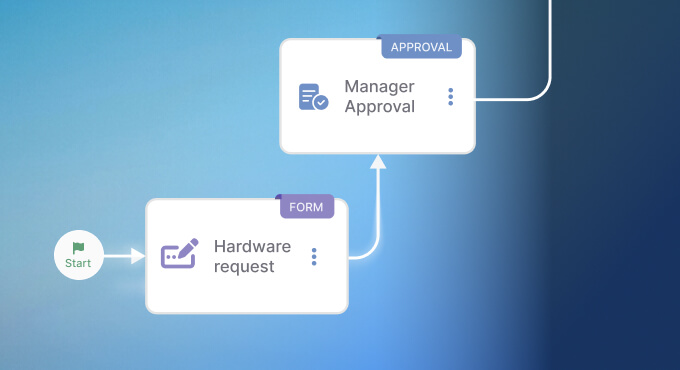
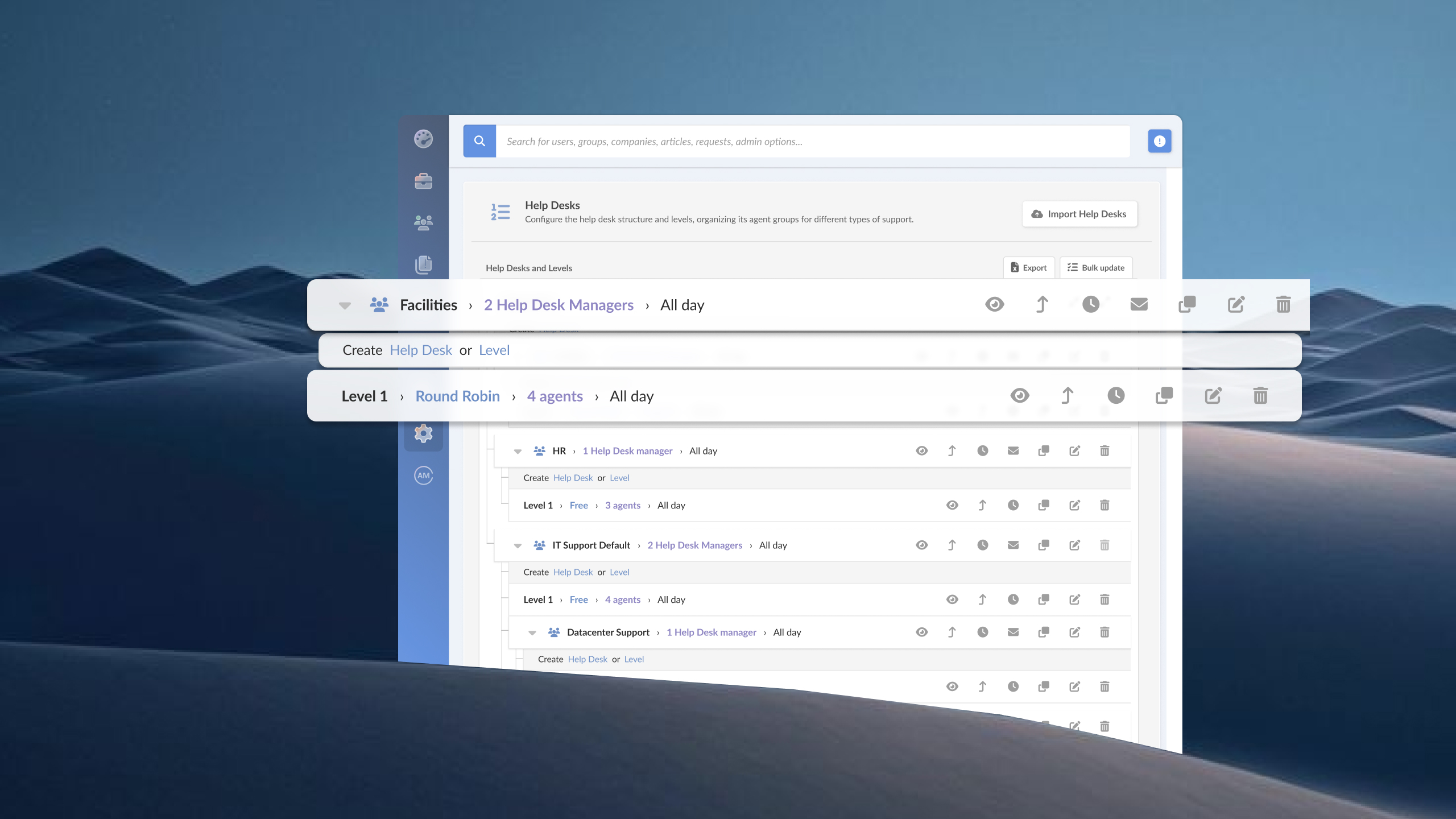
InvGate Service Management is a no-code ITSM platform that works as well for a lean team as it does at enterprise scale. Teams can build and edit workflows, add custom fields, and set up automations without paid professional services hours or a dedicated administrator.
That same flexibility shows up across the platform:
- A unified service catalog gives employees one place to submit requests, so nobody has to guess whether something belongs with IT, HR, or Facilities
- Approvers don't need a license to participate in a workflow, which keeps approval steps from becoming their own bottleneck
- Tailored dashboards give leadership visibility into ticket status and team performance without a separate BI integration
- Workflows, custom fields, and automations can all be built and changed by the team itself, without professional services hours
For Coppell, that flexibility changed what the team could commit to, and what they could produce with the same people:
How to start the transition
Moving support in-house doesn't have to happen all at once. A practical sequence looks like this:
- Map current workflows before touching any tooling, so automation has something real to build on
- Pick one function or ticket category to pilot, rather than migrating the full MSP scope on day one
- Time the switch to the MSP contract's natural expiration to avoid paying for both at once
- Set up the service catalog and approval workflows for the pilot area first, then expand
- Track resolution time and CSAT for the pilot against the MSP baseline before rolling out further
See what an in-house service desk could look like for your team. Start a 30-day free trial of InvGate Service Management — no credit card, no sales call required to get started.