Many help desk platforms assume you'll work with an implementation partner to configure workflows, build service catalogs, migrate data, and train administrators. That approach can make sense for large-scale projects, but it also increases costs, extends timelines, and creates dependencies on external consultants.
In this guide, we list ITSM platforms that can be configured and deployed by your own IT team, without a mandatory external consultant or paid partner engagement. If you're comparing a broader set of options and want more context on the general market, check out our best help desk software options reviewed — this list focuses specifically on the autonomy angle.
Key takeaways
- Some help desk platforms require a certified implementation partner before go-live — which adds cost, time, and dependency you may not need.
- The tools in this list can be configured and deployed by your own IT team, without external consultants or paid onboarding engagements.
- Key signals to look for: no-code configuration, guided self-onboarding, and a free trial with full feature access.
- InvGate Service Management is no-code, ITIL-aligned, and designed to go live in days — no partner required.
- Time-to-value varies significantly across vendors; this list includes available setup timelines for each tool.
What to look for when choosing a help desk that doesn't need a partner
Before committing to any platform, there are a few questions worth asking directly — and a few signals worth looking for in trials.
-
Ask the vendor explicitly whether they offer a guided go-live path without a mandatory partner engagement. The answer should be a direct yes, with documentation or a Customer Success team to back it up. If the response involves recommending a partner "for best results" and that language appears in every conversation, take note.
-
Evaluate what the trial actually gives you access to. A 14-day trial with locked features isn't a real trial — it's a preview. The tools worth considering offer full access to their core feature set so your team can validate the configuration experience, not just the dashboard.
-
Check whether onboarding is included in the base price or sold separately. Some platforms offer guided onboarding as a paid add-on. Others include a Customer Success touchpoint in every subscription tier. The difference matters when you're comparing total cost of ownership.
-
Look at time-to-first-resolved-ticket in customer case studies or published reviews. This is a meaningful proxy for real implementation speed. Vendors with genuinely fast deployments tend to reference it clearly. If the case studies lead with "after a 6-month implementation," that's a signal.
- Finally, assess documentation quality and community resources. A platform you can implement yourself requires that you can also maintain and extend it yourself. Look for a knowledge base that's actively maintained, a user community where practitioners share configurations, and a support team that answers technical questions without defaulting to "consult a partner."
For teams with limited internal resources, this context is especially relevant: ITSM software for small businesses with no-code setup covers the overlap between ease of implementation and lean team constraints.
Key features to prioritize
If your goal is to implement the software with your own team, these are some of the features you'll need that signal the platform will be easy to manage over time.
- Out-of-the-box ITSM or help desk processes: Preconfigured workflows, forms, SLAs, and service catalogs reduce the amount of design work required before go-live.
- Simple form and portal customization: Teams should be able to add fields, create request forms, update categories, and adjust the self-service portal without technical expertise.
- Built-in reporting and dashboards: Creating service desk metrics and reports should not require custom development or external analytics tools.
- Prebuilt integrations: Native connections to identity providers, collaboration tools, email systems, asset management platforms, and monitoring tools reduce implementation effort and ongoing maintenance.
- No-code workflow automation: Administrators should be able to create and modify approval flows, ticket routing rules, escalations, and notifications through a visual interface. Routine changes should not require developers or vendor services.
5 Help desk software options that don't require an implementation partner
Disclosure: InvGate competes in the same market as the vendors listed below. This guide aims to be a useful, objective resource for teams evaluating their options. All data is sourced from publicly available information.
The following tools were selected based on one core criterion: they can be deployed and configured by an internal IT team without a mandatory third-party partner engagement.
1. InvGate Service Management
InvGate Service Management is a no-code ITSM platform that allows IT teams to own their own deployment. The setup experience reflects that: there are no licensing barriers that require a partner to unlock, and no proprietary configuration language that only certified specialists can work with.
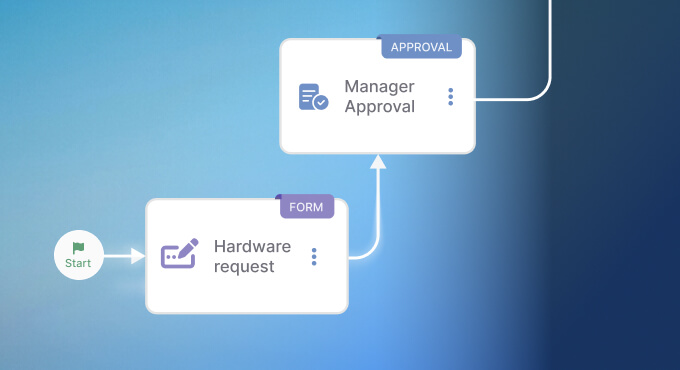
The platform's visual workflow editor lets admins build and modify service workflows through a drag-and-drop interface. Categories and custom fields define the data collected for each request type. The service catalog is configured directly in the interface. The self-service portal is deployable without front-end development skills. ITIL-aligned processes — incident, problem, change, service request — are available out of the box and can be activated incrementally as your team matures.
The platform integrates natively with Slack and Microsoft Teams for ticket creation and notifications, and on-premise deployment is available for organizations with special infrastructure requirements. Also, it's AI capabilities are available across all pricing tiers.
Want to see InvGate's setup experience directly? Get started with a 30-day free trial.
2. Freshservice
Freshservice is Freshworks' ITSM platform, positioned at small-to-midsize IT teams that need ITIL-aligned Service Management without enterprise complexity. It markets itself explicitly on deployment speed: the platform describes itself as "a plug-and-play ITIL solution for organizations looking to align themselves with best practices without getting any expert implementation help."
In practice, most teams can get a functional help desk running within the free trial window. No partner engagement is required. The platform's guided setup flow walks admins through account configuration, service catalog setup, SLA policies, and agent assignments without requiring external assistance.
Core features include Incident, Problem, Change, and Asset Management with a built-in CMDB. The interface is consistently described as one of the cleaner options in the ITSM category. AI capabilities are available across plans, though some features are gated to higher tiers. Native integrations cover Slack, Microsoft Teams, and Jira.
3. Zoho Desk
Zoho Desk is the customer support and help desk product within the Zoho ecosystem. It's cloud-native, configurable without code, and accessible to teams without dedicated implementation resources. Zoho's own enterprise page states that they "guarantee an implementation time that's at least 50% faster than the competition," with most teams running a pilot within a week.
Admins configure departments, roles, ticket routing, SLA policies, and automation rules through a settings-driven interface — no developers required. Custom fields, workflow rules, and ticket categories are set up via point-and-click configuration. The self-service portal and knowledge base are deployable without front-end development. For teams already in the Zoho ecosystem (CRM, SalesIQ, Analytics), they will find its integrations seamless.
For IT-specific use cases, Zoho Desk handles incident routing, SLA tracking, and knowledge-base-assisted deflection. It doesn't carry ITIL process modules as explicitly as Freshservice or InvGate Service Management, so teams with formal ITIL requirements should validate whether the out-of-the-box structure fits. The Zoho partner ecosystem exists for organizations that want help, but it's not structurally required to go live.
4. HappyFox
HappyFox's own website claims that "Start resolving tickets from day one. No steep learning curve." The platform handles IT, HR, Facilities, and customer-facing support from a single interface. Ticket routing, SLA management, department-specific workflows, and a self-service portal are all configurable through the admin UI.
HappyFox is designed for companies with 100 or more employees that need structured support operations, but the platform adapts to smaller and larger teams. Unlimited agent pricing tiers are available, which changes the TCO math at scale. HappyFox does not position itself as ITIL-aligned out of the box in the same way some purpose-built ITSM tools do.
5. TOPdesk
TOPdesk is a Dutch ITSM and ESM platform that has been active since the 1990s and serves over 5,000 organizations. The company states on their website: "Once set up, TOPdesk is easy to use and maintain — without coding or help from consultants."
The nuance here is that TOPdesk does recommend a consultant-assisted start, particularly for organizations with more complex environments. TOPdesk sells its own consultancy services and actively markets them to new customers. For simpler deployments, the platform's guided setup tools and documentation allow an internal admin to configure the core modules without engaging a partner. For organizations with multi-department ESM scope or legacy data migration needs, a consultancy engagement becomes more likely in practice.
TOPdesk is available as SaaS or on-premise. The platform integrates with Microsoft Teams, Slack, and over 100 pre-built connections. Modular licensing means you can start with what you need and add modules as the scope expands.
Disclaimer: All product names, logos, and brands are property of their respective owners. All company, product, and service names used on this site are for identification purposes only. Use of these names, trademarks, and brands does not imply endorsement. Comparisons are based on publicly available information as of June 2026 and are provided for informational purposes only.
Checklist: Are you ready to implement a help desk on your own?
Deploying a help desk without an implementation partner can save time and money, but success depends on how prepared your team is before the project begins. Use this checklist to assess whether your organization has the resources and information needed for a self-managed implementation.
People and ownership
- A project owner has been assigned.
- Service desk managers or team leads are available to make process decisions.
- Someone can administer the platform after go-live.
- Key stakeholders can review workflows, forms, and service catalogs during implementation.
Support processes
- Common request types have been identified.
- Incident and request handling processes are documented, even at a high level.
- Escalation paths are defined.
- Approval requirements are known.
- Service level targets or SLAs have been established.
Service catalog and intake channels
- You know which services employees will request through the portal.
- Existing email addresses, forms, or support channels have been identified.
- Categories and ticket types have been defined.
- A plan exists for consolidating support requests into the help desk.
User and organizational data
- Employee and team information is available for import or synchronization.
- User groups, departments, and locations have been identified.
- Access permissions and roles have been defined.
Knowledge Management
- Existing documentation and support articles have been collected.
- Frequently asked questions have been identified.
- A process exists for creating and maintaining knowledge articles.
Integrations
- Required integrations have been identified.
- Authentication requirements are documented.
- Existing tools that should connect to the help desk are known, such as asset management, collaboration, or monitoring platforms.
Change and adoption planning
- Employees know why the new help desk is being introduced.
- A communication plan exists for the rollout.
- Training requirements have been identified for agents and end users.
- A go-live date and rollout approach have been defined.
Long-term scalability
- The platform can support additional workflows and services as requirements evolve.
- Administrators can modify forms, workflows, and automations without vendor assistance.
- Internal staff can maintain the system after implementation.
- Future departments or service teams that may use the platform have been considered.
You do not need every item to be fully completed before starting. However, the more questions you can answer before implementation begins, the easier it becomes to configure the platform, achieve user adoption, and make adjustments after go-live.
When do you need an implementation partner?
Not every organization should implement a help desk on its own. An implementation partner can be valuable when you're replacing multiple legacy systems, migrating large amounts of historical data, integrating dozens of business applications, or rolling out service management across several departments simultaneously. In those cases, the challenge is often less about configuring the software and more about managing the project's complexity.
The decision comes down to internal resources. If your team has the time and ownership to define processes, configure workflows, and manage the rollout, self-implementation is often the faster and less expensive option. If the project involves extensive customization, complex integrations, or tight deadlines that your team cannot absorb alongside daily operations, partner assistance may help reduce risk and accelerate delivery.
Frequently Asked Questions
-
What does "no implementation partner required" mean?
It means your team can configure, launch, and manage the help desk without hiring external consultants or certified implementation partners. The vendor may still provide onboarding assistance, but a third party is not required to go live.
-
How long does it take to implement help desk software on your own?
Many cloud-based help desk platforms can be configured and launched in a few days to a few weeks, depending on the number of workflows, integrations, and services you need to set up.
-
Can a small IT team implement a help desk without external help?
Yes. Platforms with no-code configuration, prebuilt workflows, and guided onboarding are often manageable for small IT teams without dedicated implementation specialists.
-
Does "no partner required" mean no onboarding support?
Not necessarily. Many vendors offer onboarding assistance, training, and customer success resources. The difference is that you don't need to hire a separate consulting firm to deploy the software.