Flow by ServiceNow is an AI-powered platform that combines conversational AI agents with workflow automation to help businesses handle requests and execute tasks. It connects AI-driven interactions with automated actions, allowing users to get answers and complete tasks through a conversation.
This guide covers Flow’s main features, scope, pricing, and how it fits into the ServiceNow ecosystem, plus some alternatives.
What is Flow by ServiceNow?
Flow by ServiceNow is a conversational AI service desk that works inside Slack, Microsoft Teams, and email, so employees get help in the chat tools they already use rather than in a separate portal. ServiceNow launched it on October 1, 2026 and positions it as something a team can turn on and have running in a day, with no implementation project and no infrastructure to set up.
It is a standalone product: a new customer can buy and activate it without any existing ServiceNow relationship, and existing ServiceNow customers can switch it on using the AI credits they already own.
How Flow by ServiceNow works
Employees raise issues by chatting in Slack, Teams, or email. Flow answers common questions and handles repetitive requests, such as password resets, access requests, and policy questions, and hands off to a person when it cannot close something, keeping the exchange in the same thread the employee started in.
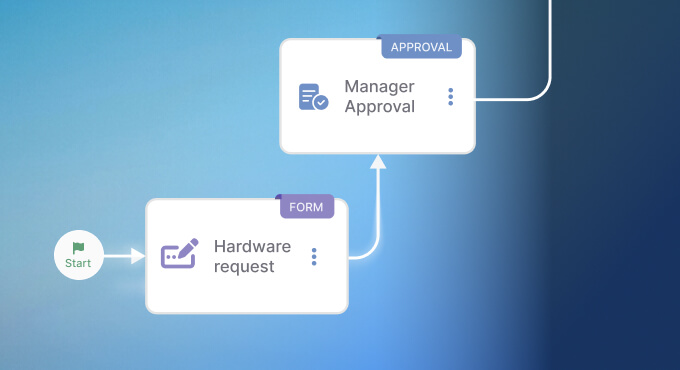
When a request is resolved the right way, a user can turn that resolution into an automation described in plain language, so the next time the same issue comes up Flow handles it on its own. ServiceNow says Flow draws on a company's existing knowledge wherever it lives, with nothing to migrate, and connects to more than 100 applications out of the box. For existing ServiceNow customers, a Flow service desk can sync both ways with their main ServiceNow instance.
Flow by ServiceNow vs. Flow Designer
These are two different things that happen to share a name, and search results currently mix them up. Flow Designer is a long-standing, low-code tool inside the ServiceNow platform that administrators use to build automated workflows, such as approval chains and notifications, within their existing ServiceNow instance.
Flow by ServiceNow is the new standalone AI service desk described here. It is a separate product that runs in chat, not a feature you configure inside the ServiceNow platform. If you are reading about building flows on ServiceNow, that is Flow Designer; if you are reading about a chat-based service desk you turn on in a day, that is Flow by ServiceNow.
Availability and pricing
Flow is in controlled availability. Anyone can sign up at letsflow.ai for early access, with North America getting priority in the first weeks. ServiceNow expects general availability for North America and EMEA in Q4 2026, and it is also available to existing ServiceNow customers on any pricing plan that includes AI.
Flow is free for 30 days with no credit card. After that, pricing is usage-based, and it depends on whether you are a new customer or already run ServiceNow. The figures below are from Flow's pricing page, checked October 16, 2026.
A conversation is a single issue handled by AI or a person, charged once whether it is opened by hand or automatically; any automation that runs inside that conversation is free. A separate automation charge applies when a Flow automation is triggered outside an employee conversation, for example through an API, an agent, or MCP.
Who Flow by ServiceNow is for
Flow is aimed at teams that want IT support to live inside the chat tools they already use, with as little setup as possible. ServiceNow describes two groups: smaller teams running support out of Slack messages, email, and spreadsheets that want structure without a long rollout, and departments inside larger organizations, such as a satellite team or a newly acquired unit, that need their own service desk quickly and may already be handling requests through Microsoft Teams.
The common thread is a preference for conversational support over a portal-and-ticket workflow, and a tolerance for starting without the asset, process, and knowledge structures that a traditional service desk is built around.
What to check before choosing a chat-based AI service desk
ServiceNow pitches Flow to newcomers with the line "No CMDB. No ITIL. No knowledge migration." For a team starting from Slack messages and a spreadsheet, dropping that overhead is the appeal. For a team that already relies on those structures, or expects to, the same line is the thing to weigh. Five questions help you tell which case you are in:
- What ITIL processes sit behind the chat? A conversation can resolve a request, but Incident, Problem, and Change Management are what keep recurring issues and risky changes under control. Check whether the tool runs those processes or only the conversation.
- Do requests connect to your assets? Many IT requests are really about a device, a license, or a contract. Check whether a request can be tied to the asset it concerns, or whether that context lives somewhere the chat can't see.
- Is there a self-service portal for what doesn't fit a chat? Service catalogs, approvals, and status pages don't always work well as a back-and-forth. Check what the experience is for anything heavier than a quick question.
- What happens to requests that start outside Slack or Teams? Some requests arrive by phone, walk-up, or from systems rather than people. Check how those enter the queue and whether they land in the same place as the chat ones.
- What will it cost in total? With usage-based pricing, the bill tracks volume. Estimate your monthly conversations and automations against the per-unit rates and any annual minimum before you commit.
If you want a chat-based service desk that still keeps full ITIL processes, a self-service portal, and includes no-code workflows, talk to the InvGate Service Management team.
Alternatives to Flow by ServiceNow
If Flow isn't the right fit, several tools offer chat-based support with more of the structure a traditional service desk provides. These are the main options to weigh, and the broader field of tools that compete with ServiceNow goes wider still.
-
InvGate Service Management — best for teams that want chat convenience without giving up ITIL structure. It runs a full service desk, with incident, request, problem, and change management, behind a self-service portal, and its
Virtual Service Agent answers employees' questions and resolves common requests on its own across the portal,
Microsoft Teams,
Slack, and WhatsApp. Requests raised in chat become tickets that follow the same workflows, SLAs, and approvals as every other channel, so chat is one more way in rather than a separate system. AI Hub, included on every plan, adds ticket summaries, suggested responses, and knowledge-article generation.
-
ServiceNow ITSM with Virtual Agent — best for organizations that want conversational support inside ServiceNow's full platform. Virtual Agent brings chat support to Teams and Slack while keeping the CMDB, ITIL processes, and governance that Flow sets aside. The trade-off is the heavier implementation that comes with the platform.
-
Freshservice — best for teams that want a cloud service desk that is quick to stand up. It offers ITIL-aligned ticketing, a service catalog, and asset management, along with its own virtual agent in Teams and Slack.
-
Jira Service Management — best for teams already standardized on Atlassian. It ties service requests to Jira and Confluence, which suits software and DevOps groups, and offers chat support through Atlassian's integrations. Teams outside that ecosystem may find it less natural.
-
SysAid — best for midsize IT teams that want ITSM with built-in automation. It covers ticketing, asset management, and workflow automation, with AI features layered on, and tends to suit organizations that want capable ITSM without enterprise-scale complexity.
Frequently asked questions
Is Flow by ServiceNow free?
Flow offers a 30-day free trial with no credit card required. After the trial, new customers pay $2 per conversation and $1 per automation run, with a $10,000 annual commitment. Existing ServiceNow customers can pay using their AI usage credits (Assists): each conversation costs 10 Assists, and each automation run costs 5 Assists. Contact your ServiceNow representative for more information about your available credits.
When is Flow by ServiceNow available?
Flow is in controlled availability now, and anyone can sign up at letsflow.ai, with North America first in line. ServiceNow expects general availability for North America and EMEA in Q4 2026.
Does Flow by ServiceNow work with Microsoft Teams?
Yes. Flow runs inside Microsoft Teams, as well as Slack and email, so employees can get help in the chat tools they already use.
Is Flow by ServiceNow the same as Flow Designer?
No. Flow Designer is a low-code tool for building workflows inside the ServiceNow platform. Flow by ServiceNow is a separate, standalone AI service desk that runs in chat.
A note on this list: InvGate publishes this blog, and InvGate Service Management is one of the tools covered. Vendor descriptions are drawn from publicly available information as of October 2026 and are provided for informational purposes only. ServiceNow is a registered trademark of ServiceNow, Inc. InvGate is not affiliated with, sponsored by, or endorsed by ServiceNow.