Large enterprises need more from an ITSM platform than ticket management. Multiple support teams, complex approval processes, strict governance requirements, and thousands of employees create demands that smaller organizations rarely face.
The right ITSM software for large organizations helps standardize service delivery across the organization while supporting automation, Asset Management, change control, reporting, and compliance requirements at scale. At the same time, the platform must remain flexible enough to adapt to evolving business processes.
In this article, we'll compare the best ITSM software for large enterprises, highlighting the types of organizations they are best suited for.
Key takeaways
- Enterprise ITSM platforms differ significantly in TCO, implementation timeline, and ESM readiness — "enterprise" on a vendor page doesn't always mean enterprise fit.
- Key evaluation criteria for large organizations include multi-department support, SLA governance, scalability, and total cost of ownership.
- There's no universal answer: the right platform depends on ticket volume, ITSM maturity, budget, and whether IT needs to extend service workflows to HR, Finance, or Facilities.
What to look for in an enterprise-grade ITSM platform
Enterprise ITSM platforms must support complex service delivery environments where thousands of users, multiple support groups, and strict governance requirements coexist. When evaluating solutions, look beyond core ticketing and assess the platform's ability to support operational maturity at scale.
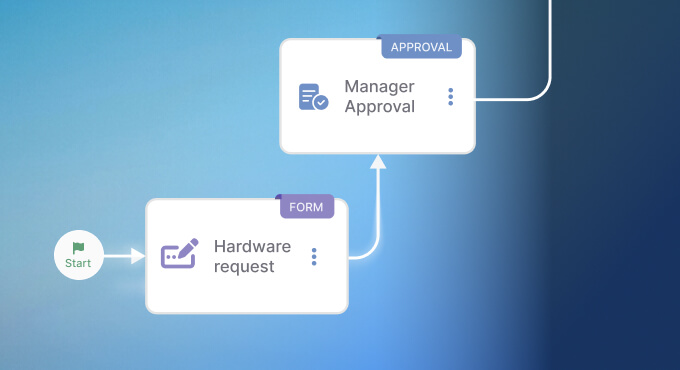
- Enterprise workflow engine — Visual workflow design with conditional logic, parallel approvals, escalation paths, orchestration actions, and cross-functional workflows involving IT, HR, Facilities, and Security teams.
- Change and release governance — Risk scoring, CAB management, change calendars, blackout windows, automated approval routing, and change-to-incident correlation.
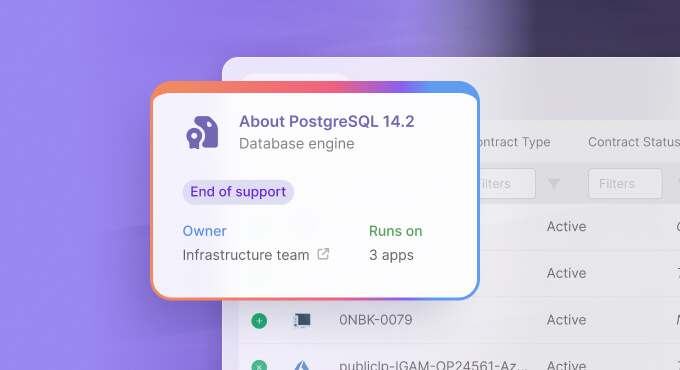
- Asset Management integration — Native IT asset management capabilities or deep integration with ITAM tools, including hardware lifecycle tracking, software asset management, license compliance, and asset-to-user relationships.
- Advanced service catalog architecture — Dynamic request forms, dependency-based service offerings, entitlement controls, approval hierarchies, and support for multiple business units.
- Automation and orchestration — Integration with identity management systems, endpoint management platforms, cloud infrastructure, and collaboration tools to execute actions directly from workflows.
- Enterprise reporting and data model access — Custom report builders, SLA and XLA tracking, operational dashboards, trend analysis, and access to underlying data for business intelligence platforms.
- Security and access controls — Granular role-based permissions, field-level security, audit logging, SSO, MFA, delegated administration, and support for regulatory requirements.
- Platform extensibility — REST APIs, webhooks, low-code development tools, custom objects, and integration frameworks that reduce dependence on custom code.
- Multi-entity support — Separate service desks, business units, subsidiaries, regions, and support teams operating within a shared platform while maintaining data segregation where required.
The best ITSM software for large enterprises
The platforms below cover the primary segments of the enterprise ITSM market. This is not a ranked list — each platform has a different fit profile, and the right choice depends on organizational scale, budget, ITSM maturity, and ESM ambitions. All entries follow the same structure.
1. InvGate Service Management
InvGate Service Management is an ITIL-certified, no-code ITSM platform with native ESM capabilities. It is positioned as a high-value alternative for enterprise organizations that need governance, scalability, and ESM readiness without the implementation complexity and consulting dependency of tier-one platforms.
Key capabilities:
- No-code workflow builder with ready-to-use templates.
- AI Hub with intelligent ticket routing, ticket summarization, Problem and Major Incident detection
- Virtual service agent deployable via Teams and WhatsApp.
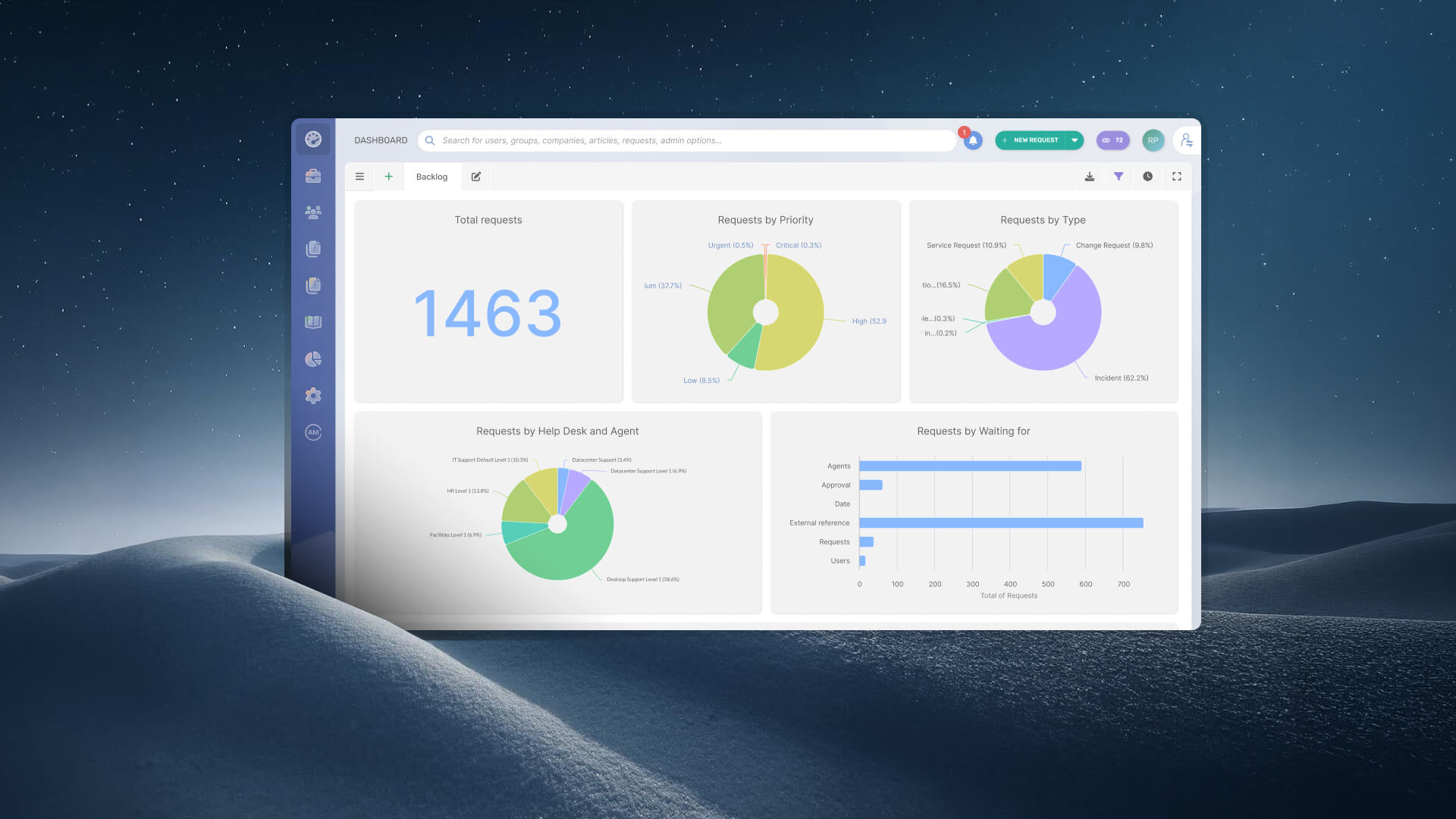
- Native ESM support for HR, Finance, Facilities, and Legal — multiple departments can operate as independent help desks under a single platform instance.
- SLA and OLA Management with granular rules by department, category, and priority.
- Reporting engine that enables multi-dimensional analysis without predefined dashboard limitations.
- Native integration with InvGate Asset Management for ITAM-ITSM alignment.
Best for: Enterprise organizations that want ITIL-certified Service Management without the cost structure and complexity that often accompanies large-scale, traditional vendors. Particularly well-suited to organizations expanding Enterprise Service Management across multiple departments, and to teams that need to go live in weeks rather than months.
Considerations: The platform is strongest for enterprise organizations that want control, not dependency — teams that intend to own their configuration rather than outsource it. When paired with InvGate Asset Management, it provides a unified approach to Service Management, Asset Lifecycle Management, software compliance, and more.
Pricing: Enterprise plan with custom pricing, contact the sales team. Pro: $500/agent/year. 5-50 agents.
The best way to validate the fit is with a live demo configured around your use case. Request a free 30-day trial and get started right away.
2. ServiceNow ITSM
ServiceNow® is the reference platform for enterprise ITSM. It offers the broadest feature set on the market: full ITIL process coverage, AI-driven automation, a comprehensive CMDB, HR Service Delivery, and integrations across Teams, Slack, SAP, Jira, and hundreds of other enterprise systems. The platform is the default choice for global enterprises with complex, multi-process requirements and is widely recognized by Gartner and Forrester as a market leader.
Key capabilities: End-to-end ITIL process coverage. AI and ML-driven automation across workflows. Integrated CMDB and discovery. HR Service Delivery and multi-department support. Extensive integration ecosystem.
Best for: Global enterprises with large ITSM budgets, a dedicated platform administration team, and requirements that demand deep coverage across multiple business processes beyond standard IT service management.
Considerations: High licensing cost and significant reliance on external consultants for implementation, configuration, and ongoing administration. Implementations typically run several months before go-live. Administrative complexity is high — internal teams often require specialized ServiceNow certifications to manage the platform effectively.
Pricing: Not disclosed. Quote-based.
3. BMC Helix ITSM
BMC Helix® ITSM is an enterprise platform with a strong AI-first positioning. It is particularly well-suited for organizations with hybrid or multi-cloud infrastructure, where predictive automation and configuration management at scale are operational requirements. BMC has a long history in the enterprise ITSM space and a deep toolset for organizations with complex infrastructure dependencies.
Key capabilities: AI-driven predictive service management, strong hybrid and multi-cloud support, advanced CMDB, and Configuration Management capabilities oriented toward large infrastructure footprints.
Best for: Large enterprises with complex hybrid or multi-cloud environments that require Configuration Management and predictive automation at scale.
Considerations: Organizations evaluating the platform should account for both licensing costs and implementation effort when estimating TCO. The platform is designed for large-scale enterprise environments and typically delivers the most value in organizations with dedicated administration resources and complex infrastructure management requirements.
Pricing: Not disclosed. Quote-based.
4. Jira Service Management
Jira® Service Management is Atlassian®'s ITSM offering and is most naturally suited to organizations with an existing Atlassian ecosystem. It is ITIL-aligned and offers strong integration with Jira Software, making it a practical option for organizations that want to connect IT support operations with development workflows.
Key capabilities: ITIL-aligned Service Management, native integration with Jira Software and Confluence, incident and Change Management with DevOps hooks, asset management at basic tier.
Best for: Organizations with active development teams in the Atlassian ecosystem that want to align IT support with software delivery operations.
Considerations: Strong choice for enterprises that have standardized on the Atlassian ecosystem. While the platform can be deployed independently, much of its value comes from its integration with development, Project Management, and Knowledge Management tools.
Pricing: The following rates apply to a 50-agent deployment:
- Standard: Starting at $20.63 per agent / per month.
- Premium: Starting at $52.16 per agent / per month.
The enterprise tier requires a quote. Checked on: June 2026 (US), official web.
5. Ivanti Neurons for ITSM
Ivanti Neurons® for ITSM is an enterprise service management platform that combines ITSM, workflow automation, asset management, and endpoint management capabilities within the broader Ivanti ecosystem. The platform places a strong emphasis on automation, self-healing technologies, and unified service management across IT and other business functions. Its integration with Ivanti's asset, endpoint, and security products makes it particularly appealing to organizations looking to consolidate multiple operational tools.
Key capabilities: ITIL-aligned Service Management, workflow automation, AI-assisted service desk features, integrated Asset and Endpoint Management, self-service portal, Knowledge Management, and cross-department ESM workflows.
Best for: Enterprises seeking to unify ITSM, IT Asset Management, Endpoint Management, and service delivery within a single vendor ecosystem.
Considerations: Ivanti's strongest value proposition emerges when multiple Ivanti products are used together. Organizations evaluating it as a standalone ITSM platform should assess how much of the broader ecosystem they expect to adopt. The platform offers significant flexibility but may require dedicated administrative resources and implementation planning to fully realize its capabilities.
Pricing: Custom quote. Pricing varies based on modules, deployment model, and the number of users or agents.
Disclaimer: All product names, logos, and brands are property of their respective owners. All company, product, and service names used on this site are for identification purposes only. Use of these names, trademarks, and brands does not imply endorsement. Comparisons are based on publicly available information as of April 2026 and are provided for informational purposes only. ServiceNow is a registered trademark of ServiceNow, Inc. InvGate is not affiliated with, sponsored by, or endorsed by ServiceNow.
How to evaluate ITSM software for large Enterprises: A step-by-step framework
Enterprise organizations consistently make the same mistake in ITSM evaluations: they compare feature lists instead of operational fit. The result is that the most recognized platform wins the procurement process — not necessarily the most appropriate one. A structured evaluation process changes that outcome.
Step 1 — Define the scope before comparing tools.
Before scheduling a single demo, answer these questions: Is the requirement purely ITSM, or does the organization need Enterprise Service Management software across multiple departments? How many departments will use the platform on day one? How many agents? Is the deployment model cloud, on-premise, or hybrid?
These parameters eliminate roughly half the vendor pool before the evaluation begins — and they prevent the common scenario where an organization goes deep into an evaluation only to discover that a platform doesn't support their deployment model or multi-department requirements.
Step 2 — Map your processes, governance requirements, and gaps
Document which service management processes have structured support today — incident, request, problem, change, asset, and service catalog management — and which still rely on email, spreadsheets, or manual coordination between teams.
At the same time, identify any governance, security, and compliance requirements that the platform will need to support. Large enterprises often evaluate frameworks and certifications such as ITIL, ISO/IEC 20000, ISO 27001, SOC 2, GDPR compliance capabilities, and industry-specific requirements alongside core functionality.
Certifications and verified framework alignment can provide confidence that the vendor supports established Service Management and security practices, but they should be evaluated alongside workflow flexibility, reporting, automation, and scalability.
Step 3 — Evaluate total cost of ownership, not just licensing.
The licensing proposal is the starting point, not the full picture. Build a TCO model that includes: external implementation costs (are consultants required to configure the platform?), projected time to go-live, internal administration costs on an ongoing basis, and the cost of reconfiguring the platform when processes change.
In platforms with high consultant dependency, this calculation frequently reveals that the total three-year cost is two to four times the licensing figure. That math changes procurement decisions.
Step 4 — Run a structured pilot.
Request a real trial environment, not a pre-configured demo. Bring actual use cases from the business — specific incident types, approval workflows that reflect the organization's real chain of authorization, service categories that match what agents handle daily.
With InvGate Service Management, it's possible to configure workflows, categories, SLAs, and multi-department structures during the trial period without external assistance, using the no-code builder directly. The trial reveals what a demo conceals: how much internal effort is required to make the platform work for your specific environment.
Step 5 — Assess long-term operational independence.
Ask each vendor a direct question: when a process changes — a new approval step, a new department onboarding, a new SLA policy — can the internal team make that change without external help? The answer to this question defines whether the organization is buying operational independence or structural dependency. Platforms that require vendor support or consultant engagement for routine reconfiguration will generate ongoing costs that compound over the contract lifecycle.
Frequently Asked Questions
What features should enterprise ITSM software include?
At enterprise scale, the baseline requirement goes beyond incident and service request management. Key capabilities include: ITIL-certified process coverage (incident, problem, change, service catalog), multi-department and multi-tenancy support, SLA governance with granular reporting, ESM readiness to extend workflows beyond IT, no-code or low-code configuration to reduce consultant dependency, and native integrations.
How is enterprise ITSM different from standard ITSM?
Standard ITSM handles IT service delivery for a defined team. Enterprise ITSM operates across multiple departments, geographies, and business units — with separate SLAs, approval hierarchies, service catalogs, and reporting requirements for each. The governance, scalability, and ESM demands of a large organization require a platform built for that complexity.
Is there ITSM software that works for both IT and other departments?
Yes. Platforms with native ESM capabilities — including InvGate Service Management, ServiceNow, and BMC Helix — support multi-department deployments where HR, Finance, Legal, and Facilities operate their own service desks under a unified platform. The depth of ESM support varies significantly between platforms.