Implementing a new ITSM platform can take anywhere from a few days to several months. The difference often comes down to how much configuration, customization, and outside support the platform requires before teams can start using it effectively.
Time to value measures how quickly an organization begins seeing real results with their new ITSM software. That means resolving requests through the platform, tracking service performance, and reducing manual work — not simply completing the initial setup.
In this guide, we'll compare 5 ITSM platforms based on the factors that have the biggest impact on time to value, including ease of configuration, pre-built templates, onboarding support, and long-term maintainability.
Key takeaways
- Most ITSM platforms promise fast setup but require weeks of professional services before a single ticket is resolved.
- Time to value in ITSM goes beyond go-live: it's the point at which your team resolves real requests, measures SLAs, and reduces manual work — without rebuilding the platform six months later.
- The fastest platforms share three traits: no-code configuration, pre-built templates for common processes, and onboarding support included in the base price.
What "time to value" actually means in ITSM
Most ITSM comparisons use "fast implementation" as a proxy for time to value. They're not the same thing.
In ITSM, time to value is not go-live. It's the point at which your team operates the new system with real autonomy — resolving actual tickets, enforcing SLAs, and adapting workflows without calling a consultant. Go-live is a milestone. Time to value is a capability threshold.
To measure it concretely, there are four components:
- Days until the first real ticket is resolved in the new system — not a test ticket, but a live request from an actual user.
- Days until agents have adopted the tool — not just trained on it, but using it consistently without workarounds.
- Time until non-technical admins can modify workflows independently — if every change requires vendor involvement, value is constrained by someone else's schedule.
- Time until SLA reports are operational — the platform is only delivering business value when leadership can see metrics that hold the team accountable.
Platforms that score well on all four components share a consistent profile: visual no-code configuration, pre-built ITIL templates that reduce setup from weeks to hours, onboarding included by default, and an architecture that doesn't require rebuilding when requirements change.
Why slow ITSM deployments cost more than you think
The license fee is the most visible line in the budget. It's rarely the one that does the most damage.
A slow ITSM deployment generates costs that don't appear on the vendor invoice. Consultants are engaged before the team can configure a single workflow. Agents spend weeks in a transitional state — the old system is being phased out and the new one isn't ready. Requests get lost between channels. Manual processes that the platform was supposed to eliminate continue running in parallel, often for months.
The longer the implementation drags on, the more the organization relies on patched workarounds that become harder to unwind. By the time go-live arrives, the system has already accumulated technical debt. The team that was supposed to gain autonomy from the platform has instead absorbed the platform as a dependency.
This is the real cost of choosing a platform on feature count without evaluating time to value. The license fee looks predictable on paper. The implementation overhead — consulting hours, agent downtime, delayed automation — can rival the annual license cost itself.
IT Service Management programs that manage this well share one trait: they define their minimum viable configuration before signing, run a working pilot with real tickets before committing, and select platforms where non-technical admins can make changes without escalating to the vendor.
How we evaluated these platforms
The platforms in this guide were evaluated against five time-to-value criteria, not feature count:
- No-code configuration included in the service desk — Can IT admins create and modify workflows without coding or external consultants?
- Pre-built templates — Are ITSM and ESM processes ready to deploy out of the box, or does every process require a custom build?
- Onboarding included vs. paid — Is implementation support bundled in the base contract, or billed as a separate professional services engagement?
- Scalability without reimplementation — Does the initial setup survive growth? Can teams add departments, users, and automations without a new project?
- End-user adoption — Does the self-service portal and agent interface reduce the change management burden, or add to it?
The 5 Best ITSM Platforms for Fast Time to Value
Methodoloogy note: Before we get started, a quick note: InvGate builds and offers IT Service Management and IT Asset Management solutions, making us an active player in this software market. Some vendors in this article are our competitors. Even so, we aim to deliver accurate, honest, and practical information that helps you make the best decision.
Our evaluations draw from publicly available sources — vendor websites, product documentation, user reviews on platforms like Gartner Peer Insights, G2, and Capterra, analyst reports, and hands-on testing or demos when available. We assess each solution based on functionality, pricing (where made public), integrations, user experience, and support quality. We'll review this content regularly to stay current with product updates and market developments.
1. InvGate Service Management
InvGate Service Management is an ITSM platform focused on fast implementation and ease of administration. It combines no-code workflow automation, strong self-service capabilities, and native integration with IT Asset Management, making it popular among mid-sized organizations looking to avoid lengthy deployments.
Key time-to-value factors:
- Implementation is designed to run in only a few weeks, with guided setup, a dedicated Customer Experience team, and no mandatory professional services engagement to unlock core features.
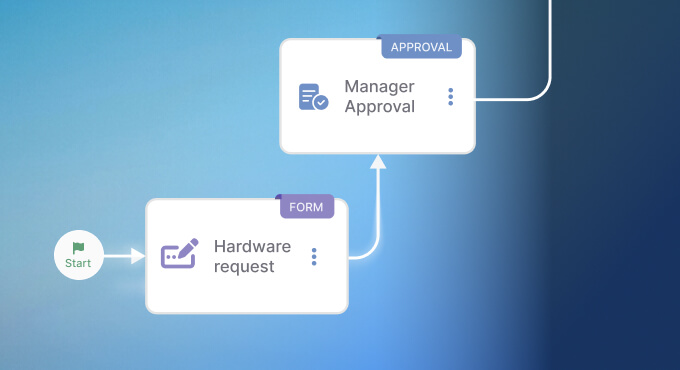
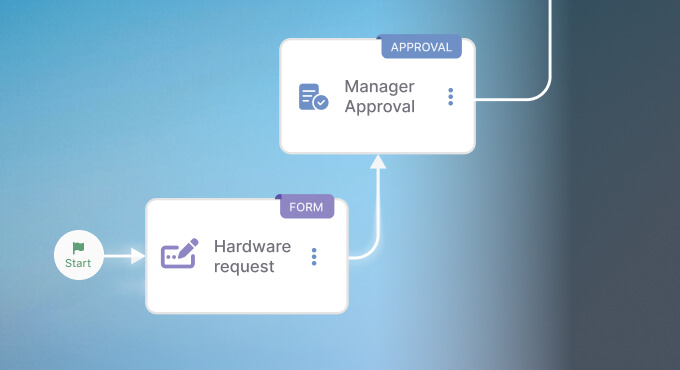
- The no-code visual workflow builder uses a drag-and-drop canvas where admins assemble workflows from pre-built blocks — triggers, conditions, approvals, assignments, escalations — without scripting.
- Pre-built templates for onboarding, offboarding, change requests, knowledge article review, and asset loan requests reduce setup time from days to hours.
- The Virtual Service Agent operates over existing workflows and knowledge base content without requiring additional configuration or training.
- Over 150 built-in metrics and dashboards are available from day one. Teams don't need to build reporting infrastructure before measuring service performance.
- ESM-ready architecture: IT, HR, Facilities, Finance, and other departments can run their own portals and workflows from the same instance, without a separate project or additional license.
What slows it down: On-premise deployments take longer than cloud by design. Teams that pursue heavy customization in the early configuration phase extend the timeline.
If InvGate Service Management is on your shortlist, the best way to validate fit is to sign up for a free trial.
2. Freshservice
A cloud-native ITSM platform from Freshworks that emphasizes ease of use and rapid adoption. Its strengths include an intuitive interface, built-in AI capabilities, and a broad ecosystem of integrations that appeal to growing IT teams.
Key time-to-value factors:
- Cloud-native with guided setup. ITIL core modules — incident, problem, change, service catalog — available out of the box.
- Agent interface is widely cited for low onboarding friction. Teams familiar with consumer software adapt quickly.
- Starter plan at $19/agent/month (billed annually) makes the entry point accessible. Change management, problem management, and release management are locked to the Pro plan.
What slows it down: Professional services engagements are common on mid-market and enterprise contracts, ranging significantly depending on environment complexity. AI capabilities (Freddy Copilot, Freddy AI Agent) are available as paid add-ons even on Pro tier. The no-code automation builder is less deep than alternatives at comparable price points.
3. TOPdesk
TOPdesk is an ITSM and Enterprise Service Management platform known for its structured approach to service delivery. It is widely used by organizations that have multi-department environments (IT, Facilities, HR) and want modular go-live.
Key time-to-value factors:
- Gartner research places TOPdesk implementation at 10–25 days, which is notably faster than most enterprise-class alternatives. Case studies show timelines as short as 6 days for focused deployments.
- Modular deployment allows teams to go live with incidents and the service catalog before activating change and problem management, reducing initial scope.
- Once configured, the platform is designed to be maintained without coding or ongoing consultant dependency.
- "Think Big, Start Small" is an explicit part of the vendor's positioning — teams can add complexity incrementally as maturity increases.
What slows it down: The depth of configurability is an asset, but it can also extend time to value when teams pursue advanced customization without a dedicated admin. Implementation support might involve additional professional services costs, even if described as minimal compared to competitors.
4. HaloITSM
HaloITSM is a highly configurable ITIL-aligned platform that offers deep process coverage without the complexity often associated with large enterprise suites. Organizations often choose it for its breadth of functionality and flexible workflow capabilities.
Key time-to-value factors:
- All ITIL 4 processes — Incident, Request, Change, Problem, Knowledge Management, service catalog — are included in the base license with no additional module fees.
- Flexible configuration without custom scripting in most cases.
- Drag-and-drop workflow engine supports SLA rules, multi-step approval chains, and escalation paths without developer dependency.
What slows it down: Time to value is sensitive to how much process design work the team pursues in the initial phase — teams that chase deep customization early extend their timeline before the system is even operational. Some reviewers note that the breadth of configuration options makes the initial setup require more planning than lighter platforms.
5. TeamDynamix
TeamDynamix is a good option for mid-market and enterprise organizations that need ITSM, ESM, and Project Portfolio Management (PPM) unified in a single no-code platform, with a priority on low admin overhead and the ability to expand across departments without IT admin support.
Key time-to-value factors:
- Customers rate TeamDynamix high for ease of implementation, configuration, and IT administration among enterprise ITSM platforms. No-code throughout — custom forms, fields, workflows, automation, and integrations are built without technical resources.
- Native PPM integration allows resource modeling and cross-project visibility without a separate tool.
- ESM expansion to HR, Facilities, Legal, and other departments requires no additional IT admin support.
- Built-in AI with Virtual Support Agents for multi-channel deflection. Automation covers on/offboarding, password resets, and equipment replacement without developer involvement.
What slows it down: The breadth of the platform — ITSM, ESM, PPM, ITAM — requires careful scope definition at kick-off. Teams that attempt to activate all modules simultaneously extend the definition phase before configuration begins. Some users note a required training program early in the process; those who complete it report that it substantially accelerates the subsequent implementation.
Disclaimer: All product names, logos, and brands are property of their respective owners. All company, product, and service names used on this site are for identification purposes only. Use of these names, trademarks, and brands does not imply endorsement. Comparisons are based on publicly available information as of April 2026 and are provided for informational purposes only.
Evaluation checklist: how to validate time to value before you buy
Before signing a contract, ask every vendor on your shortlist these questions directly. Their answers — and how they answer — will tell you more about realistic time to value than any demo.
- How many days from contract signature to the first real ticket resolved in production? Not a pilot environment, not a test ticket — a live request from an actual user in the new system. Ask for a verified customer reference that can confirm this number.
- Is implementation support included in the base contract, or is it a separate line item? Some vendors bundle onboarding hours; others require a separate statement of work. Ask what happens if the initial scope expands. Ask what the hourly rate is if you need more help after the included hours are used.
- How long does it take a non-technical admin to build a new workflow from scratch? Ask to see this in a live demo, not a pre-recorded walkthrough. If the answer involves anything that resembles developer tasks — scripting, API calls, conditional rule builders with code syntax — that's a signal worth noting.
- What happens six months after go-live when requirements change? Can the team modify the existing configuration independently, or does scope expansion require a new vendor engagement? Ask for a specific example of a workflow modification and who performed it.
- What percentage of deployments use pre-built templates versus custom builds? Vendors with strong time-to-value profiles have high template adoption rates. Vendors where most deployments are custom-built from scratch will take longer and cost more, regardless of what the marketing says.
FAQs
Which ITSM platforms have the fastest implementation times?
InvGate Service Management consistently documents implementation in under two weeks for standard cloud deployments, with individual customers reporting basic setups running in under an hour. TOPdesk cites 10–25 days in Gartner research, with some case studies as short as 6 days. Freshservice can go live in 2–4 weeks for standard cloud configurations, though mid-market and enterprise deployments often extend to 4–8 weeks or more depending on customization scope.
What is the difference between fast implementation and fast time to value?
Fast implementation refers to the process of getting the software running: provisioning the environment, basic configuration, and go-live. Time to value includes everything that happens after that — whether agents actually use the tool consistently, whether the team can modify workflows independently, and whether SLA reporting is operational without additional setup work.
Do ITSM platforms require professional services to implement?
It depends on the platform. Platforms built on no-code configuration and pre-built ITIL templates — like InvGate Service Management — are designed to be configured internally without mandatory professional services. Others, including enterprise-class platforms and those with deep customization models, typically require a vendor-certified partner or internal project team to manage the deployment, which adds cost and time.