Help desk software for law firms has a different cost of failure than in most industries. When an attorney loses access to a case management system or a document repository goes down before a filing deadline, the impact isn't measured in inconvenience — it's measured in billable hours and client risk.
This guide covers internal IT help desk tools built to handle that reality: ticketing, incident resolution, access requests, and onboarding workflows for legal staff. It doesn't cover case management platforms, e-discovery software, or managed service providers.
What to look for in an IT help desk for law firms
Before evaluating specific platforms, legal IT teams need a clear framework. Not every help desk is built to operate under the constraints of a law firm — strict compliance expectations, variable attorney-to-staff ratios, and departmental complexity that goes well beyond a standard IT queue.
These are the criteria that matter most:
-
SLA enforcement by request type and department. An attorney locked out of Westlaw two hours before a hearing is not the same priority as a new monitor request. The platform needs to support differentiated SLAs per service category, team, and escalation path — and enforce them automatically, not through manual triage.
-
Deployment model with feature parity. Some firms, particularly those with specific data residency obligations or strict security postures, can't operate on cloud-only infrastructure. The platform should offer cloud and on-premise deployment without degrading features in one model versus the other.
-
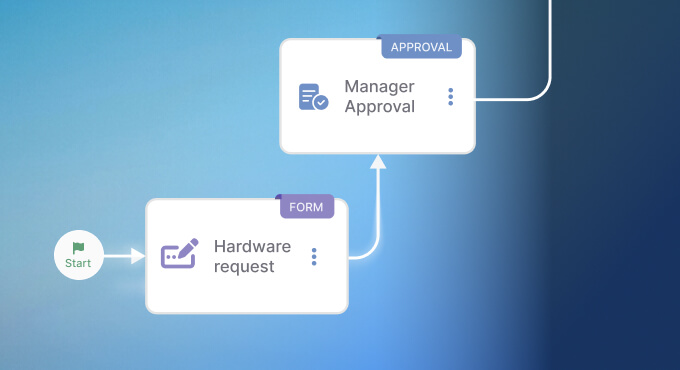
Structured onboarding and offboarding. In a firm where lateral hires and partner transitions are frequent, onboarding and offboarding can't live in spreadsheets or email chains. The help desk should support automated, multi-step workflows that coordinate IT, HR, and Facilities as a single process — not three separate queues.
-
ESM readiness. IT support is one layer. Legal operations, HR, and Facilities also generate service requests. A platform with enterprise service management capability lets those departments operate their own help desks under the same infrastructure, reducing tool sprawl and consolidating reporting.
-
Audit trail and access control. Legal environments require detailed records of who accessed what, when, and why. The platform must support RBAC configurable by group and role, integration with Active Directory or LDAP, and a complete, tamper-evident action log.
Best help desk software for law firms
The platforms below are the ones legal IT teams evaluate most frequently. They differ in profile — some are purpose-built for compliance-heavy environments, others are general ITSM platforms with strong ESM capabilities, and a few are niche options with a documented track record in legal. The right fit depends on firm size, deployment constraints, and how far beyond IT the platform needs to reach.
Methodology note: InvGate builds and offers IT Service Management and IT Asset Management solutions, making us an active player in this software market. Some vendors in this article are our competitors. Even so, we aim to deliver accurate, honest, and practical information that helps you make the best decision. The vendors were evaluated using public information only: official documentation, publicly listed pricing, and verified reviews on Gartner Peer Insights, G2, and Capterra.
1. InvGate Service Management
Law firms need to configure workflows fast — and adjust them without raising a support ticket with the vendor every time a process changes. InvGate Service Management is no-code: the IT team builds and modifies onboarding flows, offboarding sequences, and access request categories from a drag-and-drop workflow builder, without scripting or paid implementation projects.
Marval O'Farrell Mairal, a leading Latin American law firm with 650 employees and more than 300 attorneys, uses InvGate to support its IT operations aligned with ISO 27001. The firm's environment reflects the complexity typical of a large legal practice: multi-department coordination, strict access controls, and a high volume of attorney-specific service requests.
Features relevant to legal IT:
- Onboarding and offboarding workflows with coordinated steps across IT, HR, and Facilities, triggered as a single automated process from one event — a new hire record, a departure date, or a role change.
- Differentiated SLAs by request type and department, with configurable priority tiers for critical systems such as case management platforms and document repositories.
- Native Enterprise Service Management: Legal, HR, and Facilities can each operate their own help desk — separate service catalogs, SLAs, and agent queues — under a single platform with unified reporting.
- Cloud (SaaS) and on-premise deployment with feature parity. For firms with data residency requirements, data stays within the firm's own infrastructure.
- Full audit trail, Active Directory and LDAP integration, and RBAC configurable by group and role.
- Virtual Service Agent for Microsoft Teams and Slack, so attorneys and staff submit requests from the tools they already use without opening a separate portal.
Pricing:
InvGate offers flexible pricing plans that scale to meet the unique needs of your organization.
- Starter: 24.98/agent/month billed annually and 5 agents minimum - $1499/year.
- Pro: $500/agent/year. 5-50 agents.
- Enterprise: Custom pricing for larger organizations.
To see how InvGate Service Management is configured for legal environments, request a free trial.
2. Freshservice
Freshservice is a cloud ITSM platform with ESM capability and solid name recognition among mid-market IT teams. It's a natural fit for law firms already operating within the Freshworks ecosystem — particularly those using Freshdesk for external support or Freshteam for HR. The platform includes SLA management, a configurable service catalog, and ITIL-aligned processes out of the box.
The main constraint for legal environments is deployment: Freshservice is cloud-only. Firms with data residency requirements or internal policies restricting third-party cloud infrastructure will need to evaluate whether the security controls Freshworks offers satisfy their compliance posture.
Pricing: It offers 3 subscription levels with published price, the prices with annual billing are:
- Starter: $19 per agent, per month.
- Growth: $49 per agent, per month.
- Pro: $99 per agent, per month.
The fourth tier, Enterprise, requires a quote. - Checked on July 2026 (US) official website.
3. HaloITSM
HaloITSM is a full ITSM platform with broad ITIL coverage, a configurable service catalog, and support for multi-department deployments. It's positioned toward organizations that want deep customization without enterprise-tier pricing, and it has a growing presence in professional services environments.
The platform supports both cloud and on-premise deployment, which makes it relevant for firms with infrastructure constraints. Workflow automation, SLA management, and asset tracking are included natively. The interface requires more configuration effort upfront compared to lighter platforms, but the tradeoff is a higher ceiling for teams that need to model complex service structures.
Pricing: HaloITSM doesn’t disclose its pricing. Costs depend on several factors: the chosen modules, the number of users, the type of licenses acquired, and the level of support.
4. ManageEngine ServiceDesk Plus
ManageEngine ServiceDesk Plus is a mid-market option with transparent pricing tiers and strong native integration between service management and asset management. For legal IT teams that need to correlate incidents with specific hardware or software assets — a common requirement in audit-heavy environments — that integration reduces the need for a separate ITAM tool.
The platform supports ESM through separate departmental help desks and is available in cloud and on-premise. Access control, audit logging, and Active Directory integration are well documented. It's a relevant option for firms prioritizing compliance visibility and a lower total cost of ownership at mid-scale.
Pricing: Pricing is available in both cloud subscription and on-premises. Plans vary based on the number of agents and modules.
Cloud pricing tiers:
- Standard: Starts from $13 / technician / month
- Professional: Starts from $27 / technician / month
- Enterprise: Starts from $67 / technician / month
- Checked on: July 2026 (US), official website.
5. Giva
Giva is one of the few vendors in this space with a documented, explicit focus on legal and healthcare environments. The platform emphasizes security controls aligned with HIPAA-level requirements, visual reporting dashboards designed for non-technical stakeholders, and a low learning curve for IT teams without dedicated ITSM administrators.
For smaller law firms that need a compliant, easy-to-deploy help desk without significant configuration overhead, Giva is an option with a track record in the industry. The tradeoff is depth: ESM capability and complex workflow automation are more limited compared to full ITSM platforms.
Pricing: It has two pricing tiers (billed annually):
-
Professional: $69 per agent, per month. (up to 10 agents)
-
Enterprise: $89 per agent, per month.
- Checked on: July 2026 (US), official website.
Disclaimer: All product names, logos, and brands are property of their respective owners. All company, product, and service names used on this site are for identification purposes only. Use of these names, trademarks, and brands does not imply endorsement. Comparisons are based on publicly available information as of July, 2026 and are provided for informational purposes only.
How to choose: a practical framework for legal IT teams
Before committing to a platform, legal IT managers should work through four concrete questions.
How many departments beyond IT need their own help desk? If the answer is one or two — say, HR and Facilities — ESM capability becomes a baseline requirement, not a nice-to-have. Running separate tools per department creates reporting gaps and forces manual coordination on cross-functional requests like onboarding.
Are there data residency requirements that rule out cloud-only platforms? This depends on jurisdiction, practice area, and client contractual obligations. If the answer is yes — or even "possibly" — the shortlist should be limited to platforms that offer on-premise deployment with full feature parity.
Can the IT team own configuration and maintenance without ongoing vendor support? In most law firms, the IT team is lean. Platforms that require professional services engagements for every workflow change or SLA adjustment create a dependency that compounds cost over time. No-code configuration is not a convenience feature in this context — it's an operational requirement.
Does the onboarding and offboarding workflow need to coordinate more than two departments? Lateral hires at large firms can involve IT provisioning, HR system access, Facilities desk assignment, and Legal systems clearance — all within a compressed timeline. If the process spans more than two teams, the platform needs to support multi-step automated workflows across departments as a single triggered sequence, not as separate queues that someone has to manually synchronize.
InvGate Service Management is configurable without code and supports IT, HR, and Legal operations from a single platform. To see it in action, request an InvGate Service Management demo.
For a broader view of the category, the post on ITSM solutions for professional services firms covers how legal, consulting, and financial services organizations approach service management at scale.
FAQs
Do law firms need ITSM software or just a ticketing system?
Most law firms outgrow basic ticketing fast because IT issues touch client confidentiality, billable hours, and case deadlines. ITSM adds structured incident, change, and asset management on top of ticketing. This gives firms audit trails and accountability that simple ticket queues can't provide.
Can one help desk platform handle IT, HR, and Legal requests for a law firm?
Yes, this is a common Enterprise Service Management (ESM) use case. A single platform with separate workflows, forms, and SLAs per department keeps requests organized without needing multiple tools. It also gives leadership one place to track service performance firm-wide.
What compliance requirements should a legal IT help desk support?
Look for role-based access control, audit logging, and data encryption to protect privileged client information. Depending on jurisdiction and practice area, this may include SOC 2, ISO 27001, or client-mandated security questionnaires. Retention and access-tracking features matter for e-discovery and malpractice defense, too.