











IT asset tracking software for warehouses gives IT departments a continuously updated inventory of every device deployed across the warehouse floor: handheld scanners, tablets, laptops, network equipment, and label printers, along with the QR scanning, bulk reconciliation, and location tracking that keeps records accurate when devices move constantly between zones and shifts. Warehouse IT Asset Management (ITAM) is distinct from tracking merchandise: it covers the technology estate that runs the operation, not the products moving through it.
Warehouse IT teams often evaluate Asset Management tools alongside Warehouse Management Systems (WMS) such as Manhattan Associates, SAP Extended Warehouse Management, and Körber. Those platforms manage merchandise: receiving, putaway, picking, and shipping of product inventory. This article covers warehouse asset tracking for the technology the IT department deploys and maintains: the devices that make warehouse operations run, and keeping an accurate, traceable record of where each one is.
Individual QR codes give warehouse IT teams a practical way to update asset records on the floor without returning to a workstation. Each device carries a QR label that any warehouse supervisor or IT technician can scan from a smartphone to update its status, assigned user, or zone location. Daily changes (a tablet moved from the packing station to receiving, a scanner reassigned at the start of a shift) are recorded as they happen rather than accumulated for batch entry at the end of the week.
For periodic physical audits and zone reconciliation, warehouse teams use their existing handheld barcode scanners to scan assets across a zone, then paste the exported list of identifiers directly into InvGate Asset Management. The "is in list" filter returns every matching asset instantly, up to 500 items at a time, across serial numbers, hostnames, asset IDs, inventory IDs, asset names, and RFID identifiers. A single bulk operation then updates status, moves assets to a new location, or generates a delivery document without touching each record individually.
Warehouse IT assets don't stay in one place. A handheld scanner starts its day at the charging dock, gets picked up at shift start, moves through receiving and storage, ends its day at a packing station, and returns to the charging dock, or doesn't. Without a location tracking layer on each device, the IT inventory shows where assets were last assigned, not where they actually are. Over time, that gap compounds: ghost assets at locations they left months ago, missing devices that no one noticed until an audit.
An ITAM platform with a configurable location hierarchy (warehouse, zone, workstation, charging dock) records every movement in the chain of custody as it happens. Each zone transfer is logged with a timestamp and the identity of whoever made the change, building a complete movement history for every device. Location access control by role adds a further layer: a warehouse operator assigned to the receiving dock sees only the assets in their zone, while the IT administrator at headquarters sees the full estate across all locations.
The following platforms are evaluated as IT asset tracking solutions for warehouse IT teams. Pricing reflects each vendor's publicly available information as of July 2026.

InvGate Asset Management is a no-code, scalable ITAM platform that manages hardware, software, cloud, and non-IT assets from a single interface. It supports cloud and on-premises deployment and covers assets beyond standard IT endpoints through individual QR code scanning, configurable location hierarchies, and bulk reconciliation workflows that match the operational reality of warehouse environments.
Warehouse IT estates have a specific tracking problem: devices move constantly, teams change shifts, and physical audits need to reconcile what is deployed against what is in the system. InvGate Asset Management gives warehouse IT teams a continuously updated inventory, updated through individual QR scans for daily changes and through external list reconciliation for periodic audits, with the location hierarchy, chain of custody records, and bulk operations that keep the inventory accurate without dedicated administrative overhead.
The following are some of the InvGate Asset Management features that warehouse IT managers may find particularly relevant for tracking devices across zones, shifts, and physical audits.
Start a 30-day free trial or talk to Sales to find the right plan. Both options give access to the full platform from day one.
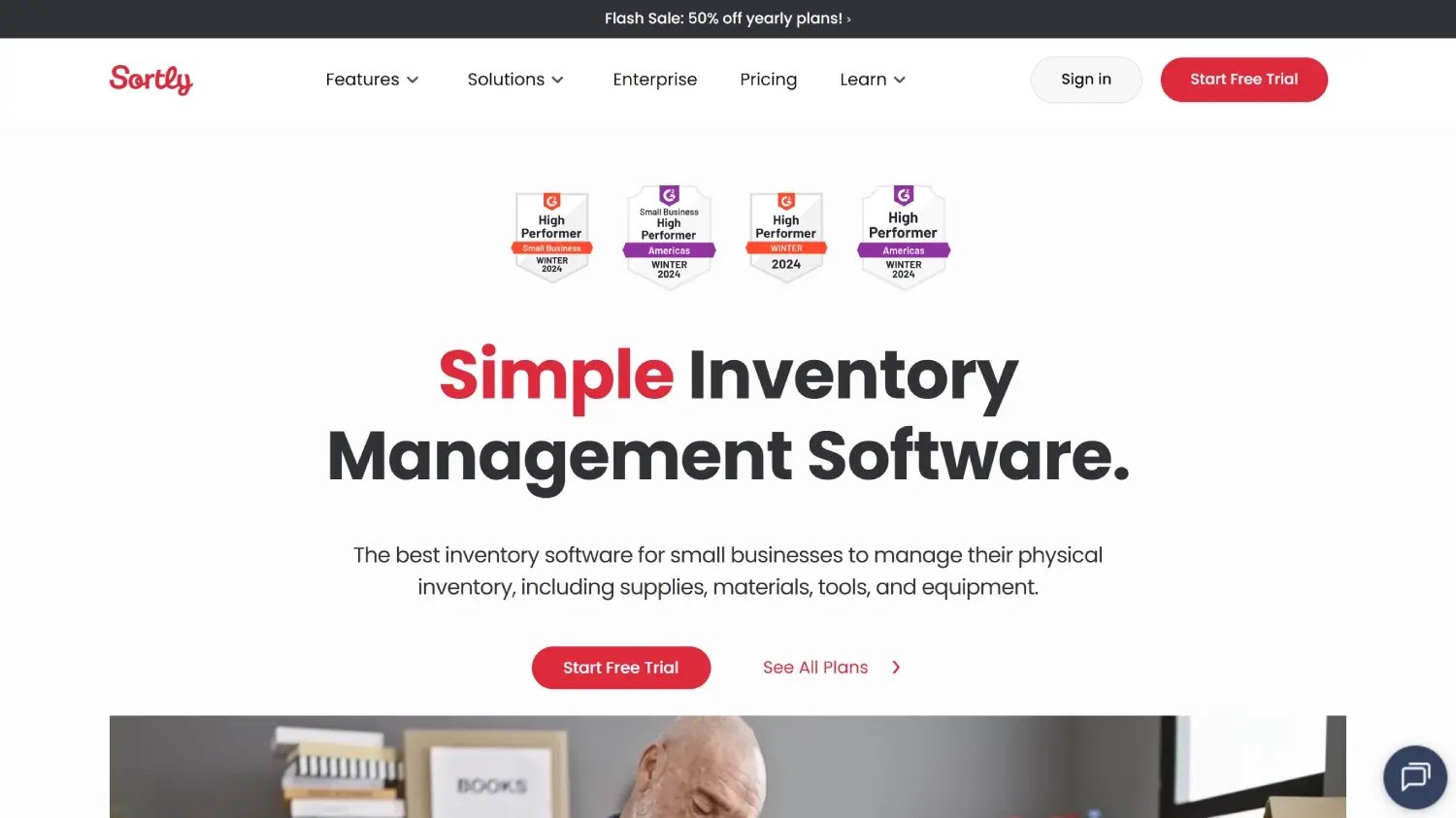
Sortly is a mobile-first inventory and asset tracking platform built around QR code and barcode scanning for teams that need to track physical assets across multiple locations. Warehouse teams use it to manage equipment, tools, and IT assets through a visual interface that non-technical staff can operate from a smartphone without training. It supports custom fields, location-based filtering, and low-stock alerts, making it practical for organizations that need structured asset records without the depth of a full ITAM implementation.
Sortly publishes its pricing by plan tier. For current plan details or to start a free trial, visit their official pricing page.
Wasp Barcode Technologies provides asset tracking and inventory management software paired with its own barcode scanning hardware, label printers, and labeling supplies. Its AssetCloud platform combines barcode-based asset check-in/check-out, movement records, and Lifecycle Management in a system designed for warehouses, manufacturing, and distributed operations. For organizations that want to source tracking software and compatible scanning hardware from a single vendor, Wasp offers that integration without requiring separate hardware procurement.
Wasp publishes its pricing by product and configuration. For current pricing, visit their official site.
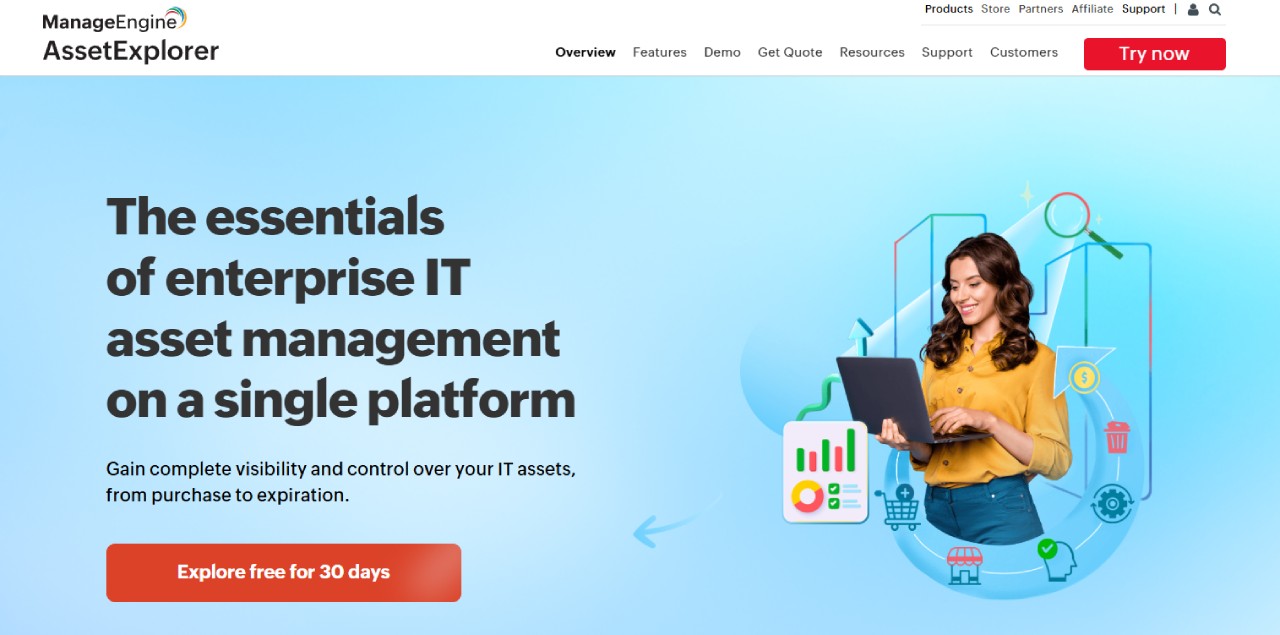
ManageEngine AssetExplorer is an IT Asset Management solution available in cloud and on-premises editions, combining agent-based and agentless discovery with Lifecycle Management, Software License Management, and a built-in CMDB. Its financial tracking covers hardware from procurement through disposal, with depreciation calculation, Contract and Warranty Management, and purchase order workflows. For warehouse IT departments that need structured ITAM with multi-location reporting and financial data per asset at a mid-market price point, AssetExplorer provides that depth without enterprise-scale implementation costs.
ManageEngine AssetExplorer's pricing starts at $955/year for on-premises or $1,245/year for cloud (250 assets). A free edition for up to 25 assets and a 30-day free trial are available.
Asset Panda is a configurable asset tracking platform that covers IT equipment, tools, and other physical assets through a flexible data model with custom fields, barcode and QR scanning, and mobile access. For warehouse organizations tracking a mix of IT devices and non-IT equipment from the same platform, Asset Panda's configurable workflows allow different asset types to follow different tracking processes without requiring separate systems. Its unlimited-user pricing model makes it practical for large warehouse teams where many staff members need to update asset records.
Asset Panda's pricing is not publicly listed. For pricing information or to begin an evaluation, contact their team directly through their official site.
Warehouse IT asset tracking requires solving a version of the inventory problem where the assets themselves are the tracking tools, and they move constantly. Individual QR scanning keeps daily changes current. Bulk reconciliation through external list matching closes the gap that periodic physical audits create. Location hierarchy by zone, combined with role-based access control, gives both warehouse operators and central IT the right view of the estate without overlap or confusion.
InvGate Asset Management covers that scope in a no-code platform that warehouse IT teams can configure and maintain without external specialists. InvGate Service Management connects directly so maintenance requests and equipment issues carry the full asset context that keeps support efficient on the warehouse floor.

