No one wants to be the victim of a cyberattack. But truth be told, that's not entirely up to you. You can do everything by the book, have all the guardrails in place, train your people, and still have one small third-party component in your tech stack that quickly becomes the front door for an attacker.
And when you provide software to other companies, the stakes double. You're not only responsible for not getting attacked yourself, but also for making sure you never become the unlocked door to your clients.
Today, I want to give you a peek into how we work to keep that from happening.
The trigger
Most of our vulnerability work starts the same way: with news from the outside world. A new CVE is published, a vendor announces an upcoming security patch, or a security consulting firm reports a discovery. One way or another, our InfoSec team flags it to us.
If the alert involves an application, language, or technology we use, it sets a series of actions in motion. The first one is creating a dedicated Slack channel that brings together the managers of every area involved: the CTO, the CISO, the Head of Support, and me, as COO, at the very least.
Once we have a general idea of what's going on, each of us adds the people who will be involved in the fix and in the communications. From that moment on, the channel becomes the single place to discuss everything related to that vulnerability, so there are no side conversations or scattered threads.
The prep
If the patch hasn't been released yet (which means we have a bit of time), we start the day with a quick sync meeting to establish common ground, map different scenarios, put together an action plan for each one, and define the team's roles, responsibilities, and scope.
We like to know who owns each task from start to finish: the strategic decisions, deploying the fixes, client-facing communications, and internal ones. In practice, that means one clear owner for every front: cloud, on-premises, integrations, and internal services.
In parallel, we draft answers to the questions clients are most likely to ask, along with a general internal announcement, so everyone knows where we stand at all times.
If the patch drops without warning, we skip straight to the next step.
The war room
Whatever prep we had time for, once the patch is out (or about to be), we all get together in the war room. When the vendor announces a specific release time, we meet a few minutes before it. And I'm talking about 20 people ready to get hands-on.
You know when the war room starts, but never when it ends. First, we wait for the patch. Then, we read it and discuss it to make sure we all understand the same thing. Only then, with the full picture, do we start making decisions. We stay there, in sync, until everything is solved, which is especially important for a hybrid team like ours. It usually takes a couple of hours, at the very least.
Our CTO, Federico Martinez, leads the session. He's the one who flags what we can start implementing right away and what still needs to wait because the information isn't complete yet.
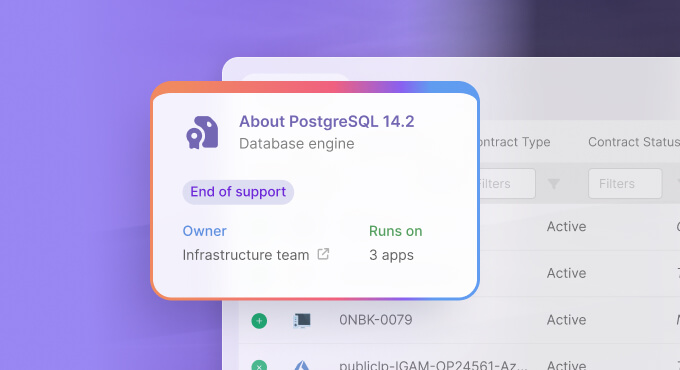
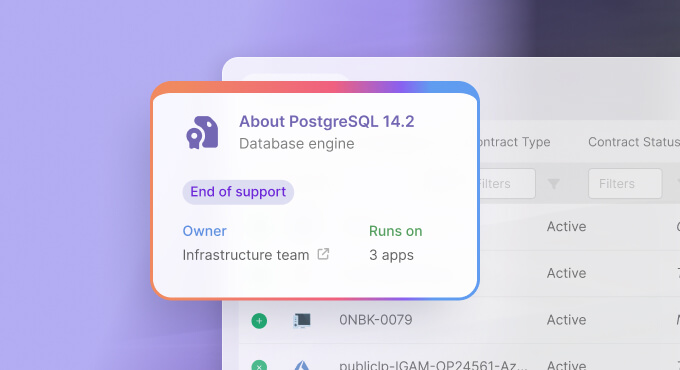
We go through the published vulnerabilities one by one to see which ones affect us and which don't. That part goes fast, because we don't have to build an inventory on the spot: InvGate Asset Management already shows us where each affected component is running and in which version.
For the ones that do affect us, we ask: How critical is it? How exactly does it affect us? Here, too, we don't start from scratch. Our CMDB maps each asset to the business applications that depend on it, so we can see right away which services, and which clients, sit behind a vulnerable component.
The severity score tells us how dangerous a vulnerability is in general; that map tells us how much it matters to us. Then come the questions no tool can answer for us: Is there a fix for this specific component yet? Is the exposure serious enough to take a product offline for a while? That last call belongs to the CTO, who escalates it to our CEO if and when he considers it necessary.
All of this happens out loud (and is logged in the Slack channel as well). That way, the person in charge of applying each patch has the context they need, can ask follow-up questions, and reports back, also out loud, on what they're doing and when the patch has been successfully applied.
Patching is necessary to close the door, but it doesn't tell you whether someone already walked through it. So while the fixes go out, part of the team reviews logs for suspicious access or attack attempts.
When a fix isn't available yet, we look for ways to reduce exposure in the meantime: configuration changes, network rules, or temporarily disabling the affected feature. That includes integrations: if needed, we pause those until they're fixed and let the affected clients know that a specific feature will be unavailable for a while. Since we can’t apply patches in on-premises environments ourselves, we build a patch installer and send those clients the steps to apply it. Our Support team then follows up to make sure it’s been applied.
My own role in the war room is to keep the checklist. Nothing gets checked off just because someone says "I applied it." It gets checked off when someone has verified the patched version is actually running, and that nothing else broke along the way.
Every once in a while, I pause to recap where we stand: what's been done so far and, more importantly, what we're still waiting on, what's yet to be defined, and what's missing. These recaps keep everyone on the same page, especially those who were heads-down on a fix. They're also my cue to release the people who don't need to be there anymore. If your part is done, there's no reason to keep you in a call that could go on for hours.
Despite its bellicose name, the war room is what keeps all of us calm, focused, and supported. Its value lies in staying in synchronous contact so no one panics, goes rogue, or makes a mistake. Decisions are made in the open, one after another, with one person accountable for each. It's a space for questions, consensus, information sharing, and help.
Sometimes we're all silent, working or reading. Sometimes someone raises a technical question or offers advice. Sometimes we're assigning work or sharing status updates. And sometimes the questions are less technical but just as important: "Should we display an upcoming update message in our products?" "Are we in a position to make this decision yet?"
Ultimately, the whole point of the war room is this: One person makes each call, but with the context of 20 people.
The post-mortem
Once everything is patched and services are back to normal, the war room closes, but the work doesn't end there. We document everything that happened during the process and get together once more to evaluate our performance: what worked, what slowed us down, and what we'd do differently. We also compare this response with previous ones.
And trust me, there will be a next one. We recently went through this twice in a matter of weeks, and everything suggests these situations will only become more frequent. The work is not over by a long shot.
That's why we treat security as a muscle we keep training. We can't control when the next alert will come. What we can control is how ready we are when it does: the right people in the room, a clear owner for every task, and the discipline to decide in the open. That's how we work for every client who trusts us with their operations.