











GLPI and InvGate Service Management are two well-known ITSM solutions, but they operate on very different philosophies: one is open source and built by the community, the other is a commercial platform focused on user experience and AI-powered automation. Companies that have been using GLPI for years often reach a tipping point when the volume of tickets, the need for more robust reports, or the lack of dedicated support begin to weigh heavily on their daily operations. It is at this point that the comparison between the two tools becomes crucial.
Migrating from GLPI is not usually a hasty decision, as it involves asset history, configured workflows, and a team accustomed to the tool. Therefore, understanding exactly where each platform excels helps avoid an unnecessary switch or delaying a change that should have already happened.
Comparing GLPI vs. InvGate makes sense because both tools compete for the same type of company: IT teams that need service desk, incident management, and asset control all in one place. The difference lies in how each delivers these features: one via an open-source community, the other via a commercial product with its own roadmap. This difference in origin shapes practically everything: the speed of new features, the quality of support, and even the type of company that feels more comfortable with each model.
Understanding this comparison helps answer a common question among those who already use GLPI: is it worthwhile to continue maintaining the solution internally or to migrate to a platform with ready-to-use support and automation? The answer varies considerably depending on the size of the IT team and the complexity of the processes. Therefore, rather than choosing a "winner," the goal here is to provide clear criteria so that each company can recognize its own scenario within one of the two profiles.
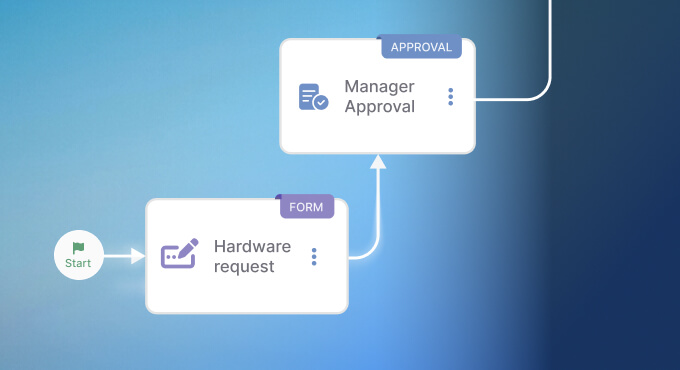
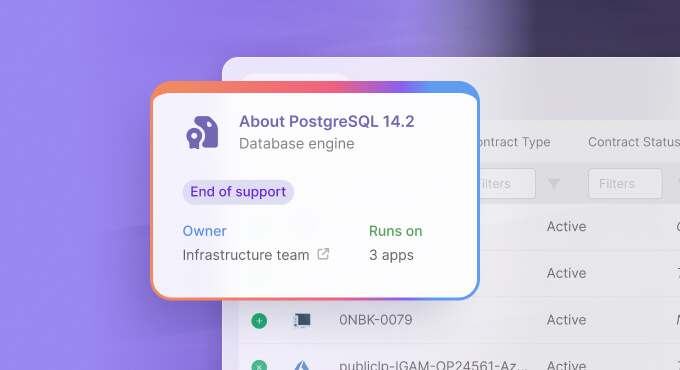
InvGate Service Management is a commercial ITSM platform with a no-code interface and AI capabilities to accelerate ticket triage and resolution. It was designed to reduce the learning curve for both agents and end users, without compromising ITIL-aligned processes. Much of this automation comes from AI Hub, a set of AI features native to the platform, not a separate add-on, which operates on a human-in-the-loop model, meaning the agent always has ultimate control over decisions. Behind the simple interface, the platform also delivers a solid foundation of CMDB, service catalog, and automations that prevent operational growth from becoming a bottleneck for the IT team.
GLPI (Gestionnaire Libre de Parc Informatique) is an open-source ITSM and ITAM platform, maintained by a global community and a French company responsible for its main development. Originally created as an inventory tool, today it covers virtually the entire IT management cycle, from help desk to financial control of contracts and licenses. Its flexibility through plugins and open-source code is precisely what sustains the loyal user base that the platform has maintained for over two decades, especially among IT teams with strong internal technical capabilities.
InvGate Service Management is often the choice for companies that are already experiencing limitations with GLPI in terms of ticket volume, reporting complexity, or time spent on internal maintenance. It makes even more sense for teams that want to reduce the learning curve for agents and end users, leveraging AI automation and a ready-to-use self-service portal.
This is the recommended option when the company prioritizes speed of implementation and specialized support over code-based customization. This is especially true for organizations that are in a growth phase, with rapidly maturing IT processes and little room to dedicate engineering hours to maintaining an internal tool. In these cases, having a vendor that assumes part of the operational responsibility is usually worth more than total control over the code.
GLPI remains a great option for companies with a technical IT team, limited budget, and a need for deep customization via plugins and open-source code. It also makes sense for organizations that already have mature ITSM processes and prefer to maintain full control over hosting, data, and configuration.
It's the right choice when licensing costs outweigh implementation time or dedicated support. This is often the case for smaller companies, lean IT teams with strong technical expertise, and public or educational sector organizations, where budget constraints make the open source model particularly attractive. In these scenarios, the extra effort of internal maintenance is offset by the absence of licensing costs and the freedom to shape the tool exactly as the team needs it.
Before deciding whether to continue with GLPI or migrate to InvGate Service Management, it's worth weighing some concrete criteria instead of basing the decision solely on general perception of each tool. These points help transform an abstract question like "is it worth switching?" into a more objective analysis of what the IT operation truly needs today and in the coming years.
Technical capacity of the team. GLPI requires knowledge of hosting, databases, and, in many cases, PHP to handle plugins and more advanced customizations. If the IT team already dedicates a significant portion of its time to maintaining the tool itself instead of supporting users, this is a sign that the hidden cost of open source may be higher than it seems.
Volume and complexity of tickets. Companies with few agents and a stable call volume tend not to feel the limitations of GLPI as much. However, operations that have grown rapidly, with multiple teams, stricter SLAs, and a need for intelligent automation, often run into less flexible reporting and time-consuming manual triage.
Total cost, not just the license cost. It's tempting to compare "free" with "paid" and stop there, but the complete calculation includes hosting, updates, internal team time, and any consulting services for GLPI, versus the monthly fee and support included in InvGate. In many cases, the TCO (total cost of ownership) of the two solutions may be closer than the list price suggests.
Data migration and business continuity. Migrating from GLPI involves exporting assets, ticket history, contracts, and workflow configurations, and this tends to be smoother the more organized the current database is. It's worth mapping in advance which data is critical to preserve and which can be simplified on the new platform, instead of trying to replicate every customization from the old environment.
Expected growth of IT operations. If the expectation is that the team, the number of users served, or the complexity of processes will grow in the coming years, it is worth considering not only the ideal tool for today, but also the one that can handle this growth without requiring an internal restructuring project at each new phase.
There's no single answer to "Is GLPI worth it?": it depends on what the company is willing to trade. GLPI is worthwhile as long as the IT team has the time and technical knowledge to maintain the platform, and the budget doesn't allow for investing in a commercial solution. InvGate Service Management, on the other hand, is usually worth the investment when the IT team needs more agility, dedicated support, and AI-powered automation, even if it means giving up some technical control.
In practice, small companies and teams with strong internal capabilities tend to do well with GLPI, while growing organizations with more complex processes and little room for internal maintenance usually find InvGate Service Management to be the most suitable platform for the coming years. Those considering migrating from GLPI today don't need to see this as admitting that the original choice was wrong; it's simply a sign that their IT operation has matured to the point of requiring a different tool than the one that made sense initially.

