For sysadmins, a help desk platform needs to do more than manage tickets. It should connect support requests with assets, configuration data, identity systems, approvals, operational workflows, and the broader IT environment. The difference between products comes down to how much operational depth they provide beyond the ticket itself.
In this guide, we'll look at five help desk platforms that offer the depth sysadmins typically need. We'll also cover the capabilities worth evaluating before making a decision, including workflow automation, asset visibility, Change Management, integrations, and administrative flexibility.
What separates a help desk for sysadmins from a basic ticketing tool
Many help desk platforms target organizations that primarily need request intake, ticket routing, and end-user support. Those capabilities matter, but they rarely tell the full story for infrastructure and operations teams.
When evaluating vendors, sysadmins should look beyond the service desk interface and assess the operational depth of the platform. The differences often appear in areas such as automation, asset visibility, change management, integrations, and administrative control. A product may handle tickets well while offering limited support for the workflows that surround them.
Key areas to evaluate include:
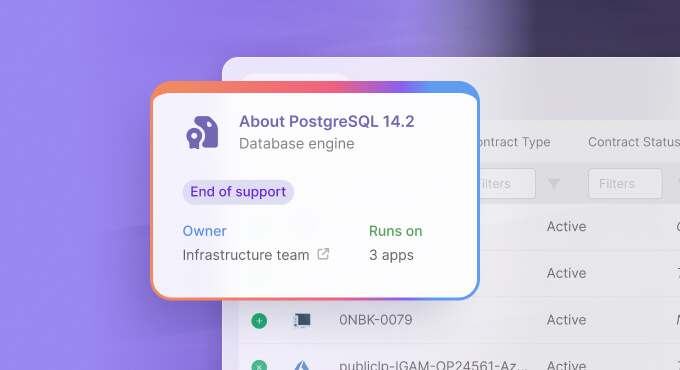
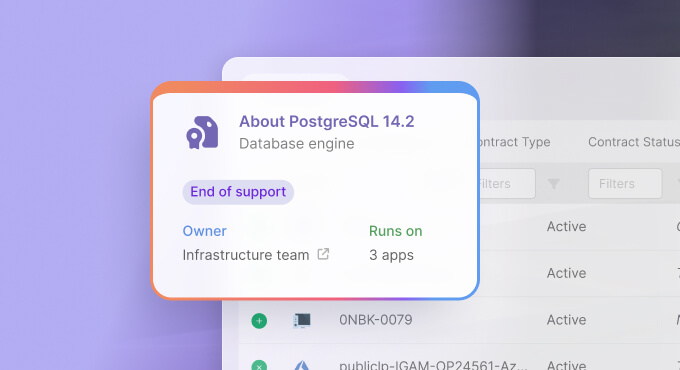
- Asset and configuration management – Native asset discovery, CMDB capabilities, and relationships between users, devices, software, and services.
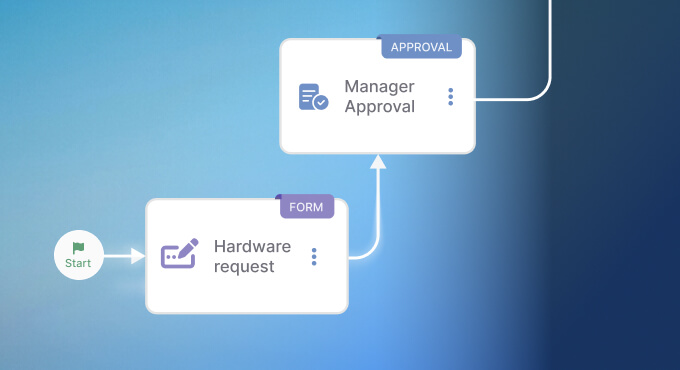
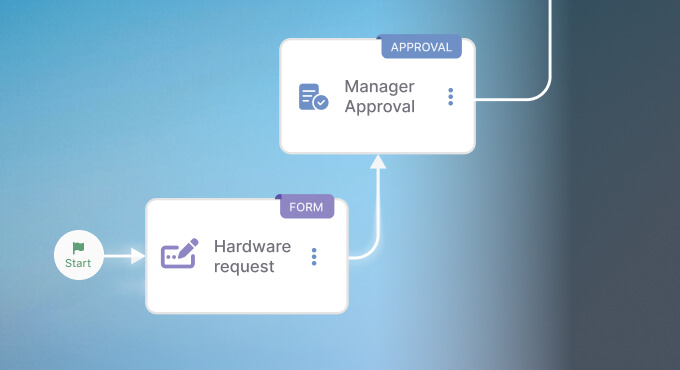
- Workflow automation – Visual workflow builders, approval processes, orchestration capabilities, and support for complex routing logic.
- Change Management and Release Management – Structured workflows for reviewing, approving, documenting, and tracking infrastructure changes.
- Integration ecosystem – Connections to endpoint management, identity providers, monitoring platforms, collaboration tools, and other operational systems.
- Administrative flexibility – Custom fields, forms, queues, permissions, business rules, and workflow configuration without requiring extensive development work.
- Scalability of ITSM capabilities – Support for incident, request, problem, change, knowledge, and asset management as operational requirements mature.
- Reporting and operational visibility – Dashboards and reporting that help teams identify service trends, recurring issues, SLA performance, and workload distribution.
The products in this guide were selected because they extend beyond ticket management and provide capabilities that support broader IT operations processes.
Best help desk software for sysadmins
Methodology note: InvGate builds and offers IT Service Management and IT Asset Management solutions, making us an active player in this software market. Some vendors in this article are our competitors. Even so, we aim to deliver accurate, honest, and practical information that helps you make the best decision.
Our evaluations draw from publicly available sources — vendor websites, product documentation, user reviews on platforms like Gartner Peer Insights, G2, and Capterra, analyst reports, and hands-on testing or demos when available.
InvGate Service Management
Best for: IT teams that need full workflow ownership without vendor dependency.
InvGate Service Management is an ITSM platform designed for organizations that want mature service management capabilities without the implementation overhead commonly associated with enterprise suites. For sysadmins, the main appeal is administrative control. The platform allows IT teams to build, modify, and maintain workflows internally rather than relying on consultants, developers, or vendor services for routine process changes. Combined with its native integration with InvGate Asset Management, it provides a strong operational foundation for teams that manage infrastructure, endpoints, and services from a single environment.
Key capabilities for sysadmins:
- SaaS and on-premise deployment options with feature parity across both environments.
- Typical implementation measured in weeks rather than months.
- No-code workflow builder for routing, escalations, approvals, notifications, and task automation.
- Native ITSM capabilities covering incidents, requests, changes, problems, and knowledge management.
- Asset context directly within tickets through integration with InvGate Asset Management.
- Built-in SLA Management, reporting, and service catalog functionality.
Pricing:
- Starter: 24.98/agent/month billed annually and 5 agents minimum - $1499/year.
- Pro: $500/agent/year. 5-50 agents.
- Enterprise: Custom pricing for larger organizations.
You can also request a free trial, so you can try the platform before committing to a plan.
ManageEngine ServiceDesk Plus
Best for: Infrastructure-focused teams already running other ManageEngine products.
ManageEngine ServiceDesk Plus has long been a staple in organizations that prefer to keep IT operations within a single vendor ecosystem. It is particularly common among infrastructure teams that already use products such as Endpoint Central, OpManager, ADManager Plus, or other ManageEngine tools. The platform combines help desk, Asset Management, and ITSM capabilities with strong support for on-premise deployments, making it a frequent choice in environments with stricter infrastructure or compliance requirements.
Key capabilities for sysadmins:
- Native integration with Active Directory and LDAP.
- Automated user synchronization and account provisioning workflows.
- On-premise and cloud deployment options.
- Built-in CMDB and Asset Management capabilities.
- Change, Problem, and Release Management modules.
- Tight integration with the broader ManageEngine portfolio.
- Reporting and operational dashboards for IT service performance.
Pricing:
Cloud pricing tiers:
- Standard: Starts from $13 / technician / month
- Professional: Starts from $27 / technician / month
- Enterprise: Starts from $67 / technician / month
Note: For Professional and enterprise tiers, price changes also according to the amount of assets. There are also available add-ons.
- Checked on: June 2026 (US), official website.
HaloITSM
Best for: MSPs and internal IT teams that need extensive workflow flexibility.
HaloITSM has gained traction among organizations looking for a highly configurable platform without moving into the complexity and cost associated with large enterprise suites. The product is especially popular with MSPs because of its multi-tenant capabilities, though many internal IT departments adopt it for the same reason: a high degree of control over workflows, automation, and service delivery processes.
Key capabilities for sysadmins:
- Highly configurable workflows, ticket lifecycles, and automation rules.
- Granular routing and escalation logic for multi-team environments.
- Active Directory integration and SAML-based authentication.
- Asset and configuration management capabilities.
- Support for Change, Problem, and Release Management processes.
- Cloud-hosted deployment with self-hosted options available.
- Multi-tenant functionality for MSP and shared-services environments.
Pricing: Not published — requires quote.
Jira Service Management
Best for: Infrastructure, platform, and DevOps teams already invested in Atlassian.
Jira Service Management stands apart from traditional help desk platforms because of its close relationship with the Atlassian ecosystem. Organizations that manage infrastructure through engineering-driven processes often find value in the connection between service requests, software projects, change requests, and operational work. The platform is particularly attractive when sysadmin responsibilities overlap with DevOps, cloud operations, platform engineering, or infrastructure automation initiatives.
Key capabilities for sysadmins:
- Native integration with Jira Software and Atlassian development workflows.
- Advanced automation engine with extensive rule-building options.
- Asset management capabilities through Atlassian Assets.
- Support for change management and approval workflows.
- Integration with CI/CD pipelines and engineering tools.
- SSO, identity management, and directory integrations through Atlassian Access.
- Strong ecosystem of third-party applications and integrations.
Pricing: Pricing rates vary depending on the number of agents. The following rates apply to a 50-agent deployment:
- Standard: Starting at $20.63 per agent / per month.
- Premium: Starting at $52.16 per agent / per month.
Checked on: June 2026 (US), official web.
ServiceNow ITSM
Best for: Large enterprises with mature IT operations and governance requirements.
ServiceNow remains one of the most widely adopted ITSM platforms in large organizations. Its strength lies in the breadth of its capabilities and its ability to support complex operational environments spanning multiple business units, infrastructure teams, and service providers. For sysadmins, ServiceNow becomes most valuable when IT operations depend on a mature CMDB, formal change management processes, auditability, and extensive workflow customization.
Key capabilities for sysadmins:
- Enterprise-grade CMDB with relationship mapping across infrastructure and services.
- Mature change management workflows with risk assessment and approval controls.
- Extensive integration catalog and API ecosystem.
- Advanced workflow automation and orchestration capabilities.
- Asset, configuration, incident, problem, and knowledge management within a single platform.
- Detailed reporting, compliance tracking, and audit support.
- High scalability for large and distributed IT organizations.
Pricing: Not published — requires quote.
Disclaimer: All product names, logos, and brands are property of their respective owners. All company, product, and service names used on this site are for identification purposes only. Use of these names, trademarks, and brands does not imply endorsement. Comparisons are based on publicly available information as of April 2026 and are provided for informational purposes only. ServiceNow is a registered trademark of ServiceNow, Inc. InvGate is not affiliated with, sponsored by, or endorsed by ServiceNow.
Questions to ask before shortlisting a help desk for IT administration and service delivery
Most vendors can demonstrate ticket creation, automation rules, and self-service portals in a 30-minute demo. A more effective evaluation focuses on the requirements that are harder to change after implementation: deployment options, integration capabilities, workflow ownership, operational context, and long-term platform flexibility.
Before evaluating vendors, consider the following questions:
- Does the deployment model fit your requirements? If on-premise deployment is mandatory due to security, compliance, or internal policy requirements, eliminate vendors that only offer SaaS.
- How will the platform integrate with your identity systems? Evaluate support for Active Directory, Entra ID, LDAP, SCIM, Google Workspace, and SSO providers. Native integrations typically require less maintenance than custom or third-party solutions.
- Who will manage workflow changes? Approval paths, routing rules, and escalation processes rarely remain static. Look for platforms that allow IT teams to update workflows without relying on vendor services or development resources.
- How much operational context is available within a ticket? For many sysadmins, a ticket is only useful when it can be connected to the affected device, user, application, service, or configuration item.
- Can the platform support future ITSM requirements? Many organizations start with incident management and later add asset management, change management, knowledge management, service catalogs, and automation. Consider whether the product can support those requirements without requiring a migration later.