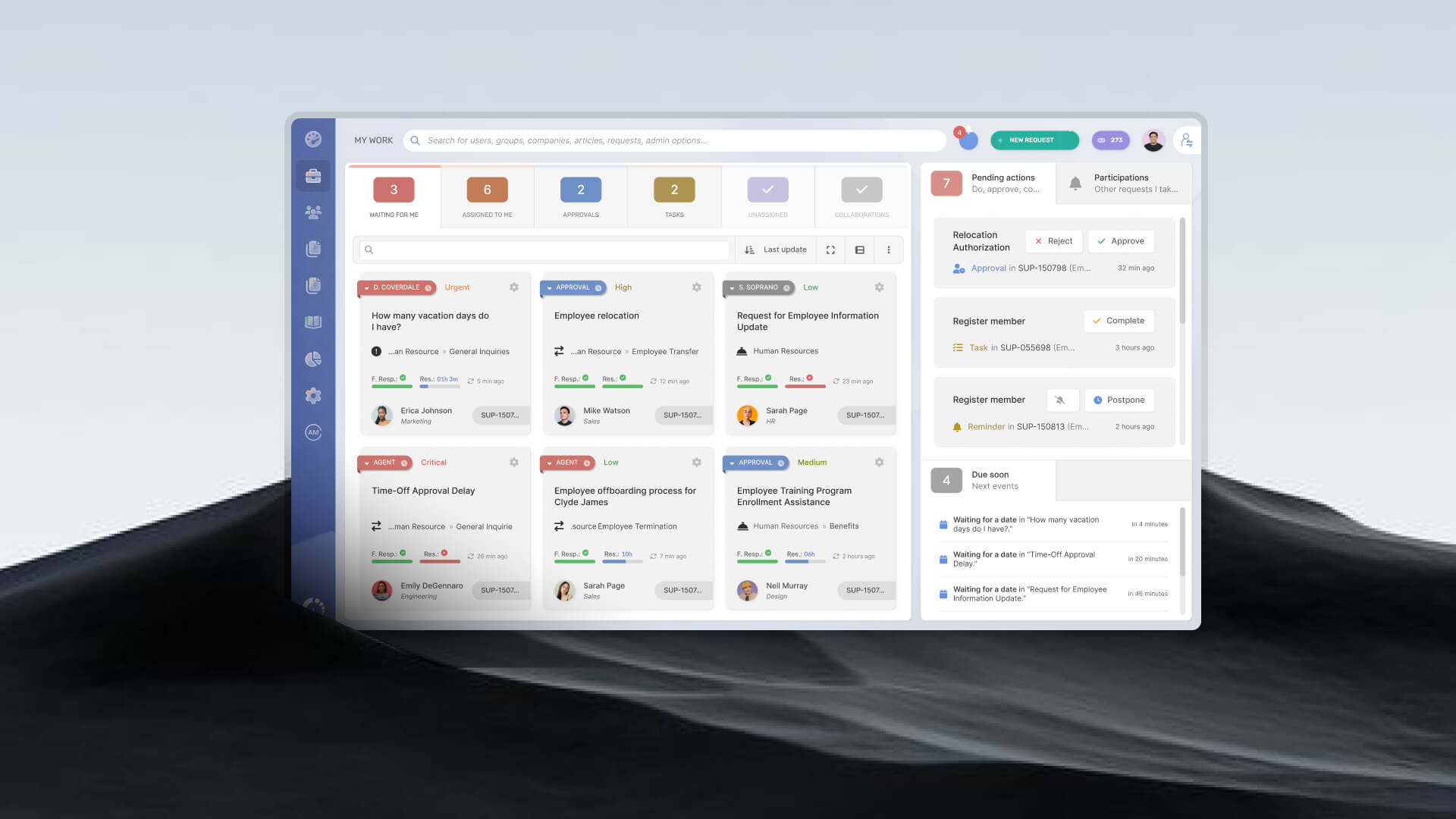
HaloITSM is Halo's IT service management platform for internal IT teams, while HaloPSA is a separate product designed for managed service providers (MSPs). The alternatives covered here focus on HaloITSM, with options for teams reassessing their current service desk, pricing, implementation requirements, or plans to extend service management to other departments.
The right choice depends on the capabilities your team needs, the resources available for implementation, and how licensing scales as usage grows across the organization.
HaloITSM alternatives at a glance
Methodology note: InvGate builds and offers IT Service Management and IT Asset Management solutions, making us an active player in this software market. Even so, we aim to deliver accurate, honest, and practical information that helps you make the best decision.
Our evaluations draw from publicly available sources — vendor websites, product documentation, user reviews on platforms like Gartner Peer Insights, G2, and Capterra, and analyst reports. Pricing from platform's official websites - Updated: October 2026.
What is HaloITSM?
HaloITSM is Halo's IT service management product for internal IT teams, covering incident and major incident management, service requests and a service catalogue, change and problem management, a CMDB with asset management, and reporting on a single platform. Halo now markets these capabilities as part of one unified platform, so what was branded HaloITSM sits alongside Halo's other products at usehalo.com.
The distinction that matters for a shortlist is between Halo's IT Service product and its Managed Services product: the first is built for internal IT and business teams, while the second is a PSA tool aimed at managed service providers. A lot of the "HaloITSM alternatives" discussion online actually compares HaloPSA, so it helps to keep the two apart while you evaluate.
Halo also positions the platform for public sector buyers, and in August 2026 it achieved FedRAMP 20x authorization at the Moderate level, listing the platform on the FedRAMP Marketplace for US federal agencies.
A few reasons internal IT teams weigh alternatives, drawn from what Halo publishes:
- Mandatory onboarding packages. Halo's pricing page lists onboarding packages as required with purchase, at a bespoke cost that depends on scope.
- A platform that spans well beyond IT. Halo bundles IT service management, customer service, CRM, and PSA into one platform, which can be more surface area than an internal IT team needs.
1. InvGate Service Management
InvGate Service Management is a no-code ITSM and ESM platform built for teams that want to run service desks across IT and other departments without a long implementation.
Best for: Enterprise organizations replacing legacy tools that want to configure workflows without developers.
Features: Cloud or on-premise deployment on the Enterprise plan, so teams that need to keep service management in their own environment can. Security is backed by ISO 27001 and SOC 2 Type II certification, which matters for regulated and public sector buyers. Teams coming from HaloITSM can plan the move with InvGate's team.
Pricing: Per-agent pricing with a custom Enterprise tier for larger deployments; current figures are on the pricing page.
Reviews: Gartner Peer Insights, G2, Capterra.
You can start a free trial of InvGate Service Management and run it against your own workflows, or book a call with our team to talk through your requirements.
2. ServiceNow ITSM
ServiceNow runs ITSM on the Now Platform, its single system of record, with a large marketplace of modules and integrations and the scale to span complex enterprises.
Best for: Large enterprises that need highly customizable ITSM and can resource the platform.
Features: ITIL-aligned incident, problem, change, and request management built on the Now Platform, with broad automation across IT and the wider business. Now Assist layers generative AI onto agent workflows and self-service.
Pricing: ServiceNow does not publish standard list prices; licensing is quote-based and scales with editions, modules, and users. See the pricing page for details.
Reviews: Gartner Peer Insights, G2, Capterra.
3. Jira Service Management
Jira Service Management is Atlassian's ITSM product, built on Jira and connected to Confluence and Jira Software so service work sits next to development.
Best for: Teams already building in the Atlassian stack who want service management close to their development work.
Features: Request, incident, problem, change, and asset management built on Jira, with tight links to Jira Software and Confluence. Atlassian Intelligence and Rovo add AI assistance across requests and knowledge.
Pricing: A free tier plus paid per-agent plans that scale up for larger teams, with figures on the pricing page.
Reviews: Gartner Peer Insights, G2, Capterra.
4. Freshservice
Freshservice is Freshworks' cloud-native ITSM, with packaged ITIL processes, built-in automation, and a focus on quick setup.
Best for: Mid-market IT teams that want fast setup and a clean, modern interface.
Features: Incident, problem, change, and release management with a no-code workflow builder, plus asset management and a service catalog. Freddy AI handles ticket triage, summaries, and a self-service assistant.
Pricing: Per-agent plans that scale from a core service desk up to enterprise ITSM, with figures on the pricing page.
Reviews: Gartner Peer Insights, G2, Capterra.
5. ManageEngine ServiceDesk Plus
ManageEngine ServiceDesk Plus is a long-established ITSM tool from the ManageEngine suite, available as a cloud service or self-hosted software.
Best for: Teams that want solid ITSM with the choice of cloud or on-premise deployment, often at a lower entry cost.
Features: Incident, problem, change, and asset management with a CMDB, available both as a cloud service and as self-hosted software. Zia provides AI assistance for ticket handling and self-service.
Pricing: Tiered per-technician plans with cloud and on-premise options, listed on the pricing page.
Reviews: Gartner Peer Insights, G2, Capterra.
6. SysAid
SysAid has built ITSM software since 2002, bundling a help desk, Asset Management, and automation into one ITIL-aligned platform.
Best for: Smaller and mid-size IT teams that want a help desk, Asset Management, and automation in one package.
Features: Incident, request, problem, and change management with a built-in CMDB and asset management, delivered as an ITIL-aligned service desk. SysAid Copilot adds generative and agentic AI for ticketing and self-service.
Pricing: Editions span Help Desk, ITSM, and ITSM Enterprise, quoted to the team's needs rather than as public list prices; start on the pricing page.
Reviews: Gartner Peer Insights, G2, Capterra.
How to choose a HaloITSM alternative
The best fit depends on your service management requirements, existing tools, and available resources. Compare alternatives across these areas to identify which platform matches your needs and budget.
1. Service management beyond IT. If HR, facilities, or finance will use the same platform, compare how vendors license additional departments. Some charge per agent across all teams, while others include ESM capabilities in specific plans. Check that each department can manage its requests, approvals, and workflows without costly customization.
2. Integration with your existing tools. If your team relies on Jira and Confluence, evaluate how well each platform connects service requests with development workflows and documentation. Also check integrations with identity providers and collaboration tools, including whether they require additional licenses or third-party connectors.
3. Security and compliance. Identify the certifications and controls your organization requires, such as ISO 27001 or SOC 2 Type II. Public-sector organizations may also need FedRAMP authorization. Verify each vendor's current certifications, deployment options, and data-handling policies against your requirements.
4. Implementation effort. Compare the time, expertise, and internal resources needed to configure the platform and migrate existing data. Review workflow customization, training, and vendor support, and ask for realistic implementation timelines based on your requirements.
HaloITSM alternatives FAQ
What is the difference between HaloITSM and HaloPSA? HaloITSM is Halo's IT service management product for internal IT teams, while HaloPSA is the separate product for managed service providers, built around billing, contracts, and project profitability.
Does HaloITSM have a free trial? Yes. Halo offers a 30-day free trial with every feature and module included, as noted on its pricing page.
What is the best HaloITSM alternative for internal IT teams? It depends on your existing stack and compliance needs. This guide leads with InvGate Service Management for enterprise teams leaving legacy tools, with ServiceNow, Jira Service Management, Freshservice, ManageEngine ServiceDesk Plus, and SysAid close behind.
Disclaimer: All product names, logos, and brands are property of their respective owners. All company, product, and service names used on this site are for identification purposes only. Use of these names, trademarks, and brands does not imply endorsement. Comparisons are based on publicly available information and are provided for informational purposes only. ServiceNow is a registered trademark of ServiceNow, Inc. InvGate is not affiliated with, sponsored by, or endorsed by ServiceNow.