









Marketing agencies run on two clocks at once: client deadlines and internal operations. Account teams juggle multiple client brands, creative staff move between campaigns, and contractors rotate in and out on a project basis. IT requests land wherever it's convenient — a DM, a reply-all email thread, a hallway conversation — with no ticket, no owner, and no SLA behind any of it.
The help desk software in this list is designed to bring structure to that internal work. It helps IT teams manage employee requests, onboard and offboard staff, support agency devices and applications, and keep service delivery consistent while the business moves at a fast pace.
Key takeaways
- Marketing agencies face a specific support challenge: a mix of internal IT needs, creative team requests, and client-facing tickets that all compete for the same queue.
- The right help desk separates these request types while keeping them on a single platform, with clear ownership and SLAs for each.
- No-code configuration matters because agency IT teams are typically small and can't rely on a vendor to update workflows every time an account structure changes.
- Pricing, deployment model, and ESM depth vary across vendors — the right fit depends on how many departments and client accounts the platform needs to serve.
Why marketing agencies need a dedicated help desk
Agencies operate with lean internal IT teams supporting account managers, creative staff, and a rotating base of freelancers and contractors, all while fielding requests from client contacts who expect fast turnaround. A shared inbox or a Slack channel absorbs this volume for a while, then, these informal channels tend to break down.
The typical failure points:
-
No traceability. A request comes in through email, Slack, or a phone call. There's no ticket, no assigned owner, and no record once it's resolved. When a similar issue surfaces with a different client three weeks later, the team starts from zero.
-
Mixed request types in one queue. IT tickets (password resets, software access, hardware issues), creative team requests (asset access, tool licensing), and client-facing tickets (campaign questions, deliverable status, billing) often land in the same inbox. Without structured routing, urgent items get buried under routine ones.
-
High contractor and freelancer turnover. Agencies bring in freelance designers, copywriters, and specialists on a project basis. Provisioning and deprovisioning access to shared drives, design tools, and client systems is a recurring task that manual processes handle inconsistently.
-
Client confidentiality across accounts. Requests tied to one client account shouldn't be visible to teams working on a competing account. A generic shared inbox has no mechanism to enforce that separation.
A purpose-built help desk doesn't remove the complexity of running a multi-client, multi-department agency. It gives IT the structure to manage it: centralized intake, routing rules by request type, SLA enforcement, and separation between internal operations and client-facing work.
Managing internal requests from the creative team
Creative staff generate a steady stream of IT requests that differ from a typical office worker's: software license activations for tools like Adobe Creative Cloud or Figma, storage and bandwidth issues tied to large video or image files, equipment requests for shoots, and access to shared drives that change with every new campaign. These requests need their own catalog, separate from general IT support, so a designer waiting on a license activation isn't stuck in the same queue as a password reset.
A service catalog scoped to the creative team lets staff submit requests through predefined forms — software access, hardware checkout, storage upgrades — instead of describing the issue from scratch every time. That structure also gives IT visibility into recurring patterns, such as which licenses get requested most often around campaign launches.
Agencies that also handle creative request management — intake for design revisions, campaign asset requests, or internal creative briefs — can run that workflow through a separate catalog on the same platform, kept apart from IT tickets so approval chains and SLAs don't get mixed.
Receiving and organizing client tickets
Client-facing tickets carry different requirements than internal ones. Each client account needs its own queue, so a designer on Account A never sees a ticket from Account B, and each client can be routed to the right account manager without manual sorting. SLAs also tend to vary by client tier — a retainer account might have faster response commitments than a project-based one.
A structured intake process matters here: client requests often arrive by email or through a form embedded in a client-facing portal, and each one needs to be tagged to the correct account, prioritized against existing work, and tracked to resolution with a visible status the client or account manager can check without asking the internal team directly. Multi-channel intake — email, a branded portal, chat — reduces the number of requests that arrive as an untracked message with no record behind it.
What to look for in help desk software for marketing agencies
-
Multi-client and multi-department support. The platform should separate client accounts and internal departments into distinct queues without requiring separate instances for each.
-
ESM capabilities. Agency IT teams often support more than IT: creative operations, HR onboarding for contractors, and client-facing requests all benefit from enterprise service management — multiple catalogs, unified visibility, one platform.
-
No-code configuration. Client rosters and account structures change often. An IT admin should be able to adjust routing rules, catalogs, and approval flows without a development ticket to the vendor.
-
SLA management with automatic escalation. Retainer clients and internal teams need enforceable response times. A ticket approaching its SLA threshold should escalate on its own, not wait for someone to notice.
-
Self-service portal. A portal where staff and clients can submit and track requests reduces the volume of items arriving through untracked channels and gives everyone visibility into status without a follow-up email.
-
Integration with existing tools. If the agency already runs on Slack, Microsoft Teams, or Google Workspace, the help desk should meet the team there, includes support for those channels and more, instead of asking staff to adopt a separate system just for IT requests.
-
Deployment time. Agencies operate on tight timelines between campaigns. A platform that takes months to configure delays the very problem it's meant to solve.
Best help desk software for marketing agencies
Methodology note: InvGate develops ITSM and ITAM software and is one of the vendors evaluated in this list. The analysis below is based on public documentation, official demos, and user reviews on Gartner Peer Insights, G2, and Capterra. All vendors receive the same structural treatment.
1. InvGate Service Management
InvGate Service Management is a no-code ITSM/ESM platform with an integrated AI Hub. It covers IT, creative operations, and client-facing request intake from a single instance, without requiring a partner for initial configuration.
Key features for marketing agencies:
- Service catalog configurable by department — IT, creative team, and client-facing requests can each run on their own catalog.
- Multi-channel self-service portal, accessible via web portal, Microsoft Teams, WhatsApp, and email, and more.
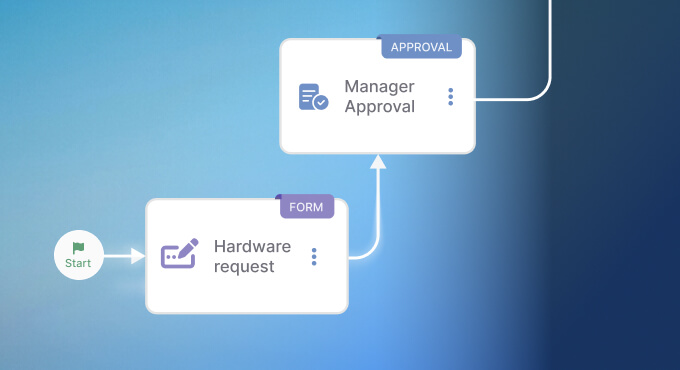
- Drag-and-drop workflow builder for routing rules, approval chains, and escalation logic, configured visually with no code.
- SLA management with automatic escalation and breach alerts, configurable per client account or department.
- Virtual Service Agent for ticket deflection on high-volume, low-complexity requests.
- Customizable dashboards for IT managers tracking volume, SLA compliance, and performance across client accounts.
Deployment: Available as cloud and on-premise, with feature parity across both models.
Pricing: InvGate Service Management has flexible pricing plans that scale to meet the unique needs of your organization.
- Starter: $24.98/agent/month billed annually, 5 agents minimum — $1,499/year.
- Pro: $500/agent/year, 5–50 agents.
- Enterprise: Custom pricing for larger organizations.
For a hands-on look at the platform, start a 30-day free trial.
2. Freshservice
Freshservice is a cloud-based ITSM platform from Freshworks with AI capabilities through its Freddy AI layer. It's a mature product with broad adoption across mid-market IT teams, including agencies already in the Freshworks ecosystem.
Key features for marketing agencies:
- Multi-department ESM support with separate service portals per team.
- Freddy AI for automated ticket categorization and agent assistance.
- Asset management module included natively.
- Pre-built integrations with Microsoft 365, Slack, and Jira.
Pricing: Starts at $19/agent/month (Growth plan). Enterprise plans with full AI features are priced higher. Checked June 2026 (US), official website.
3. Zendesk
Zendesk is widely known as a customer support platform, and its Employee Service suite addresses internal IT and HR use cases. It's a fit for agencies that want both client-facing support and internal IT under a single vendor.
Key features for marketing agencies:
- Unified agent workspace with omnichannel intake — email, chat, Teams, WhatsApp.
- Advanced reporting for tracking performance across client accounts.
- AI-powered ticket routing and summarization.
- Flexible views and SLA tracking per department or client.
Pricing: Pricing for their employee service plans, designed for internal teams.
Zendsesk employee service (annual billing):- Suite Team: $29 per agent/month.
- Suite Growth: – $59 per agent/month.
- Suite Professional: $99 per agent/month.
- Suite Enterprise: price available upon request.
4. Jira Service Management
Jira Service Management (JSM) is Atlassian's ITSM platform, tightly integrated with the Jira and Confluence ecosystem. It fits agencies that already run project tracking or documentation in Atlassian tools.
Key features for marketing agencies:
- Native integration with Jira Software for cross-team visibility.
- ITIL-aligned workflows for incident, problem, and change management.
- Asset and configuration management via Assets (formerly Insight).
- Forms-based intake configurable per team or client.
Pricing (50-agent deployment):
- Standard: starting at $20.63/agent/month.
- Premium: starting at $52.16/agent/month.
Checked June 2026 (US), official website.
5. HappyFox
HappyFox is a help desk platform covering both customer support and internal IT use cases, with an internal ticketing module built out over time alongside its customer-facing roots.
Key features for marketing agencies:
- Omnichannel ticket intake — email, phone, chat, social.
- Internal help desk module kept separate from client-facing queues.
- SLA management and automation rules.
- Reporting and analytics dashboards.
Pricing (billed annually):
- Basic: $24/agent/month (up to 5 agents).
- Team: $49/agent/month.
- Pro: $99/agent/month.
Checked June 2026 (US), official website.
How to choose the right help desk software for your agency
The comparison above is a starting point. The decision comes down to how the agency actually operates. Four questions worth answering directly:
Is the priority internal IT support, client-facing ticket management, or both? Most platforms optimize for one side. If internal IT and creative team requests come first, ITSM-native platforms like InvGate Service Management, Freshservice, or JSM fit well. If client-facing support carries equal weight, Zendesk or HappyFox cover both sides more evenly.
How many client accounts need separate visibility? An agency with a handful of retainer clients can manage with lighter tooling. One running dozens of accounts at once needs queue separation, account-level SLAs, and confidentiality between teams built into the platform, not layered on with manual workarounds.
Can the IT team configure the tool without vendor involvement? Client rosters and creative tool stacks change often. If every adjustment requires a support ticket to the vendor, the team ends up working around the platform. No-code configuration is a requirement for lean agency IT teams, not a bonus feature.
Does the platform need to support creative operations alongside IT? If the answer is yes, the shortlist narrows to platforms with genuine ESM depth — separate catalogs, independent SLAs, and distinct agent queues per department, confirmed during evaluation rather than assumed from a feature list.
FAQs
What features should a help desk for marketing agencies have? A multi-client ticket queue structure, SLA enforcement by account or department, a self-service portal for staff and clients, and ESM capabilities to separate IT, creative team, and client-facing requests within one system. No-code configuration matters for agencies with lean IT teams and frequently changing client rosters.
Do marketing agencies need ITSM software or just a ticketing system? A basic ticketing system handles intake and tracking. ITSM software adds SLA management, workflow automation, a service catalog, and multi-department support — capabilities agencies with creative teams and multiple client accounts typically need as they scale.
Is help desk software different from creative project management tools? Yes. Platforms like Asana or Monday.com manage campaign timelines, briefs, and content calendars. Help desk software manages internal IT support and client-facing ticket intake. They solve different problems for different parts of agency operations.
Can one platform handle IT, creative team requests, and client tickets for an agency? Yes — platforms with ESM capabilities support multiple departments from a single instance, with separate catalogs, SLAs, and queues per team or client account. InvGate Service Management, Freshservice, and Jira Service Management all support this model. Confirm ESM scope with each vendor during evaluation.
Disclaimer: All product names, logos, and brands are property of their respective owners. All company, product, and service names used on this site are for identification purposes only. Use of these names, trademarks, and brands does not imply endorsement. Comparisons are based on publicly available information as of July 2026 and are provided for informational purposes only.